 Guide On Map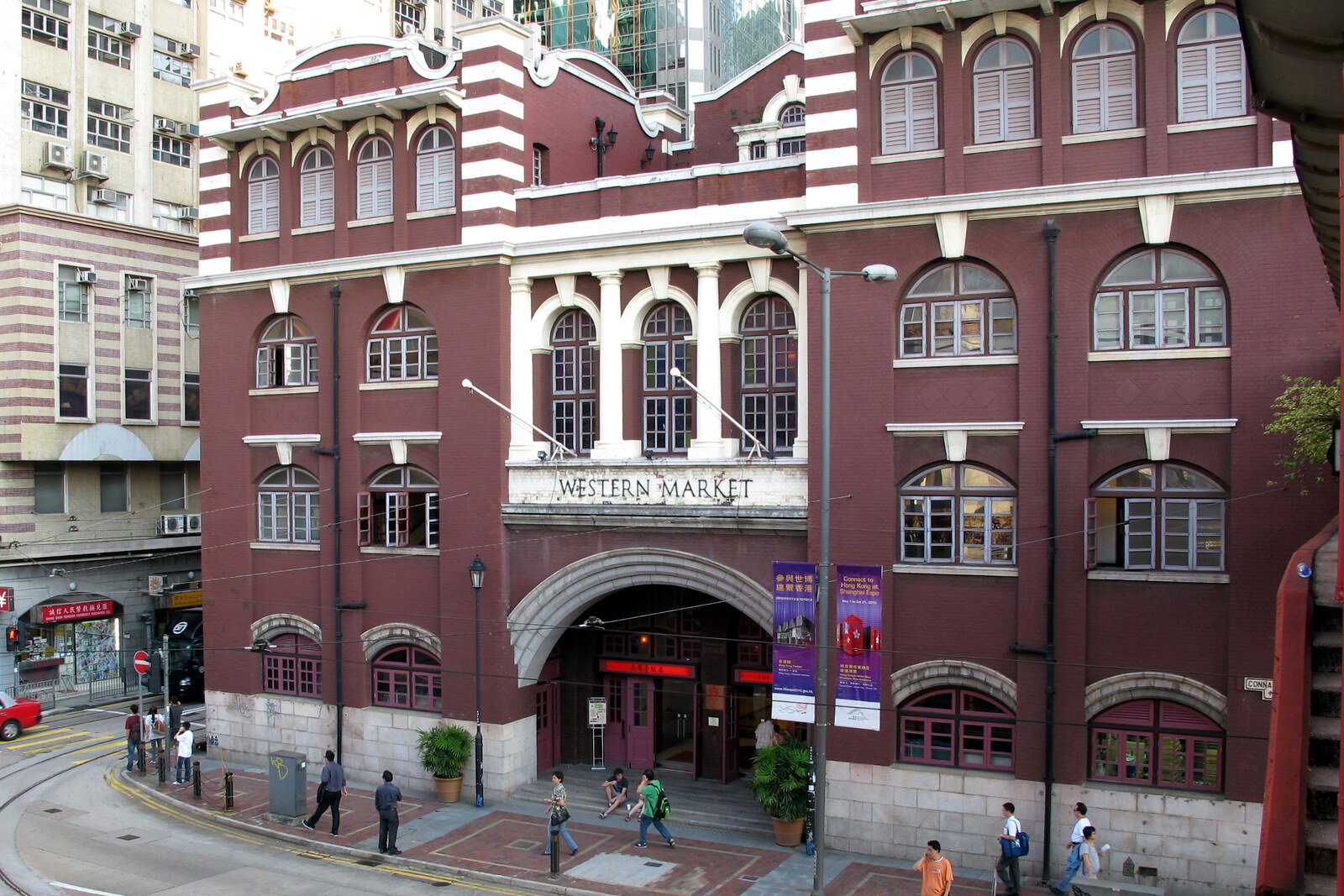
Look around first
What to notice
- Red-brick facade
- Closed entrances
The story of the place
Behind the red-brick facade, the northern section of the food market, Western Market, once operated. The building was constructed in nineteen oh six; inside were sixty-seven fish stalls, twelve poultry shops, a slaughterhouse, and an engine room that supplied water for daily floor washing. After the sellers were moved to a new municipal complex, the halls stood empty, and the following year the building was recognized as a monument. The closed entrances belong to yet another change: since the autumn of twenty twenty-five, the building has been under long-term renovation.
In the early nineteen nineties, spaces in this building were assigned by lottery among fabric merchants. On neighboring Wing On Street, known as Fabric Street, forty shops were operating. The executives of the Land Development Corporation were clearing the block for an office complex and could offer only eighteen premises in Western Market.
One of those who was due to choose was seventy-seven-year-old Lo Yu-chong. He had made his living from the fabric trade since nineteen forty-one and wanted to keep working in his shop for as long as his age allowed. Moving meant expenses he could no longer afford. Lo declined the lottery and decided to retire when Fabric Street closed.
Another merchant, Yu Kwong Ling, accepted the offer and moved his goods here. There were fewer customers: his former shop had stood along the route of people who worked in Central, and they did not make it as far as Western Market. Marina Lo, a corporation employee responsible for the relocation, demanded that the sellers look for customers more actively. She acknowledged that Fabric Street could not be recreated here: the street allowed forty shops to stand side by side and catch passersby, while the old building held fewer than half the merchants.
Vacant spaces became available after another reshuffling of people. This red-brick building was constructed in nineteen oh six as the northern section of the original food market, Western Market. Inside were sixty-seven stalls selling live fish, twelve poultry shops, a slaughterhouse, and an engine room that supplied water for daily floor washing. In nineteen eighty-nine, officials moved the sellers to a new municipal complex. The building stood empty, but the following year it was declared a monument. The corporation's executives adapted the vacated halls for craft and retail shops, then moved in those being displaced from Fabric Street.
The fabric merchants remained inside until the autumn of twenty twenty-five. The building is now closed for long-term renovations: there have been no fish stalls here since nineteen eighty-nine, and the shops assigned by lottery after Fabric Street disappeared have also been moved out.
Useful on site
Temporary closure for renovations until further notice; the stop is intended for viewing from outside. Checked 2026-06-30.
Checked: June 30, 2026. Check the official source before visiting.The market is closed for renovations: view it only from the street, and do not expect entry or operating shops.