 Guide On Map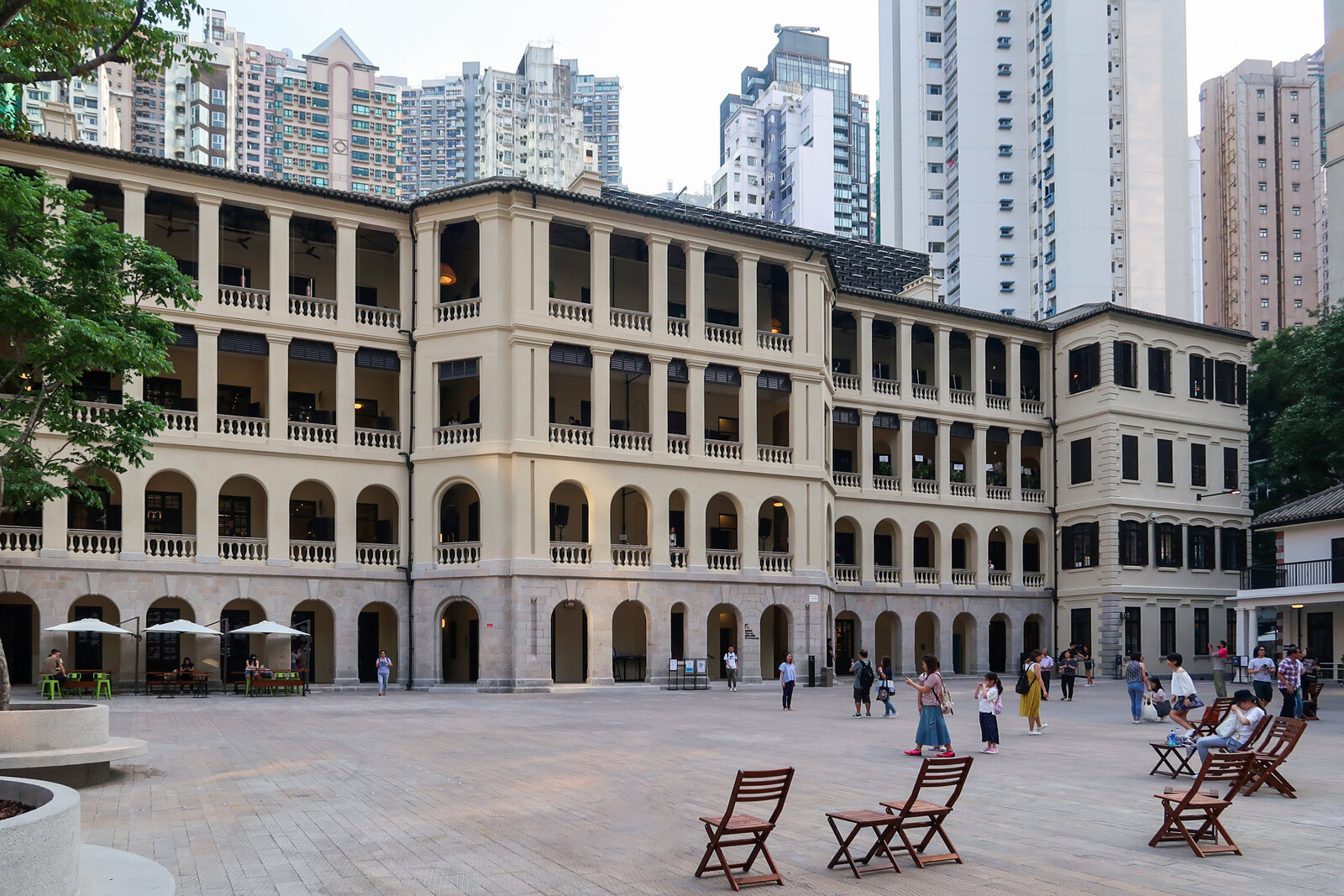
Look around first
What to notice
- The police headquarters, court, and prison buildings
- Block B
- Rows of prison cells
- Cell doors
The story of the place
Here, in the former Central Police Station complex, stood Victoria Prison, where, on June twelfth, nineteen thirty-one, a man who called himself a Chinese man named Sung Man Cho was imprisoned. In fact, he was Nguyễn Ái Quốc—a Vietnamese revolutionary who later took the name Ho Chi Minh. He sought Vietnam's independence from France and concealed his identity because a French colonial court in Vinh had already sentenced him to death in absentia.
French agents discovered his hideout and passed the information to the Hong Kong police. That was how Nguyễn ended up inside the complex, where the police headquarters, magistrates' court, and prison stood on opposite sides of a wall. For an ordinary detainee, the entire journey fit here: interrogation, trial, cell. From the magistrates' building, guarded corridors led back to the prison or outside, depending on the sentence. Police officers and residents called the entire site Tai Kwun, meaning “Big Station.” The heritage and arts center now open here bears that name.
Legal obstacles prevented Nguyễn from being handed over to the French immediately. The colonial administration then decided to deport him from Hong Kong on a French ship bound for Indochina. Hong Kong lawyer Francis Loseby took on the task of preventing that departure. He demanded that the prisoner be brought before a court and that the legality of his detention be proven. Nguyễn was summoned to hearings again and again. In September, the court nevertheless upheld the deportation order, and Loseby appealed to the Privy Council in London—the highest appellate authority for British colonies.
While the lawyers argued, Nguyễn remained in custody. He fell ill with dysentery and tuberculosis, and in November he was transferred to the prison hospital. Ho Chi Minh later recalled that in the cell one could lie down only diagonally. Twice a day, he was given rice, about a quarter of which remained in its husks, water spinach, and spoiled fish seasoning. White rice and several pieces of beef were provided once a week.
In the summer of nineteen thirty-two, the sides reached an agreement. The deportation order remained in force, but Nguyễn was forbidden to be sent on a French ship, to French Indochina, or to any other French territory. He could choose his destination country himself, and the Hong Kong administration was to help him leave.
Loseby understood that the legal agreement was not enough: after his client's release, French agents might intercept him. So the lawyer circulated a report claiming that Nguyễn had died in prison from illness. Hong Kong and foreign newspapers printed it. On December twenty-eighth, the prisoner was secretly taken out of the prison hospital and, until departure, lodged as a visiting scholar.
The first attempt to leave nearly ruined the whole plan. Nguyễn was denied entry to Singapore, returned to Hong Kong, and arrested again on January nineteenth. Governor Sir William Peel, intending to carry out the agreement on safe departure, then ordered him taken on a private launch directly to the ship Anhui. Nguyễn boarded as a late passenger and, on January twenty-second, nineteen thirty-three, sailed for Amoy—present-day Xiamen. He was not handed over to the French. Twelve years later, he proclaimed Vietnam's independence and became president of the Democratic Republic of Vietnam.
Ho Chi Minh is believed to have been held in Block B, where an exhibition about prison life is now open and rows of cells have been preserved. The imprisonment itself is confirmed by documents, but researchers have been unable to establish either Nguyễn's prison number or his cell number. None of the doors open here can be confidently identified as his door.
Useful on site
The complex is usually open 08:00–23:00; the visitor center, gallery, and heritage displays operate on separate schedules, and temporary gallery closures are possible. Checked 2026-06-30.
Checked: June 30, 2026. Check the official source before visiting.Walk freely through the accessible courtyards, but check the visiting conditions for exhibitions and individual rooms in advance.