 Guide On Map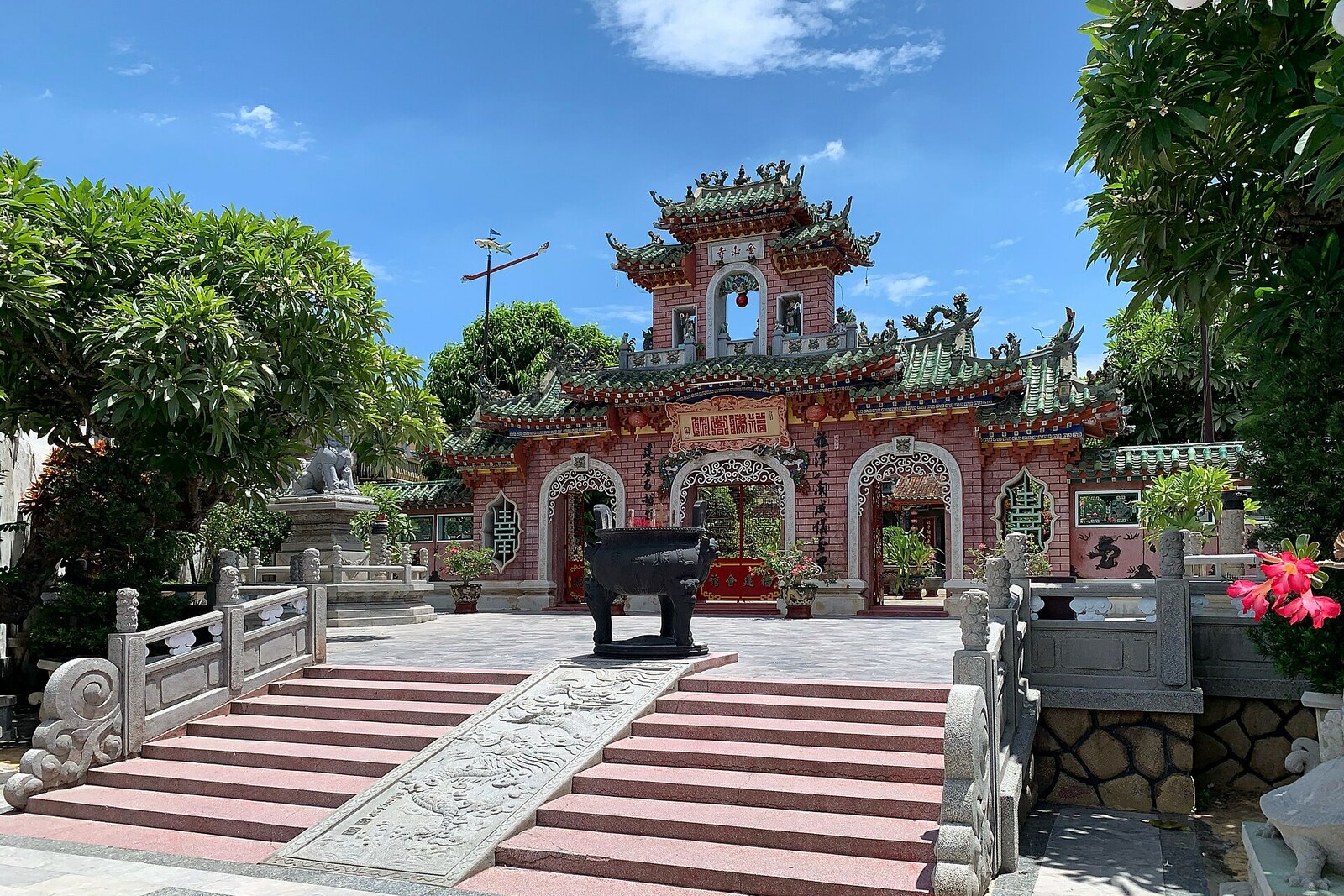
Look around first
What to notice
- Red model of a sailing vessel
- Mazu’s altar
- Stone stele
- Tiled roof
The story of the place
This hall was maintained by a community of Chinese merchants and settlers from Fujian. Under its tiled roof, they prayed, settled the affairs of people from their home region, received recent arrivals, and collected donations. Mazu’s altar recalls that for many community members, the sea route was both work and a path to a new home. By the lunar calendar, the hall is still prepared for her festival, and after the ritual the food is shared with guests.
Before the main altar stands a large red model of a sailing merchant vessel. For the people who created this complex, such ships were both the road to Hoi An and a working tool. Merchants from the southeastern coast of China sailed for months, carried goods between ports, and risked their cargo, earnings, and lives. They came from Fujian, a coastal province facing the sea trade routes.
A stone stele erected in seventeen fifty-seven tells of the shrine’s appearance here. It is a record made more than sixty years after the event, not a ship’s log. According to it, a trading vessel lifted a statue of Mazu from the water near Cam Nam. People carried it ashore and built a shrine for it out of bamboo and straw.
Mazu was considered the patroness of seafarers. Merchants believed that she guided vessels out of storms and helped them reach shore. The statue that was found therefore concerned the very risk on which their income depended. The legend of her miraculous help cannot be verified; something else is known for certain: people preserved the statue and built a temple for it.
Over more than sixty years, the straw roof had fallen into disrepair. In the spring of seventeen fifty-seven, the Fujian native-place association replaced it with tiles. Thi Chat Hoanh, a native of Jinjiang County near Quanzhou, erected the stele and separately recorded that the community undertook the construction to honor the goddess, not for profit. The merchants invested earnings from maritime trade in a permanent shrine and a place where they could gather with people from their own home region.
Such a native-place association was called a bang. In Hoi An, people from different regions of China formed separate associations, and their halls served for prayers, shared meetings, and assistance to recent arrivals. The Fujian Assembly Hall is named for the merchants and settlers who maintained it. Here they received people from their home region, collected donations, settled community affairs, and worshipped the patroness of their voyages.
This work continues. On the twenty-third day of the third month of the lunar calendar, board members prepare the hall for Mazu’s day, wash her statue, and dress it in clothing donated by believers. The head of the native-place association reads a memorial text, then a roasted pig presented as an offering is divided among people from the same home region and guests. Vietnamese families now come here as well; those who have fulfilled a vow return with offerings.
The model of the sailing merchant vessel still stands before Mazu’s altar. Inside is kept the stele of seventeen fifty-seven—a record of the vessel, the statue lifted from the water, and the straw roof that Fujian merchants replaced with tiles.
Useful on site
Indoor access is included with the combined ticket; confirm the hall’s exact hours on the day of your visit.
Checked: date not specified. Check the official source before visiting.Do not pass in front of someone who is worshipping, and keep the approach to the altar clear. Touch incense and offerings only when invited by the attendants.