 Guide On Map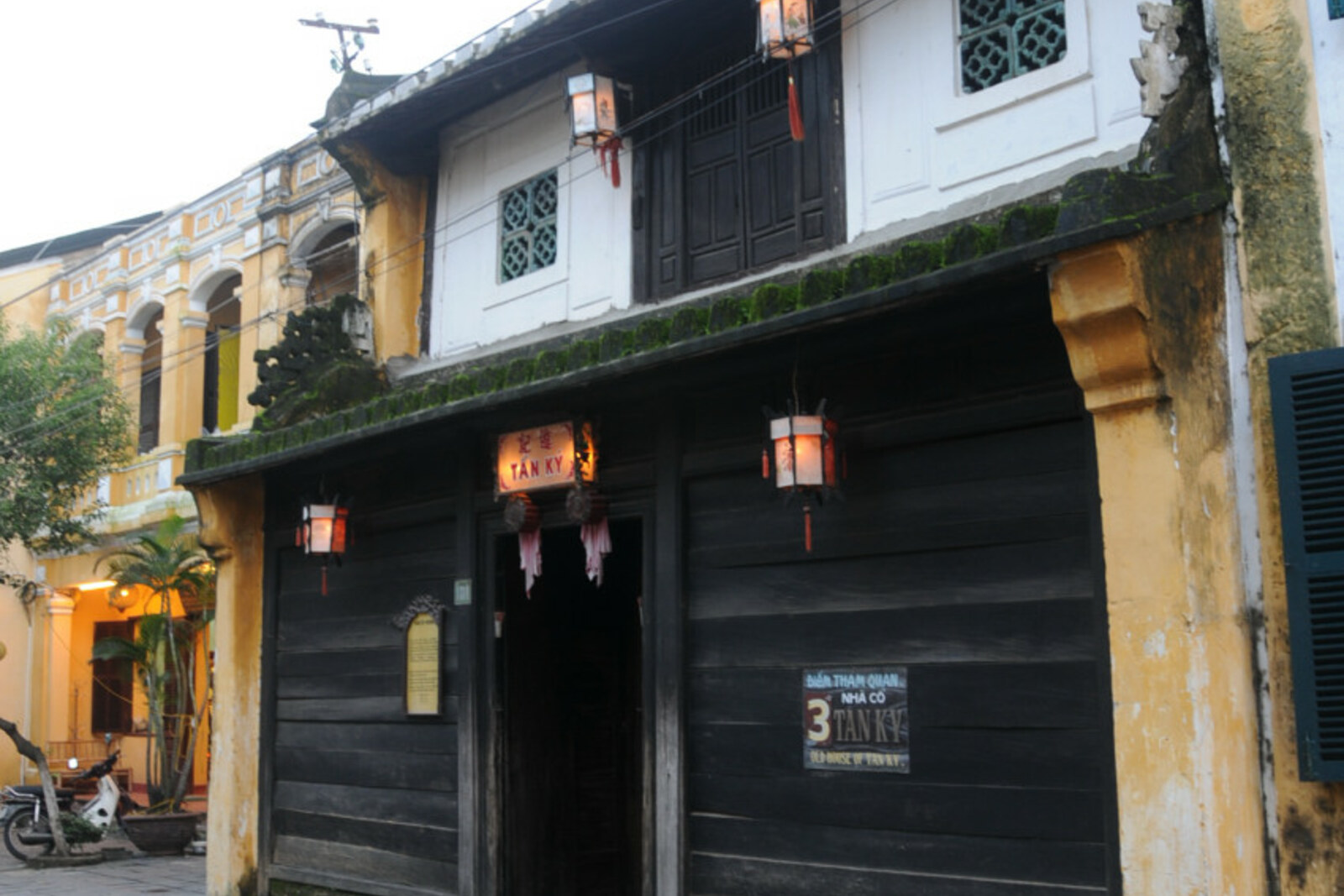
Look around first
What to notice
- Portrait of Thai Thi Lan
- Square hatches
- Hand-operated lifting mechanisms
- Old “Tan Ky” signs
The story of the place
Large consignments were negotiated in the front rooms of the merchant house, supplies were kept above, and visiting merchants stayed in some rooms; the family lived here as well. The square hatches and hand-operated lifts on the upper floor were used for cargo: bundles were lifted there directly from the boats. The water of the Hoai River once reached the house's back door, and vessels brought cinnamon, pepper, resin, agarwood, and timber here from the mountain regions. A portrait of Thai Thi Lan hangs in the main hall; she managed the entire enterprise for more than half a century.
The name Tan Ky appeared here as the sign of a trading house. In the early years of the nineteenth century, the future merchant Le Tan Ky came to Hoi An as a boy of about ten. His mother soon died, and the child was taken in by the family of an uncle who owned one of the city's largest shops. There he learned how to conduct trade, then built up his own capital and rebuilt this house for the family business. The name “Tan Ky” can be translated as “shop of prosperity”: the merchant wanted it to express hope for further growth.
When Le Tan Ky was about sixty years old, he handed the entire business over to his eldest daughter-in-law, Thai Thi Lan, and left Hoi An. Her husband died early. Thai Thi Lan remained at the head of the large enterprise that supported the family and ran it for more than fifty years. During that time, she lost her husband, son, and grandson, but continued buying goods, outfitting boats, and expanding the trade. Under her, the family owned about thirty ghebau—broad, engineless sailing vessels capable of carrying dozens of tons of cargo.
The boats traveled up the Thu Bon River and Vu Gia River into the mountain regions for cinnamon, pepper, agarwood, resin, and timber. The goods were dried and processed on family plots, then brought here. At that time, the back door opened directly onto a quay on the Hoai River: Bach Dang Street between the house and the water did not yet exist. Cargo was unloaded from the boats, lifted by hand through square hatches to the upper-floor storerooms, and deals were made in the front rooms facing the trading street of Nguyen Thai Hoc Street. Chinese, Filipino, and Malay merchants bought goods here wholesale. The family simultaneously lived in the house, stored supplies, received partners, and rented out some rooms to visiting merchants.
The river gradually silted up. Large vessels could no longer approach the back door, and the family shifted from wholesale supply to retail trade. The business declined for several more generations and ended with the fifth. The descendants kept the house in private ownership, established a family shrine here, and opened the ground floor to visitors.
A portrait of Thai Thi Lan hangs in the main hall. On the upper floor, the hand-operated lifting mechanisms and hatches remain, through which her people stored goods in the warehouse. Bach Dang Street now runs behind the house, and the old “Tan Ky” signs still hang inside—the name of the business that the widow managed for more than half a century.
Useful on site
Interior access with the combined ticket; the house's exact hours have not been officially compiled in the 2026 notice.
Checked: date not specified. Check the official source before visiting.There is little space inside, so let oncoming groups pass and do not lean on the old structures. View the exhibits and family belongings without touching them.