 Guide On Map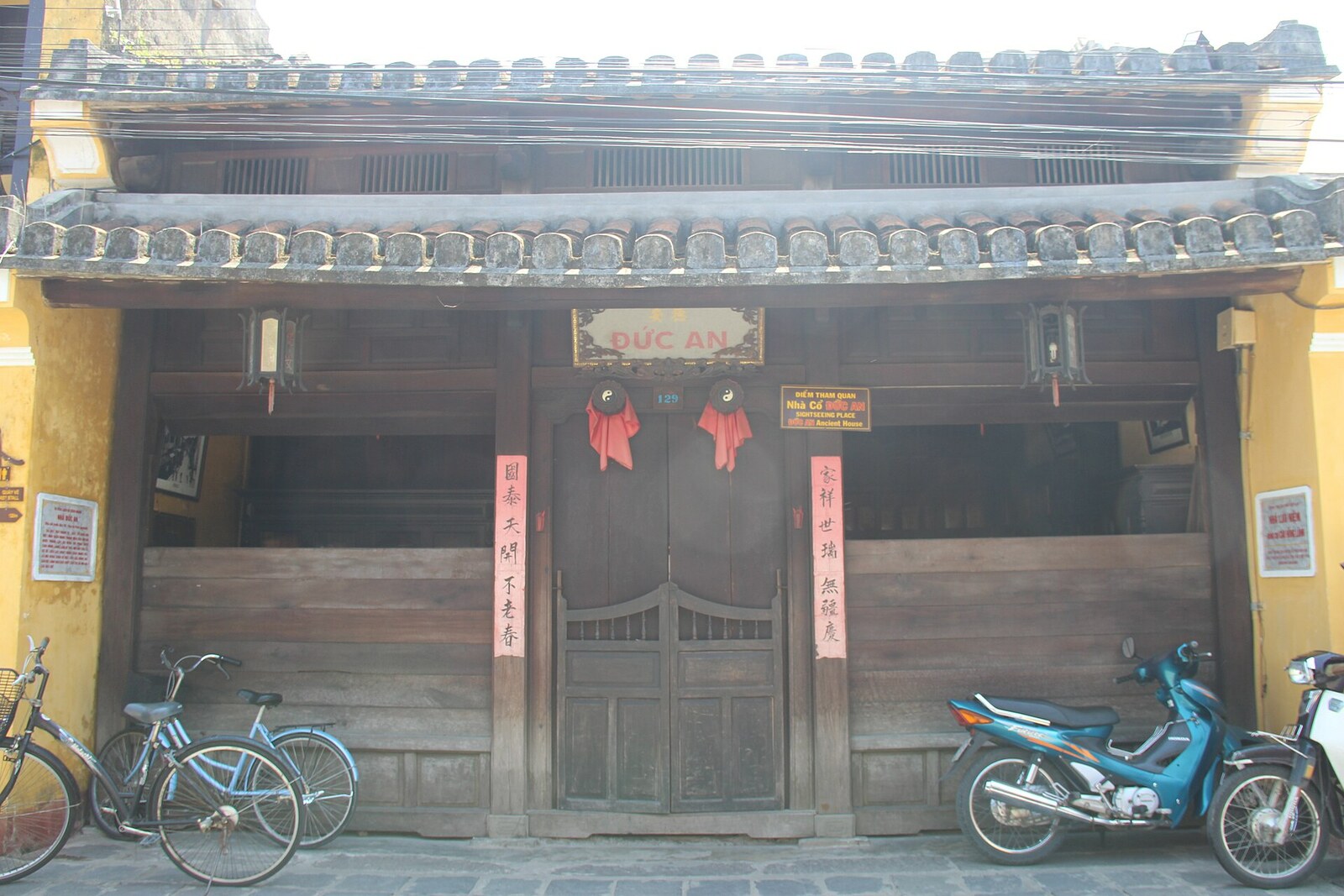
Look around first
What to notice
- Bookcases
- Pharmacy cabinets
- Inner courtyard
- Family altar
The story of the place
The bookcases and pharmacy cabinets at the entrance preserve the appearance of an old merchant house: behind the street façade, the rooms extend into the living area with a family altar and an inner courtyard. Here, the family trade eventually changed to the sale of Chinese medicines, while books and newspapers remained in the rooms. The middle part of the house now keeps the clothes, shoes, watch, and radio receiver of one of its residents, and the entire building is open as a memorial and a merchant house.
Duc An was not a person’s name. It was the name of the Phan family’s bookshop. The front part of this long house served as a commercial space; beyond it were the family’s rooms, the ancestral altar, and an inner courtyard. At the end of the nineteenth century, books in Chinese and writing supplies were sold here.
At the beginning of the twentieth century, the owners began accepting publications that could not be considered ordinary merchandise. Works on enlightenment and the restructuring of the country were distributed through the shop. They were bought by supporters of the movement to renew Vietnam: they hoped to use education and new knowledge to change colonial society.
In nineteen oh eight, anti-tax protests were suppressed in the central provinces. The family closed the book trade and began selling Chinese medicines. Pharmacy cabinets and boxes of herbs now provided their livelihood, but some books and newspapers remained in the house. In the mid-nineteen twenties, they were again passed on to young readers.
One of them was Phan Hai Tham, born here—the youngest member of the family, who decided to create an underground organization in Hoi An against the French colonial regime. In underground work, he was known as Phan Them; later, he took the name Cao Hong Lanh.
In October nineteen twenty-seven, the twenty-one-year-old Phan Them gathered two more like-minded people here. The three founded the Hoi An branch of the Vietnam Revolutionary Youth Association, and turned Duc An House into a headquarters and a repository for documents. The choice of address was explained by the family’s entire earlier life: the shop already connected the book trade, private rooms, and a circle of regular visitors.
The small group grew. In March nineteen twenty-nine, an agreement was reached in the house to unite the organizations of Hoi An and Da Nang into the provincial Quang Nam Association. After the local communist organization was created, meetings were scheduled here, leaflets were discussed, and messages were passed on.
In nineteen thirty-four, an informant identified Duc An House. French soldiers searched the rooms and found several documents in foreign languages. Phan Them was not at home, they could not detain him, and a colonial court sentenced him in absentia to fifteen years in prison. After the search, the underground activists stopped using this address. His elder brother Phan Nam remained living in the house and preserved the family property.
Now bookcases and pharmacy cabinets again stand in the front room. The middle part displays Cao Hong Lanh’s clothes, shoes, watch, and radio receiver. Duc An is open as an old merchant house and a memorial to the man who once hid documents behind a room in the family shop.
Useful on site
The route is designed for viewing the façade from the street; access to the house interior is not required.
Checked: date not specified. Check the official source before visiting.If the interior rooms are inaccessible, the stop can still be fully introduced from the façade. When entering, bear in mind that this is an intimate family house with narrow passages.