 Guide On Map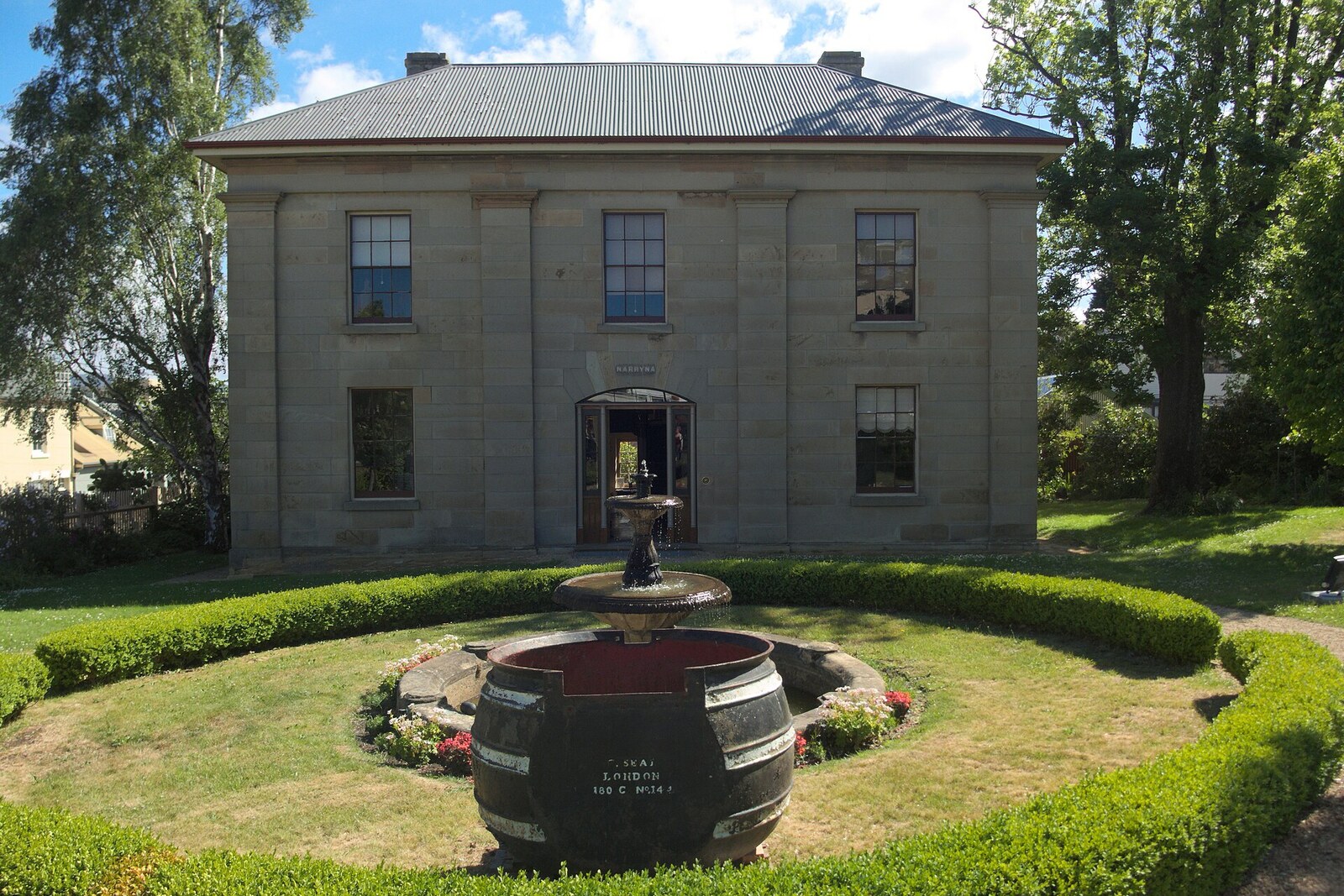
Look around first
What to notice
- Portrait of the vessel Sir John Rae Reid
- Family rooms
- Colonial household objects
- Seafaring objects
The story of the place
In the entrance hall hangs a portrait of a ship, and beyond it are the rooms of the former family home and a collection of objects from colonial Hobart. The house occupies the upper part of an elongated property that once descended from here to New Wharf: trading warehouses stood at the bottom, while the owner’s family lived at the top. Such a plot connected the unloading of ships, office business, and the way home within a single property. Later, objects of everyday life and seafaring were assembled here, and a museum opened that became Australia’s first museum of folk life; researchers have still not discovered why the name Narryna became attached to it.
Captain Andrew Haig built this house to settle here as a successful Hobart merchant. By the time Haig, his wife Elizabeth, and their seven children finally moved in, the house had already had to be mortgaged: the family lacked money for everyday expenses and servants’ wages.
Haig began as a sea captain. Under a license from the British East India Company, he traded between Calcutta and Canton—present-day Guangzhou: he carried opium to China and received tea, silk, porcelain, and lacquerware. In eighteen twenty-four, his ship needed repairs on its way to South America. Haig spent two weeks in Hobart, saw the busy harbor, and bought a narrow strip of land of about two acres—from Hampden Road to the water’s edge at the time.
Ten years later, this plot connected the two parts of his enterprise. At New Wharf, Haig built warehouses, already behind us on Salamanca Place. Here, at the upper end of the same land, he began building a family home. The merchant could receive cargo by the water, conduct business in the warehouses, and return home while scarcely leaving his own property.
But construction dragged on until October eighteen forty, and his affairs had begun to collapse earlier. The European downturn reached the British colonies. In eighteen thirty-nine, Haig’s uncle took from him the vessel Sir John Rae Reid, which brought the captain about five hundred pounds a year. At the same time, a heavy share of the Derwent Shipbuilding Company’s debts fell on Haig as its manager.
The family lived in the long-awaited house for a little over a year. By the end of eighteen forty-one, Haig could no longer pay the mortgage and moved his wife and children into a small house on Kelly Street. In January, he wrote that he did not have money even for bread and that eight people depended on him. In April eighteen forty-two, creditors put Narryna, the warehouses, and the rest of the property up for a forced sale.
Haig avoided formal bankruptcy, but he did not regain his former position. He took on work delivering coal and ballast to ships and inspecting vessels; sometimes the expenses of the work exceeded the earnings. Later he managed to obtain a post as a marine surveyor, and then as an immigration official. He remained in Hobart, but he never returned to this house.
The present rooms have not been preserved as the Haigs’ untouched home. Hobart residents assembled here objects connected with colonial everyday life, trade, and seafaring, and in nineteen fifty-seven opened Australia’s first museum of folk life. Haig himself called the building simply the New House in his diary; researchers have still not established the origin of the name Narryna, which became attached to it later.
In the museum entrance hall hangs a portrait of the Sir John Rae Reid, commissioned by Haig as evidence of his maritime and commercial success. The vessel, whose loss hastened his ruin, remained depicted in the painting inside the house sold for debts.
Useful on site
Tuesday–Saturday 10:00–16:00; closed Sunday and Monday. Scheduled winter closure: 8 August–1 September 2026.
Checked: date not specified. Check the official source before visiting.Admission depends on the museum’s opening hours; check special visits in advance, and if the doors are closed, listen to the story by the fence.