 Guide On Map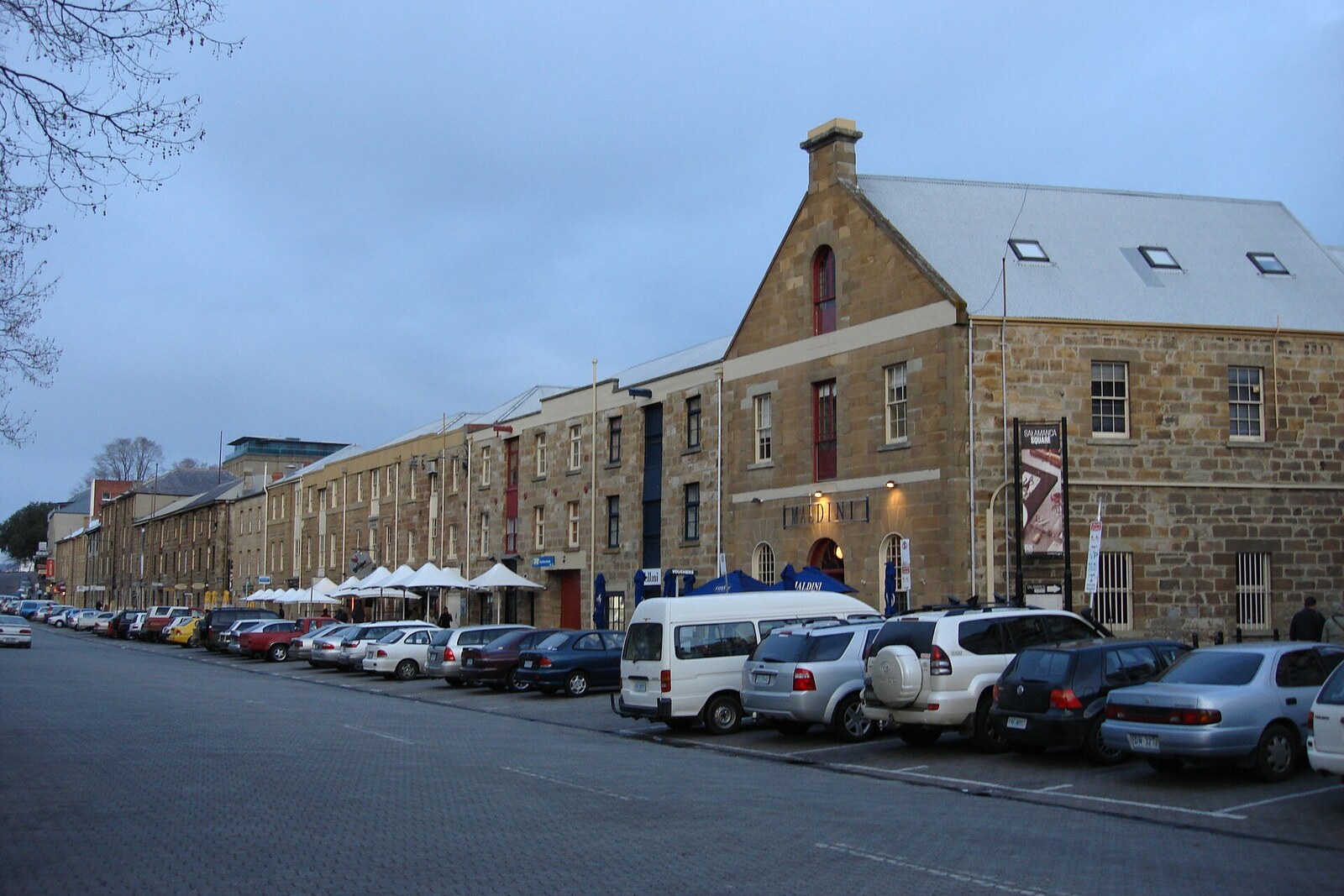
Look around first
What to notice
- Stone warehouse buildings
- The staircase in the former light well
- The open wall of the old quarry
- Peacock Theatre
The story of the place
The name Salamanca at this wharf came from a European war: colonial officials commemorated a British victory in Spain on the street. The street itself grew up beside a deep harbor prepared for unloading ships; convicts quarried sandstone for the warehouses standing by the water. The stone buildings still preserve the logic of the port today: goods could be carried from a ship straight under cover, while imported items and barrels of whale oil were stored inside. Later, when whaling faded, the same premises were used for apples and stone fruit.
In nineteen seventy-four, the Peacock Factory was closed and its seven stone buildings were put up for sale. Production of jams and preserves had already been declining for several years, and the premises were emptying out. Behind the commercial facades of what is now Salamanca Place lay dark factory floors, a boiler room, and a yard beneath an iron roof.
These buildings appeared beside New Wharf in the eighteen thirties and forties. The colonial administration created a deep harbor here, convicts quarried sandstone, and merchants built warehouses where cargo could be taken straight from a ship. Imported goods and barrels of whale oil were stored inside. When whaling declined, apple and stone-fruit processors moved into the premises.
The Spanish name refers neither to a merchant nor to a factory owner. Colonial officials named the street by the wharf in memory of the Battle of Salamanca. In eighteen twelve, the British commander Arthur Wellesley, the future Duke of Wellington, then seeking to drive the French army out of Spain, defeated French forces there and then occupied Madrid. For residents of distant Hobart, the names of British victories served as a link to the mother country.
After Peacock closed, Claudio Alcorso took on the warehouses. He was a textile industrialist and patron of the arts who sought a permanent public arts center for Hobart. He and his supporters created the Community and Art Centre Foundation and persuaded the state government to buy the vacant buildings.
In nineteen seventy-six, the government of Premier Bill Neilson bought the seven warehouses and transferred them to the foundation for ninety-nine years at a nominal rent. The condition was strict: the foundation itself had to repair and maintain the dilapidated buildings and find money for studios, exhibitions, and performances. Volunteers carried out factory rubbish, cleaned the premises, and painted the walls. At first, retail spaces on the ground floor generated income. The upper floors could not be leased until a fire-protection system had been installed; that was achieved only in nineteen eighty.
This created the arrangement that remains behind the facades: shops and cafes help pay for studios, galleries, rehearsal rooms, and performance spaces. The staircase in the former factory light well was built during that conversion. And the Peacock Theatre, built beside the open wall of an old quarry, was named after the company that made jams and juices here for half a century.
Useful on site
The street is open at all times; on Saturdays the market operates 08:30–15:00, and the roadway is closed 05:30–18:00.
Checked: date not specified. Check the official source before visiting.The street remains a lively public space; view the facades without blocking entrances or the flow of people.