 Guide On Map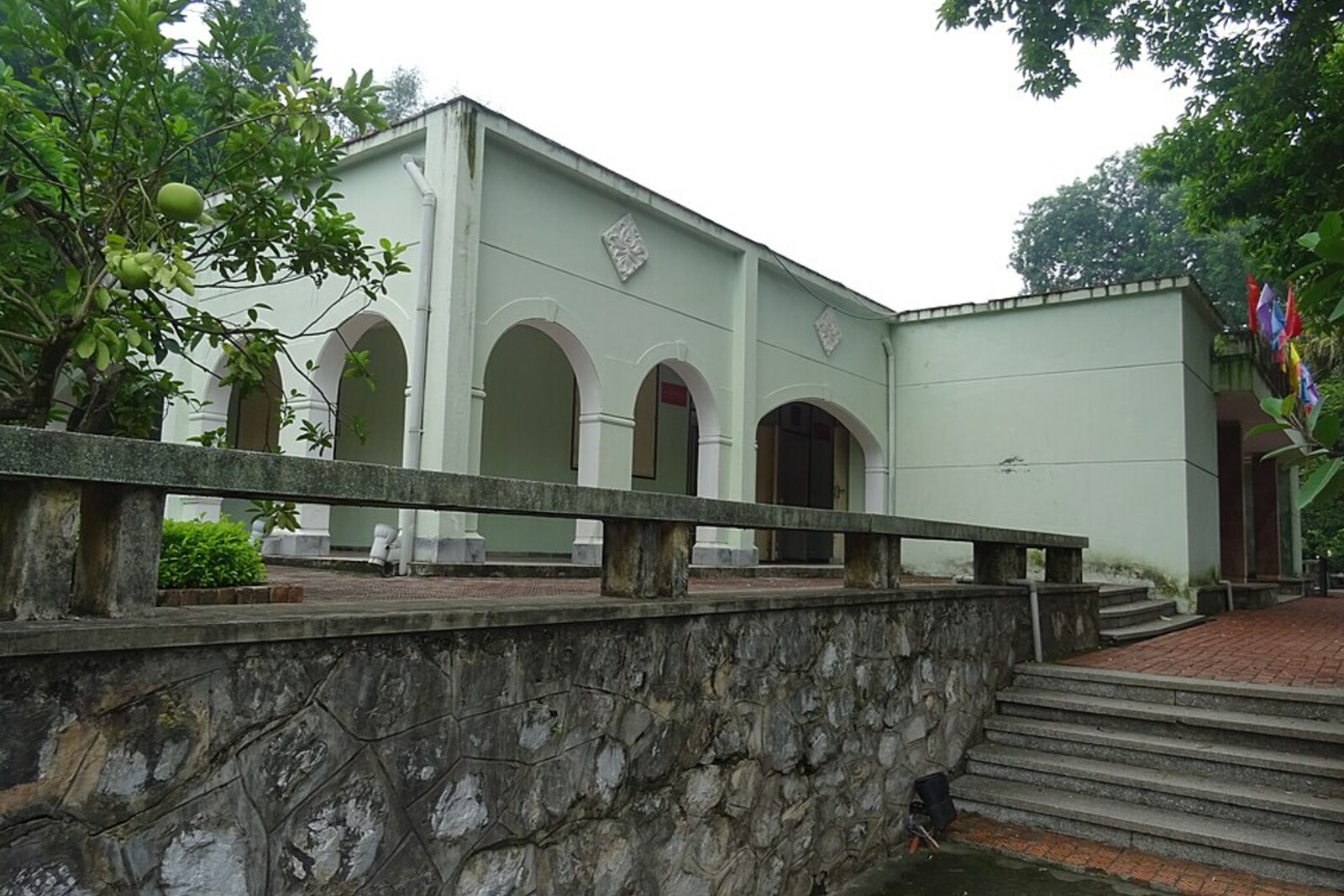
Look around first
What to notice
- Large table
- Hospital bed
- Clock at the head of the bed
- Wall calendar
The story of the place
House 67 stands beside Ho Chi Minh's Stilt House and contains one small room. Party leaders regularly gathered here at the large table to make wartime decisions. Now a hospital bed stands beside the table, while the clock at the head of the bed and the wall calendar have been left in their places.
In the spring of nineteen sixty-seven, American aircraft bombed Hanoi increasingly often. The Politburo—an inner circle of party leaders who made the main wartime decisions—ordered a protected room built for Ho Chi Minh, the president of North Vietnam. It was placed thirty meters from the wooden Ho Chi Minh's Stilt House where the president lived and connected to the nearby bomb shelter. The walls were poured in reinforced concrete more than sixty centimeters thick, and the ceiling was more than a meter thick. The number in the name indicates the year of construction.
They also tried to protect Ho Chi Minh from the stairs. He was seventy-seven, his health was weakening, and at every air-raid alarm he had to descend from Ho Chi Minh's Stilt House and make his way to the shelter. The new building made it possible to work near the entrance to the bunker.
But Ho Chi Minh refused to move in. According to the recollections of his guard, the president decided that it was safe to gather the leaders in the concrete room, while he himself should remain in the wooden house and endure the bombings just like the other residents. By this decision, his personal shelter became a meeting room: about once a week, the Politburo met here, and Ho Chi Minh took his place at the large table.
In August nineteen sixty-nine, the doctors had to reverse that decision. The president developed a fever and a severe cough; he could no longer climb the stairs. On August seventeenth, he was carried into House 67, and a few days later the room was equipped for treatment. A bed appeared by the table, and doctors and nurses from the military hospital kept round-the-clock watch nearby. The room built to protect against bombs became Ho Chi Minh's permanent home for the first time—for the final two weeks of his life.
On the morning of September second, he suffered a severe heart attack. At nine fifteen, his heart stopped. Doctors and guards took turns giving cardiac massage until Prime Minister Pham Van Dong, the president's associate, who was at the bedside, acknowledged that it was futile to continue. It was nine forty-seven.
Now the meeting table and the hospital bed remain in one room. The small clock at the head of the bed shows nine forty-seven, and the wall calendar shows September second, nineteen sixty-nine.
Useful on site
The citadel is open daily 08:00–17:00; access to individual rooms and the bunker may change at the administration's discretion.
Checked: July 1, 2026. Check the official source before visiting.Inside, do not hold the group up in the passageways, and observe photography restrictions; the bunker may be accessible separately from the building.