 Guide On Map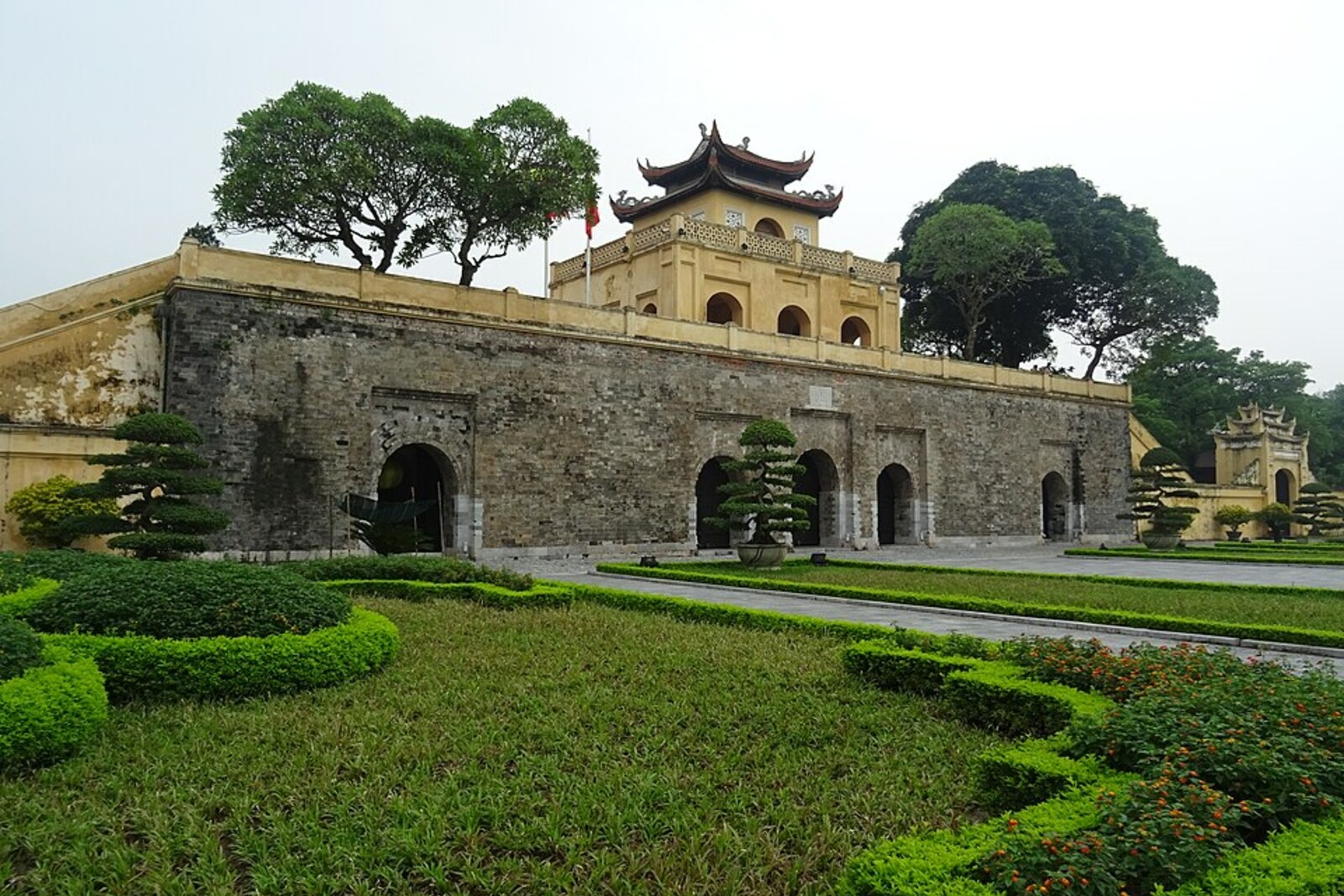
Look around first
What to notice
- Five Arches
- Central Passageway
- Upper Pavilion
- Open Lawn
The story of the place
Doan Mon Gate was called the main palace gate. It separated the enclosed Forbidden City, where the emperor, his family, and court institutions were located, from the rest of the complex. The present lower part of the gate has survived from the Le dynasty, although it was repaired later. The upper pavilion is visible above it, and a lawn now begins beyond the arches: Dan Chi Courtyard once extended here.
In the spring of fourteen ninety-six, forty-three scholars stood beyond Doan Mon Gate, in Dan Chi Courtyard. They had reached the final test for government service. Behind them was Thi Hoi, the capital examination, to which candidates came from across the country. Ahead lay Thi Dinh: the emperor personally set the topic and determined the places on the list.
The participants expected that the main thing had already been done. Under the previous rule, a person admitted to the palace examination was no longer eliminated—the emperor merely assigned a degree. For a scholar, this list meant an official post, a salary, and the standing of his family; failure sent him back to years of preparation without the highest degree.
Le Thanh Tong, emperor of Dai Viet, came to Dan Chi himself. He was selecting people who would be responsible for state affairs, and he asked them to write about how the country should be governed. The next day, the reviewed papers were handed to him. Then the candidates were led out into the courtyard one by one.
Here the emperor broke with the previous order. The chronicle reports that he inspected each person's appearance and found only thirty worthy. Thirteen who had already passed the capital selection did not receive the highest degree. The chroniclers did not explain why Le Thanh Tong made this decision; it cannot be claimed that unattractive appearance alone was the reason. The thirty names were then carved on the examination stele of fourteen ninety-six. The other thirteen are not on it.
Doan Mon Gate and Dan Chi Courtyard were part of a single arrangement. The gate's name means “main palace gate.” Beyond it began the Forbidden City—the enclosed part of the complex where the emperor, his family, and court institutions were located. Dan Chi Courtyard extended from the gate to Kinh Thien Palace and served as a place for audiences, inspections, and examinations.
As early as fourteen seventy-two, Le Thanh Tong ordered court officials to line up outside Doan Mon Gate on both sides of the entrance. After three drumbeats, they had to go inside and take their places strictly according to rank. The guard could detain those who broke formation after the third signal or arrived late. The five passageways in the gate fixed the same order in brick: the central arch was intended for the emperor, the others for people of lower rank.
The lower part of the present-day Doan Mon Gate was built under the Le dynasty and repaired later. Beyond the arches now lies an open lawn on the site of Dan Chi Courtyard. The examination places have disappeared; the central passageway, which the forty-three candidates could not use, remains.
Useful on site
The Citadel is open daily 08:00–17:00; standard adult admission is 100 000 dong.
Checked: July 1, 2026. Check the official source before visiting.First look at the gate as a whole, then walk through it: the change in perspective matters more than a detailed examination of each surface.