 Guide On Map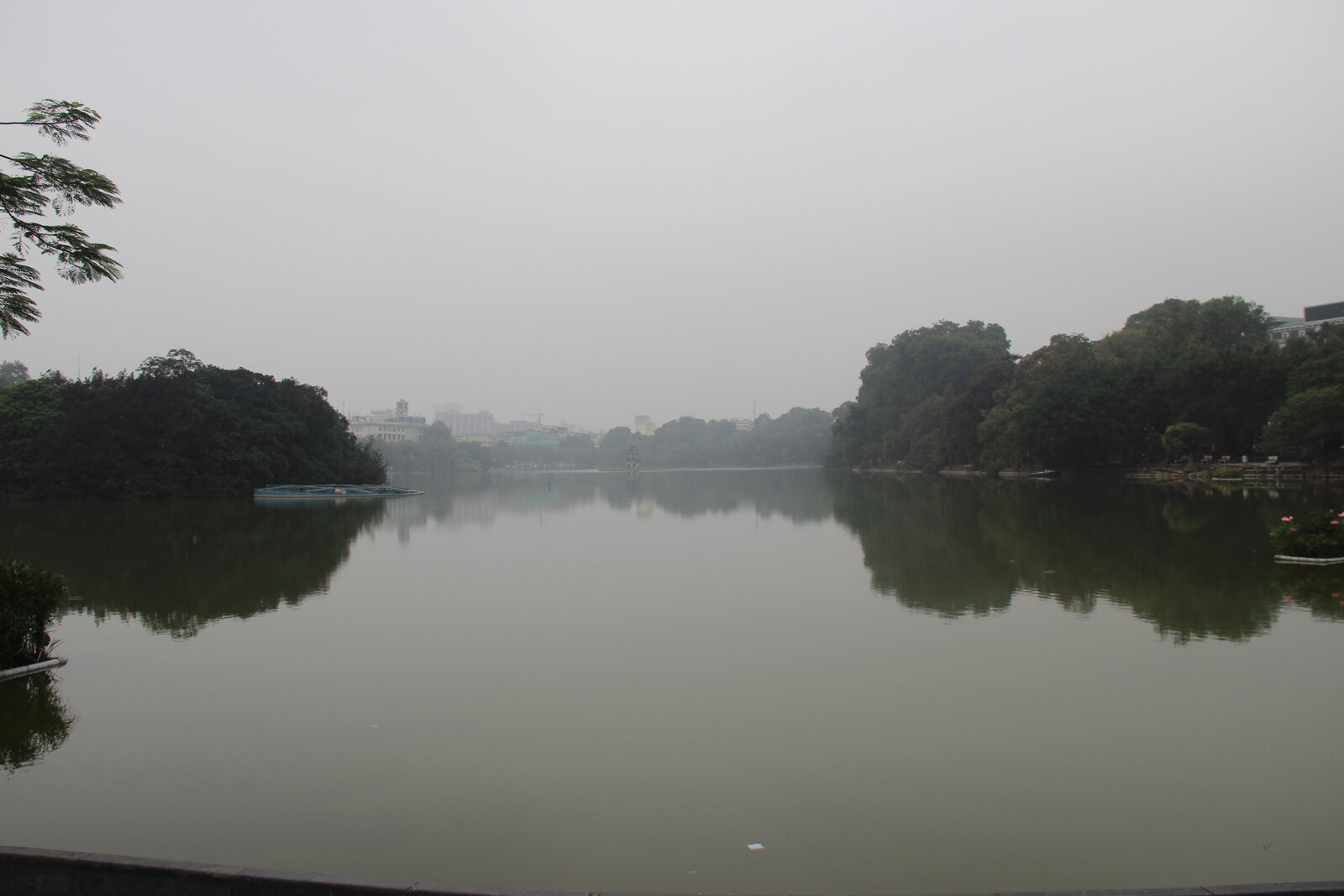
Look around first
What to notice
- The northern shore of the lake
- The beginning of Hang Dao Street
- Three white arches of house No. 4
The story of the place
The northern shore of Hoan Kiem Lake opens onto Dong Kinh Nghia Thuc Square. Five streets meet here, the lakeside promenade meets the commercial quarters, and during city holidays and pedestrian weekends the square fills with stages and spectators. Its long name belonged to a school that operated for less than a year.
“Dong Kinh” is one of Hanoi's old names. “Nghia Thuc” was the name given to a school opened for the common good and charging no fees. In the spring of nineteen oh seven, such a school was set up at the beginning of Hang Dao Street, a few dozen steps from here.
Its director, Luong Van Can, passed the Confucian examination but made his living from private lessons and his family's fabric trade. Together with his wife, he set aside the houses at number four and number ten for classes. Downstairs, silk and other fabrics from which the family earned its living lay among the shelves; upstairs, several hundred students could fit. Luong Van Can put his home, trade, and standing as a respected scholar at stake all at once.
During the day, about fifty boys and girls came here. In the evenings, from seven to nine, hundreds of adults gathered. Age and gender did not matter, and no payment was required for instruction. Instead of preparing students for the old examinations, teachers taught geography, natural sciences, history, economics, and quoc ngu—the modern Vietnamese writing system based on the Latin alphabet.
Quoc ngu itself was not forbidden: the colonial administration promoted it too, because literate people were easier to govern. The problem was the content of the lessons. Teachers explained how other countries were organized, why their own industry and trade were necessary, printed affordable books, and held public lectures. The quickly mastered writing system allowed readers to pass these texts on without a learned intermediary.
How they circulated is known from the interrogation record of the twenty-eight-year-old merchant Nguyen Ich Ty. Every Sunday he came to Hang Dao Street to listen to lectures, took books from the teachers, asked for unfamiliar matters to be explained, and gave sheets to a bookbinder. In November nineteen oh seven, he and three other people were arrested for copying and distributing texts described as seditious. An ordinary mercantile activity—taking a manuscript, ordering a copy, passing it to an acquaintance—turned a student in the evening courses into a defendant.
In December, the Resident Superior of Tonkin sent out a secret circular: the school had long been under surveillance, and its organizers were suspected of preparing an uprising against French rule. The school was closed. Luong Van Can and his associates tried to act through the same rules under which they had received permission: they submitted a petition to reopen it. In April nineteen oh eight, they were refused because some provisions of the curriculum were deemed inadmissible. The classes above the shops never resumed.
In nineteen forty-five, Hanoi mayor Tran Van Lai removed the square's former name—the name of the French general Negrier—and transferred the name of the closed school here. The classes themselves were never on the square: their addresses remain a little farther along Hang Dao Street. Three white arches survive on house number four, while at the northern shore of the lake stands the name of the free classes held above shelves of fabric.
Useful on site
Open public space by the lake; no ticket required. On weekends, pedestrian closures and event traffic arrangements may be in place around the lake.
Checked: June 29, 2026. Check the official source before visiting.Listen to the story away from the flow of pedestrians, and take care when approaching the wet edge of the embankment. You can save the temple island for a separate visit.