 Guide On Map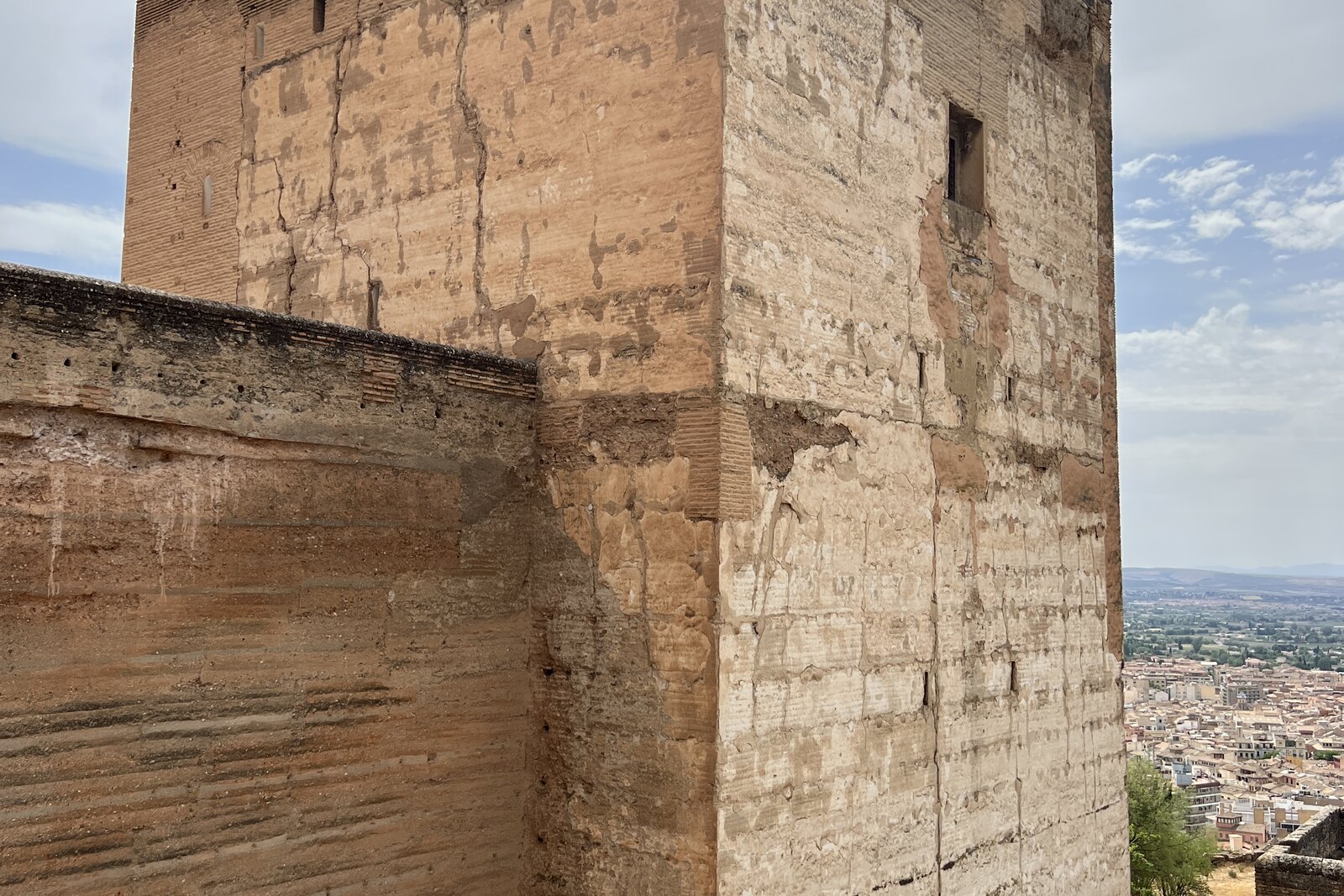
Look around first
What to notice
- The bell above the tower
- The terrace of Torre de la Vela
- The rooms beneath the terrace
- The Granada Vega
The story of the place
At the western end of the Alcazaba rises a tall tower, from whose terrace the city and the Granada Vega open out below. In the thirteenth century, Muhammad I incorporated it into the military citadel, where guards lived, supplies were kept, and a bathhouse, an oven, and a water reservoir were installed. Sentries watched the roads and fields from here, and a dungeon lay below. Originally, the tower was called the Great.
After the conquest of Granada, Ferdinand of Aragon and Isabella of Castile ordered a bell to be installed on this tower. It required a permanent bell ringer: signals had to be given day and night, and it was impossible to descend through the entire fortress after every strike. The military governors assigned the bell ringer and his family an entire third floor of the tower.
This post was usually entrusted to the so-called disabled knights—soldiers who had received severe wounds in war. They had already paid for their service with their own bodies; a state apartment and a post by the bell allowed them to remain on military pay. The bell ringer lived directly beneath the terrace and, by the governor's order, rang out the start of the day, the nighttime curfew, an alarm in case of fire or rebellion, and mourning for a deceased monarch.
But the regular ringing was most important for the surrounding area: by it, the farmers of the Granada Vega took turns at the irrigation channels. Water there was distributed in rotation. One owner's hours ended, the next owner's began, and the shared signal came from the highest tower of the Alhambra. It was chosen because of its position: the western edge of the Alcazaba is open toward the city and the plain, so the ringing reached the places where water was divided by it.
Before the bell, the tower was called the Great. In the thirteenth century, Muhammad I, founder of the Nasrid dynasty, ordered it built when he moved his residence to the Alhambra hill. The Alcazaba was a military citadel: it contained quarters for the sultan's guards, storehouses, an oven, a bathhouse, and a cistern. From the tower, sentries watched the roads and fields; the lower chamber held a dungeon. After fourteen ninety-two, the new owners preserved the citadel's military purpose, but added bell signals to visual observation. The Vela Bell gave the tower its present name—Torre de la Vela.
The last resident of the service apartment was Encarnación “La Velera”, the widow of a military bell ringer. After her husband's death, she continued to live on the third floor until the middle of the twentieth century. When the management of the Alhambra passed from the military to the monument's custodians, Encarnación left the tower, and the apartment ceased to be a dwelling.
The bell above it is not the one installed after the conquest, either. The present one was cast in seventeen seventy-three and moved to the center of the western side of the terrace in eighteen forty. Now it is heard only on special days. Beneath the bell remain the rooms where wounded soldiers lived in return for their service, and above them hangs the very device by which the farmers below received their turn for water.
Useful on site
Part of the general daytime visit; access depends on ticket type, season, and posted signs.
Checked: June 28, 2026. Check the official source before visiting.Climb to the accessible levels only if the stairs are comfortable for you; the meaning of this stop can also be understood from below. On open platforms, stay away from the edges.