 Guide On Map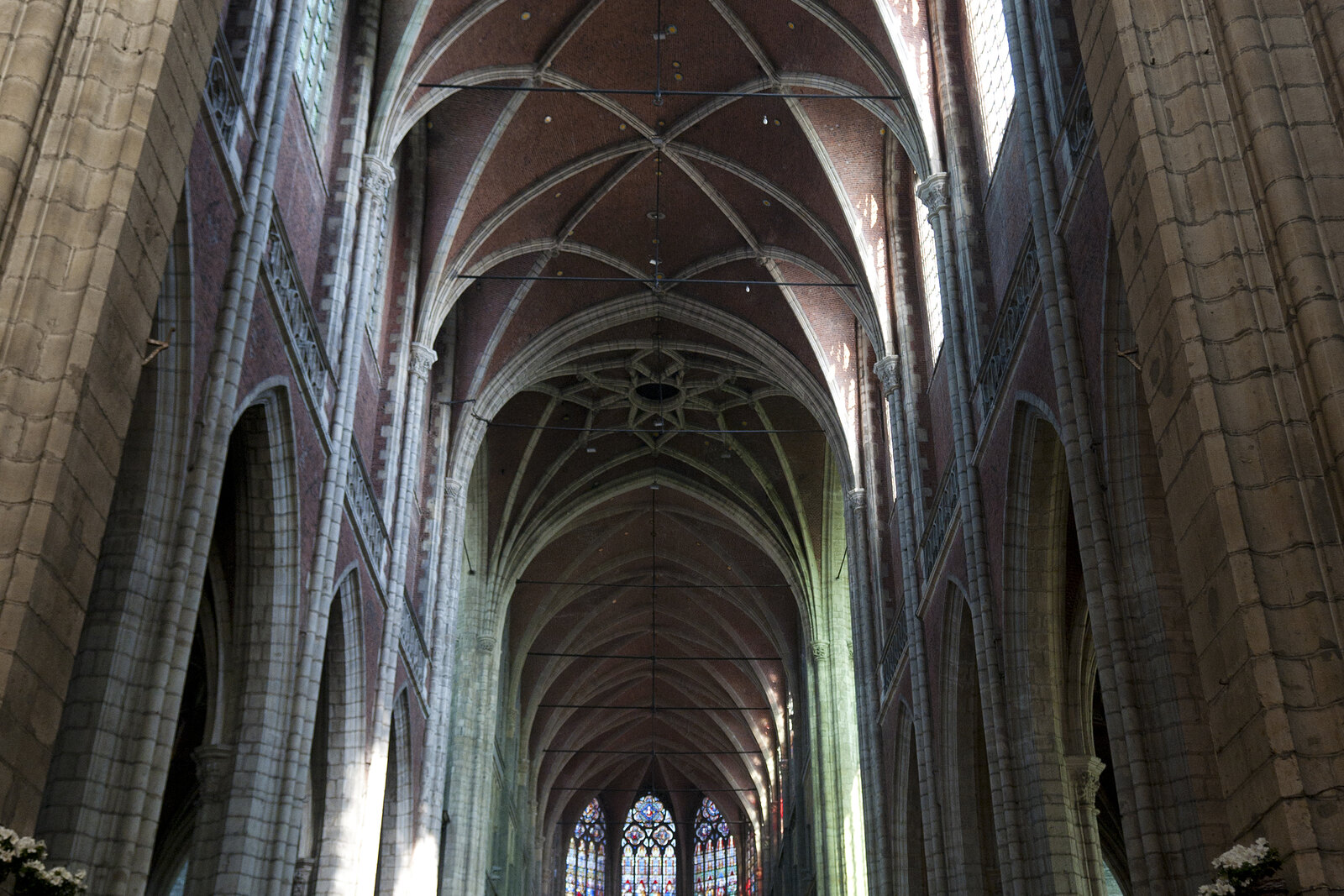
Look around first
What to notice
- Vijd Chapel
- Ghent Altarpiece
- Outer panels with the couple
- Figure of John the Baptist
The story of the place
St Bavo's Cathedral lives in several layers at once: the bishop's chair is still here, and the chapter of canons still serves here, although the church began as the Church of St John the Baptist. The canons brought Bavo's name from the monastery at the confluence of the Lys and the Scheldt after losing their home when it was destroyed. A ninth-century Gospel book transferred from there lies in the crypt, while on the closed panels of the Ghent Altarpiece, the figure of John the Baptist recalls the church's former name.
In the fourteen twenties, Joos Vijd and Elisabeth Borluut paid for a family chapel in the Church of St John the Baptist that stood here and commissioned for it an enormous multi-panel altarpiece. Joos was a churchwarden and a member of the city government. After his father was stripped of his office for fraud, he restored the family fortune through the peat trade. Elisabeth belonged to the old Ghent Borluut family. The couple had no children, and after their deaths the Vijd line was to die out.
The chapel addressed this problem quite literally. Joos and Elisabeth established a daily mass here for their souls and for deceased relatives. They left funds for the priests so that the services would continue after the patrons' deaths. The altarpiece was to stand above the altar before which their names were spoken every day.
Hubert van Eyck began the work but died without completing it. An inscription on the frame says that his younger brother Jan completed the commission at Joos Vijd's request. On May sixth, fourteen thirty-two, the polyptych was installed in the family chapel. On the outer panels, Jan painted the couple kneeling: Joos has visible wrinkles, uneven skin, and sparse hair; Elisabeth has heavy eyelids and tense lips. The artist did not improve the faces of the people who had paid him for the work.
Joos died seven years after the altarpiece was installed, and Elisabeth another four years later. The masses they had established were celebrated until seventeen ninety-seven, when the French administration abolished the fund. The family did indeed end, but the couple's names remained attached to the chapel, and their faces remained on the panels of the Ghent Altarpiece.
The altarpiece itself also preserves this church's earlier name. John the Baptist is depicted on the closed panels, and at the center of the opened polyptych stands the Lamb, a Gospel image of Christ linked to John's words. When the van Eycks worked here, Bavo was not yet part of the church's name.
The Dutch name Sint-Baafskathedraal means St Bavo's Cathedral. According to a medieval life, Bavo was a wealthy Frankish landowner who, after his wife's death, gave his property to the poor, became a follower of the preacher Amandus, and withdrew from his former life. He was buried in a monastery at the confluence of the Lys and the Scheldt. Bavo's veneration grew, and the monastery received his name.
In fifteen thirty-six, Charles V turned the monks of this abbey into canons, clergy who made up a cathedral chapter. Four years later, by the same sentence with which the emperor punished Ghent for its rebellion, he ordered most of the abbey demolished and military barracks built in its place. The canons lost their monastery and moved their chapter here, to the Church of St John the Baptist. Bavo's name and the monastery's relics moved here with them. Among the transferred items was a ninth-century Gospel book; it is still kept in the crypt.
In fifteen fifty-nine, the Diocese of Ghent was established, and the former Church of St John became St Bavo's Cathedral. The bishop's chair is now here, and the chapter of canons serves here. In the crypt lies the book from the destroyed abbey, and on the panels of the Ghent Altarpiece, John the Baptist still stands beside Joos Vijd and Elisabeth Borluut.
Useful on site
See the official practical page for opening hours and tickets; for the Ghent Altarpiece, 10:15 and 17:15 matter as the opening and closing times
Checked: June 27, 2026. Check the official source before visiting.The cathedral remains an active church, and viewing of the Ghent Altarpiece is organized separately; keep quiet and check the visiting conditions in advance.