 Guide On Map
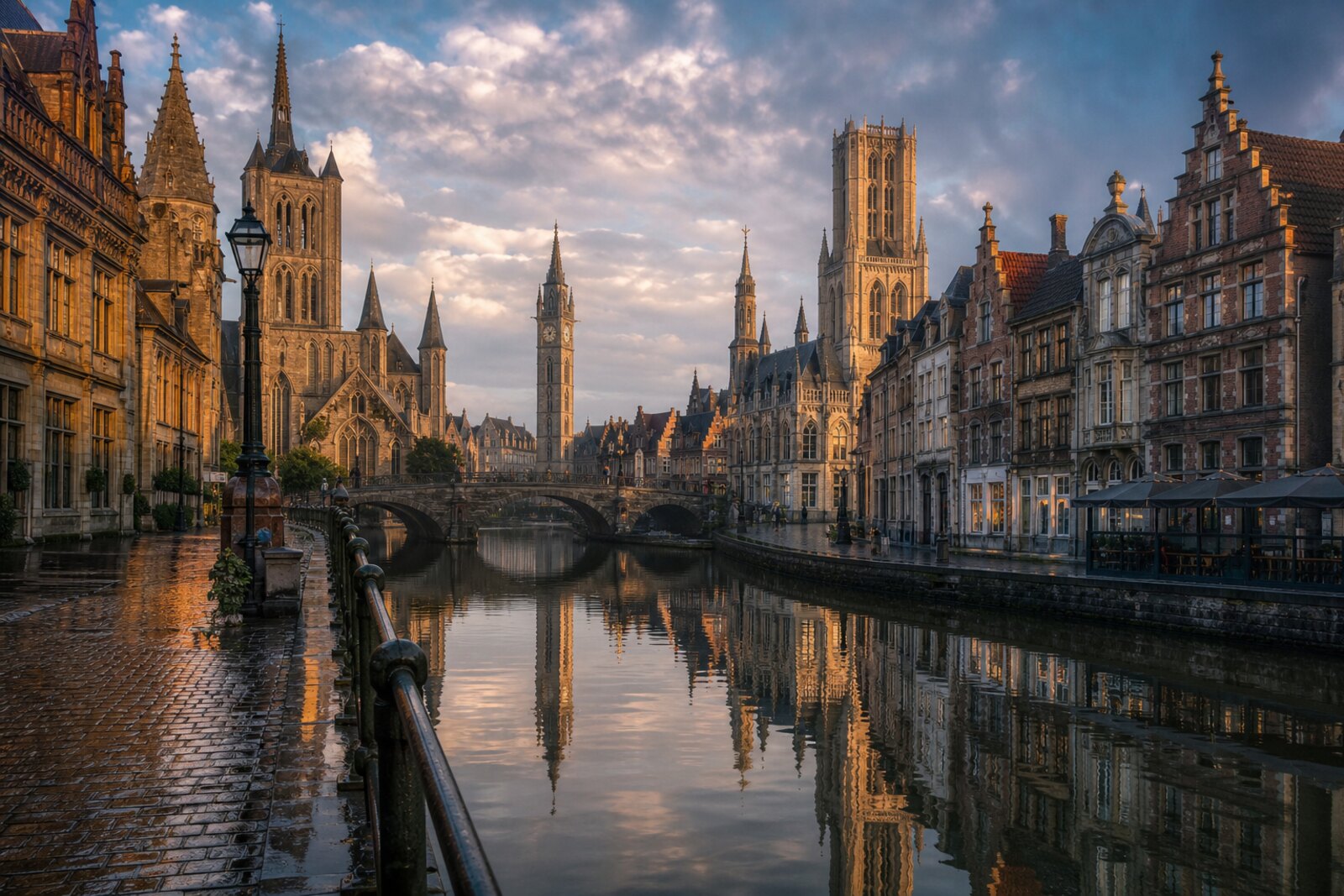
Ghent: River, Market, and Three Towers
From St Michael's Bridge, through the quays and Korenmarkt, to St Bavo's Cathedral
Guide On Map on your phone
Open the walk like a regular app
It takes about 10 seconds to install. No app store needed.
The whole path
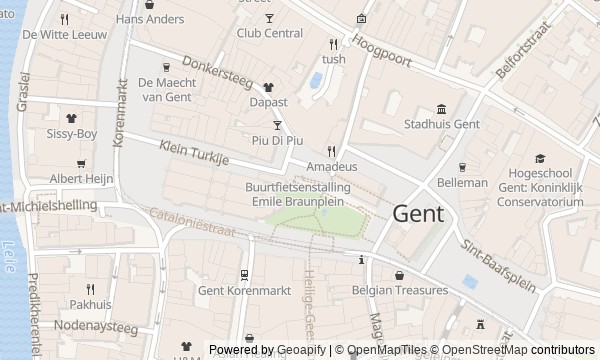
Route map
About the walk
The walk begins on a bridge above the Lys, where both quays and the city's three towers come together in one view. Then you will head down to Graslei and walk along what was once a grain harbor. Across the river, a facade awaits, built by people who were left with the less profitable work. From the river, the route leads to Korenmarkt, St Nicholas' Church, the Belfry of Ghent, and St Bavo's Cathedral. This story is not held together by a list of styles, but by decisions, deals, and punishments. You will spot two ships above a doorway, a bell by a tower, and the faces of a husband and wife on the panels of an altarpiece. Why did city documents require 3 keys? What did a carrier gain along with his own hall—and what was he denied? By the end of the walk, you will read central Ghent through the signs of who was allowed to move cargo onward, call citizens together, and leave behind a name.
Why this order
From St Michael's Bridge, you can see both banks of the Lys and all 3 towers at once, so first you will make sense of the panorama, then descend to its riverbound foundation. On Graslei, the Guildhall of the Free Skippers reveals the profitable side of transshipment; after it, cross to Korenlei, because directly opposite stands the hall of their less privileged rivals. From there, the route returns across the bridge to Korenmarkt: following the cargo, you move from transport to the city's rules for selling grain and to the church of its merchants. Next comes the middle tower—the Belfry of Ghent—where watchkeeping and bells moved from the church, and where the city kept not goods but its rights. One final crossing of the square brings you to the cathedral: the punishment that stripped Ghent of its charters also explains why the name of Bavo appears here, while the final chapel shifts the story from civic rights to one private effort not to disappear.
Those who want to understand medieval Ghent through trade and civic rights Those interested in the human decisions behind famous facades Those who enjoy compact routes with a dense historical story
Those expecting an overview of every major sight in Ghent Those looking for a walk only about styles and architectural dates Those who prefer a light story without conflict and inequality
Before you go
You can follow the entire route outdoors without preparation, but plan visits to the Belfry of Ghent and the Ghent Altarpiece exhibition separately: they have their own access rules and ticketing arrangements. Before setting out, check the official information for the interiors of St Nicholas' Church and St Bavo's Cathedral, especially on days with services and events. Bring headphones: the bridge, quays, and Korenmarkt can be noisy. Sturdy shoes will help by the water and on the old paving; in rain, the stone can be slippery. Speak quietly in the churches, and do not expect every area to be open to visitors.
When to go
Allow about 2 hours for the outdoor route. If you climb the Belfry of Ghent and see the Ghent Altarpiece, you will need at least 2.5 hours, and more if there are queues. Morning usually makes it easier to take in the facades; closer to dusk, the reflections on the Lys and the silhouettes of the towers are especially striking.
Backup plan
If the weather turns, spend less time on the open quays: take in the overall view from the bridge, note the key details on Graslei and Korenlei, then move on to the towers. If interiors are closed, the route still holds together—St Nicholas' Church, the Belfry of Ghent, the Cloth Hall, and the cathedral are expressive enough from outside, and the audio explains their roles without requiring entry. If only 1 paid site is possible, choose between climbing the Belfry of Ghent for the civic view and the altarpiece for the artistic finale. If time is short, do not change the order of the stops: it is better to skip an interior than to lose the progression from river trade to civic and church power.
Route conditions
Surface. Paved — 1.1 km
Facilities. Toilets — 2
Elevation. Ascent — 9 m; descent — 4 m
OpenStreetMap extract of June 18, 2026: database data, not a check on the ground. Data © OpenStreetMap contributors, ODbL licence
Walk plan
Open in maps ↗- 1
St Michael's Bridge
The high arch provides a shared vantage point and raises the route's first question: who had to give way on the old crossing. - 2
Graslei
One façade shows how an established right over someone else’s cargo became a steady income. - 3
Korenlei
The guildhall will make it possible to see the difference between corporate dignity and real equality at work. - 4
Korenmarkt and St Nicholas' Church
The square and church will connect the compulsory sale of grain with the people who paid for the church beside the place of trade. - 5
Belfry of Ghent and Cloth Hall
The tower chest and the removed bell show how a city's rights could be kept in documents—and taken away by a single verdict. - 6
St Bavo's Cathedral
The family chapel will conclude the route with the story of patrons who provided for commemoration after their deaths.
Route features
Everything you need stays in the browser
Progress, saves and your trip plan are stored on this device.
Add Guide On Map to your home screen so the walk opens outside the browser.
How we handle sources, maps and corrections: our editorial standards