 Guide On Map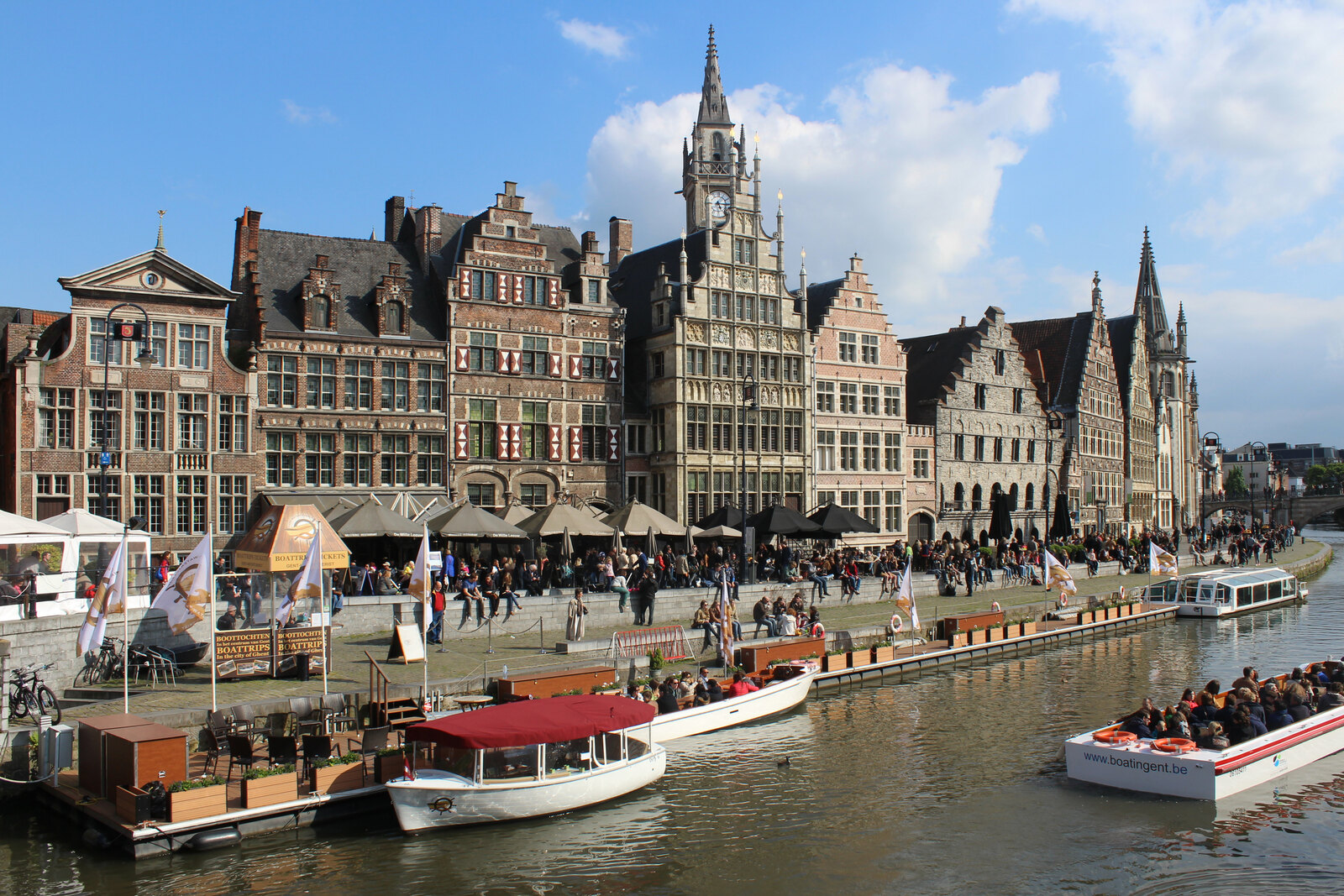
Look around first
What to notice
- Guildhall of the Free Skippers
- Stone ship above the entrance
- Figures raising an anchor
- Date above the door
The story of the place
The name Graslei—“Grass Quay”—became established only in the last quarter of the eighteenth century: grass and hay were traded by the Grasbrug, the Grass Bridge. Before that, both banks of the river were called Korenlei, Grain Quay, or Tussenbruggen—“Between the Bridges.”
For a grain merchant arriving here, city regulations took away the right to continue his journey at once. Under the grain warehouse law, at least a quarter of the cargo had to be unloaded and offered first on the local market. Before potatoes became widely available, bread and porridge formed the basis of the diet; in the fourteenth century, Ghent had to feed more than sixty thousand inhabitants. The merchant lost time and the freedom to dispose of part of his goods, but the townspeople retained a reserve of grain.
On the quay, the work began for people whose offices can now be read in the names of the façades. Porters carried the sacks into the stone warehouse, Spijker. An appointed weigher checked the volume of the goods; the House of the Grain Weighers still stands nearby. But the most profitable stage went to the free skippers. This was the name for members of a Ghent corporation permitted to carry goods on the Lys, the Scheldt, and the Lieve Canal at their own expense. Goods passing through Ghent were transferred from a foreign vessel to their boat. The visiting skipper lost payment for the next stretch of the journey, while the Ghent skipper received guaranteed freight.
The skippers earned this privilege through a service to Philip the Good, Duke of Burgundy and ruler of Flanders, who was seeking to subdue the rebellious urban craftsmen. The corporation helped suppress the uprising, and in fourteen thirty-six the duke confirmed its special rights on the three waterways in writing. After that, every foreign cargo transferred here to a Ghent vessel brought income to the corporation’s members.
A century later, they had enough money for their own house at the very point of transfer. In fifteen thirty, Pauwel van de Velde, dean of the free skippers, bought an old millers’ house at Graslei fourteen and commissioned the master Christoffel van den Berghe to replace its wooden façade with a stone one. The dean wanted the building to display the corporation’s standing. The work was completed within a year: the date was carved above the door, a ship was placed above the entrance, and figures raising an anchor stood on either side.
Now this is the Guildhall of the Free Skippers: inside is the organization that manages the present-day seaport. Cargo is no longer transferred here from a foreign vessel to a Ghent one, but above the door of the free skippers, the ship that brought them payment for continuing someone else’s journey is still carved.
Useful on site
Open twenty-four hours
Checked: June 27, 2026. Check the official source before visiting.View the upper floors from the opposite bank or by stepping back from the façades; there is no need to enter the buildings.