 Guide On Map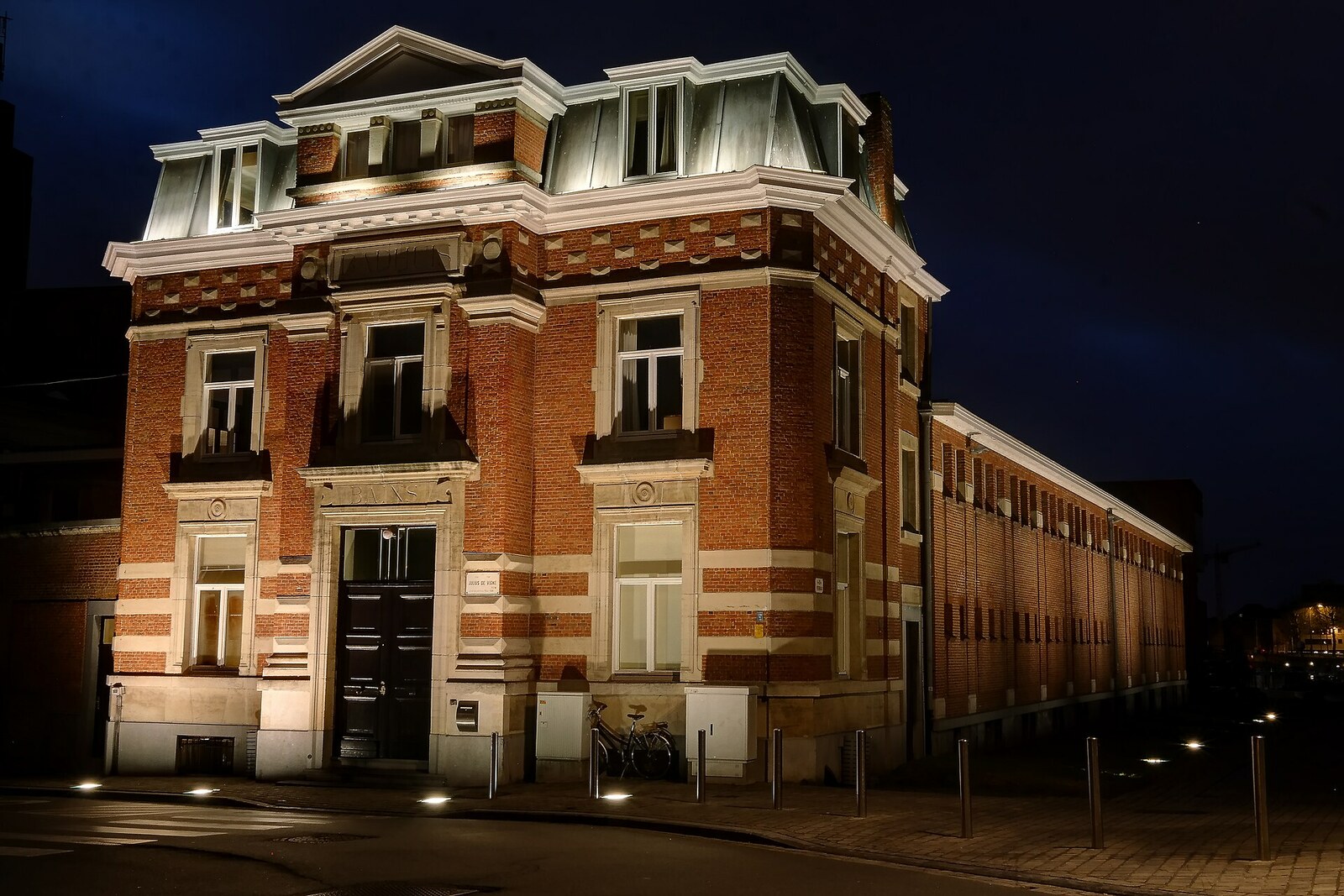
Look around first
What to notice
- Old facade
- French and Dutch inscriptions reading “baths”
- Art Deco interior
- Pool basin
The story of the place
The old facade has retained French and Dutch inscriptions reading “baths.” Behind it is an indoor pool, and below, separate baths and showers still operate for people who do not have a suitable bathroom at home. The building originally combined a swimming pool, a washhouse, and paid baths; low prices and discounted Sunday tickets made them part of working-class daily life in the neighboring district. Warm water arrived through underground pipes from the neighboring factory, and today's interior around the pool basin appeared during the renovation after which the swimming pool became a year-round sports facility.
On the first of August, eighteen eighty-six, employees of the new swimming pool had to close the doors as early as four o'clock: visitors had taken all eight hundred eighty-nine bathing suits intended for rental.
Such demand was explained by life in the neighboring working-class district. Many residents earned their living in textile mills, but their homes had neither running water nor a bathtub. They went swimming in the Lys, the Scheldt, and the harbor docks—sometimes in prohibited places, where water quality was considered unacceptable and drownings occurred. The chance to wash in warm water also depended on what a person could bring home themselves.
The Joint-Stock Company of Public Baths and Washhouses sought the right to build and operate a paid facility here. The city signed an agreement with the company, and architect Edmond De Vigne designed a building with an indoor pool, a washhouse, and separate baths in the basement. Prices were kept low, subscriptions were sold, and workers were entitled to a discounted ticket on Sundays. A separate morning was set aside for pupils from city schools. On one Sunday, the ticket office sold more than a thousand tickets to the public baths.
The site was chosen near the water and Ferdinand Lousbergs's factory. Its owners agreed to supply warm, clean water free of charge through underground pipes. The water filled the pool, was changed once a month, and was discharged without treatment into the nearby De Reep. Cleanliness inside the bathhouse was still paid for by polluting that same river outside.
Under the agreement, the facility was to pass to the city after forty-four years. It became municipal earlier than planned and retained both of its original functions: people learned to swim here and came here to wash. The building became a year-round sports pool only after the renovation of nineteen thirty-two; that was when today's Art Deco interior appeared around the pool basin.
The swimming pool inherited its name from the former Van Eyckplein. The square was named after the brothers Hubert and Jan van Eyck, creators of the famous Ghent Altarpiece. On the old facade, the same word—“baths”—is still written in French and Dutch. Separate baths and showers still operate beneath the pool for people who do not have a suitable bathroom at home.
Useful on site
Operating swimming pool and bathhouse; the schedule changes with the seasons and school vacations, and the exterior facade is accessible without a ticket.
Checked: June 30, 2026. Check the official source before visiting.The operating swimming pool is not a freely accessible museum: whether it is possible to enter or see the historic rooms must be checked separately. Looking from the street is enough for this account.