 Guide On Map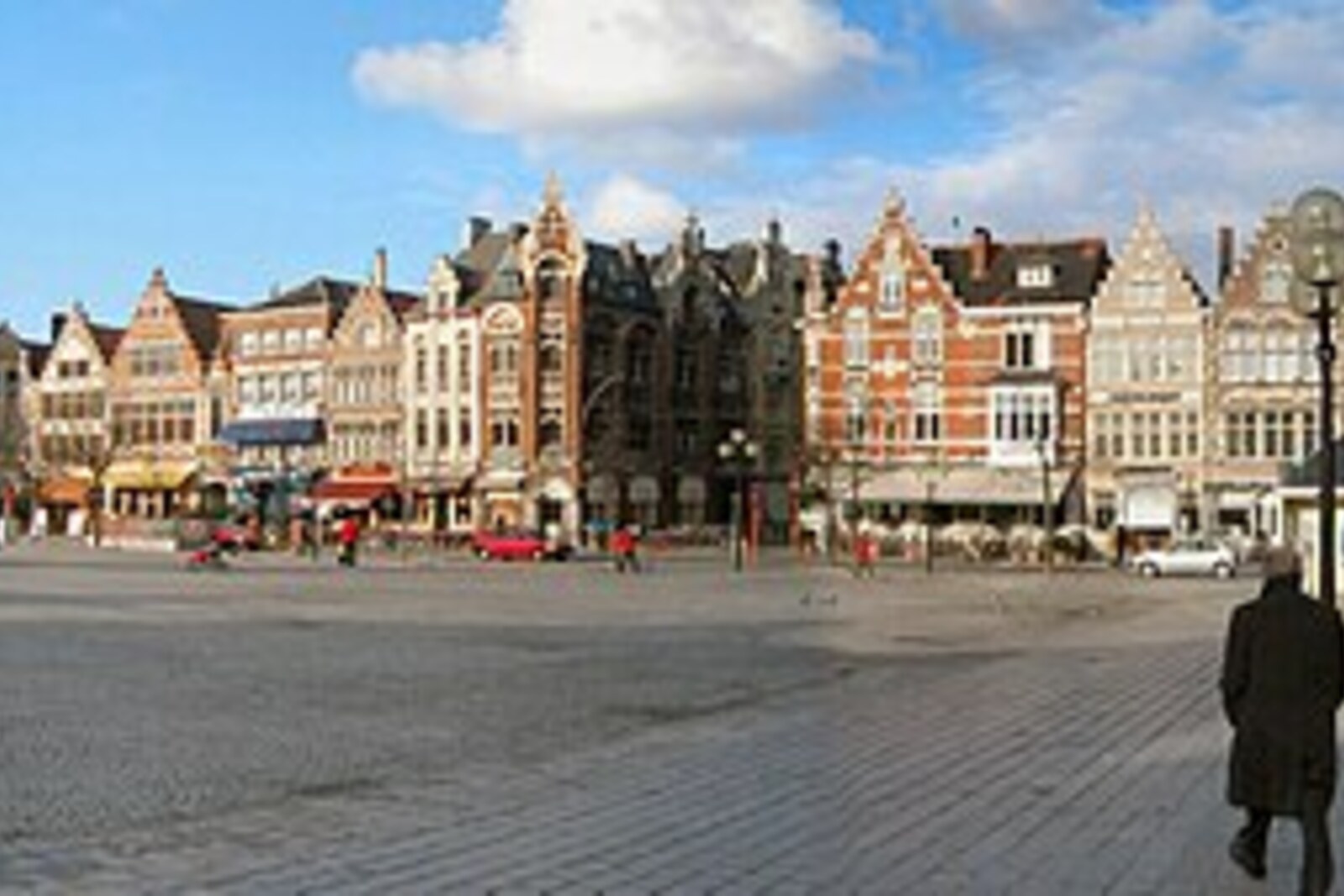
Look around first
What to notice
- The bronze statue at the center of the square
- The statue's raised hand
- The façades around the edge of the square
The story of the place
The bronze figure at the center of the square holds its hand raised toward England. Of the buildings around the edge, only the Toreken turret dates from the fifteenth century; the others took shape in the nineteenth and early twentieth centuries. In this open urban space, rulers were ceremonially received and public executions were carried out.
The name “Vrijdagmarkt” means “Friday Market.” Trading took place here on Fridays as early as eleven ninety-nine. Townspeople also came to this square to greet rulers, hear decisions, and take part in civic assemblies. One such assembly needed this trading place because, without English wool, Ghent lost its main source of income.
At the center of the square stands Jacob van Artevelde, a wealthy cloth merchant whose fortune depended on supplies of raw material from England. When the Hundred Years' War began, Louis I, Count of Flanders, supported Philip VI of France. Edward III of England responded by banning exports of goods to Flanders. Ghent's weavers lost their wool, merchants lost their turnover, and Artevelde risked his own investments in the cloth trade.
He led the townspeople, secured the count's expulsion, and in thirteen thirty-eight reached an agreement with England on the neutrality of Flanders. Wool supplies resumed. Edward then needed military assistance from the Flemish cities. This created a trap: the people of Flanders were considered subjects of the French crown and, by acting against Philip VI of France, would become rebels.
Artevelde proposed changing the name of the person they were obliged to obey. Edward descended from the French kings through his mother and himself claimed their throne. On January twenty-sixth, thirteen forty, representatives of Ghent, Bruges, and Ypres gathered at Vrijdagmarkt and officially proclaimed the English king King of France. There was no coronation here: Edward received recognition and a new title. The Flemings could now claim that they were serving the lawful French sovereign.
On March twenty-ninth, Edward confirmed the deal with a charter. He promised to keep the market for English wool in Flanders or neighboring Brabant, and to admit Flemish cloth into England without hindrance. Edward himself continued for another twenty years to style himself King of France and England in official documents. Artevelde preserved the alliance but gradually lost the support of Ghent's guilds. Five years later, after returning from negotiations with Edward, he was killed by a crowd in the courtyard of his own house on Kalandeberg.
The bronze statue was erected here in eighteen sixty-three. Artevelde's raised hand points toward England—the place from which he brought wool back to the city. On Fridays, the square is still occupied by a market, and above the stalls stands the man who once brought the French crown into this marketplace.
Useful on site
The square is accessible around the clock; the market takes place on Fridays and Saturdays from early morning until midday.
Checked: date not specified. Check the official source before visiting.Walk around the edges of the square: its details are on different buildings and cannot be taken in from a single point. As you cross the open space, watch for ordinary city traffic.