 Guide On Map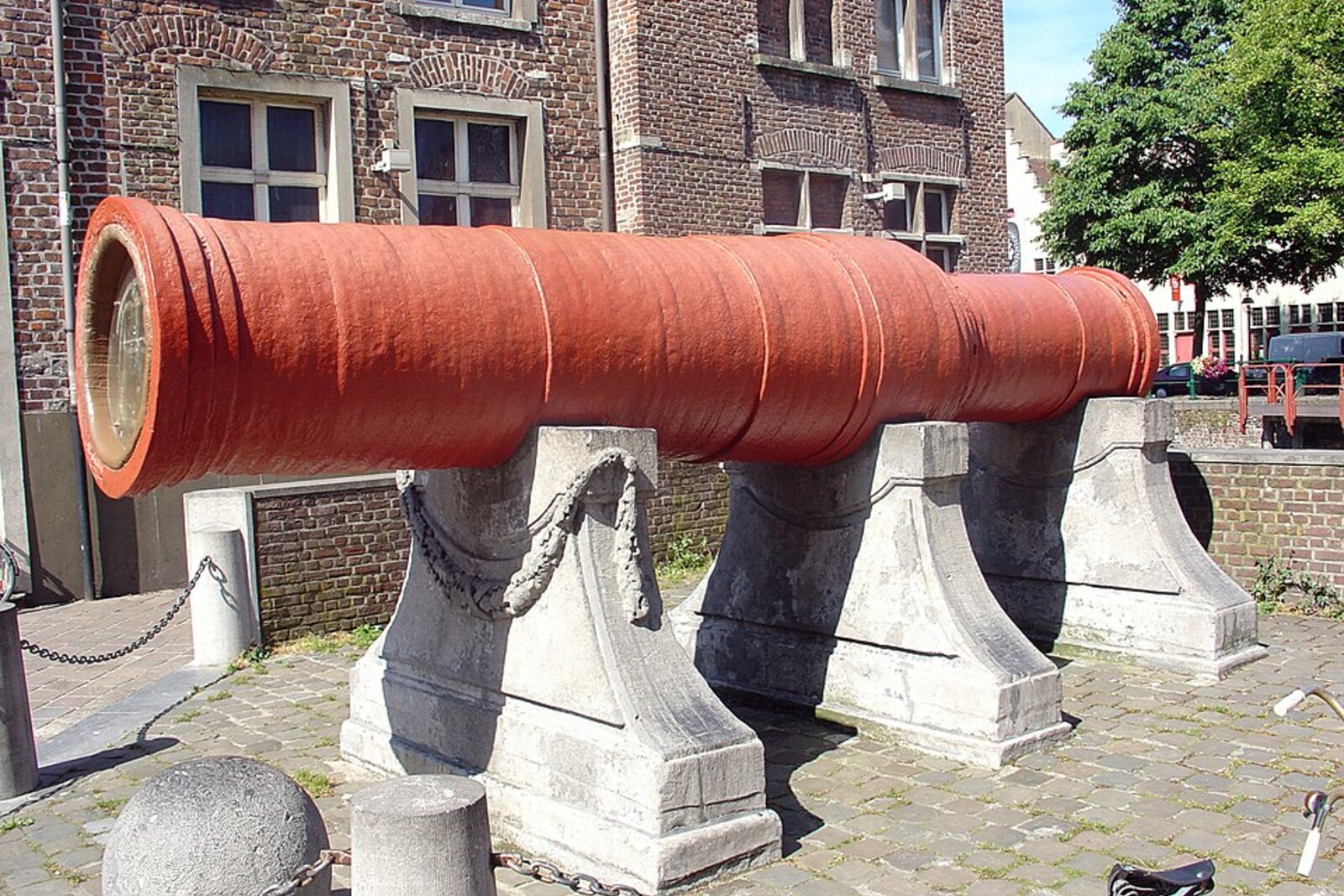
Look around first
What to notice
- Red wrought barrel
- Coat of arms near the touch hole
- Three stone supports
The story of the place
Dulle Griet is often called the Ghent cannon, lost during the siege of Oudenaarde in fourteen fifty-two. That is a later city story: there is no reliable evidence that this particular barrel took part in that siege. The cannon's documented biography begins a century later and leads directly to its present location.
In fifteen seventy-eight, a hundred Ghent infantrymen under the command of Charles Rochelfin were stationed in Oudenaarde. His company had been sent to hold the town for the rebel Netherlands in the war against the Spanish king. Oudenaarde itself maintained the soldiers: the town accounts record the cost of lodging them in inns. Meanwhile, Ghent's Calvinist leadership was assembling artillery for defense and demanded the enormous bombard lying in the Oudenaarde arsenal—siege artillery for firing stone cannonballs.
Later, people said that Rochelfin had secretly stolen the cannon at night. The accounts are more prosaic: Oudenaarde paid local carpenters Jan and Pieter Del Croos to load Great Griet onto a Ghent vessel. They had to lower the wrought barrel, about five meters long and weighing more than twelve tons, to the water and place it aboard the ship.
On March eighth, the cannon was unloaded in Ghent at Kuipgat. On September fifteenth, it was brought here, to the bank of the River Lys, at the end of Langemunt. The site was then called Wannekensaard; it is now Great Cannon Square. Townspeople laid the barrel on wooden supports. In seventeen eighty-three, the magistrates replaced them with three stone pedestals, on which the cannon still rests.
The Ghent infantrymen received no military reinforcements. The bombard, most likely made for Philip the Good, Duke of Burgundy, in the first half of the fifteenth century, was never put into action again. The duke's coat of arms survives near the touch hole. Over the intervening century, artillerymen had switched to more powerful corned gunpowder; technical research showed that a charge typical of the sixteenth century could have burst the old wrought chamber. People transported across Flanders a weapon that was safer left unloaded.
A contemporary recorded two of its names: Dulle Griet and the Red Devil—the latter because the iron had been painted red. No historical woman lies behind the first name. “Griet” is a colloquial form of Margaret, and “dulle” meant fierce or frenzied. Who gave the cannon its nickname is unknown; most likely, it refers to Mad Meg, the Flemish folklore figure so desperate that she was ready to rob hell itself. The present red paint repeats the color recorded at the unloading, and the three stone supports hold the barrel that was brought here for defense and was never put into service.
Useful on site
Accessible around the clock in the open air.
Checked: date not specified. Check the official source before visiting.The cannon stands outdoors and is easier to take in by walking around it from different sides. Do not climb onto the barrel or try to push objects into its openings.