 Guide On Map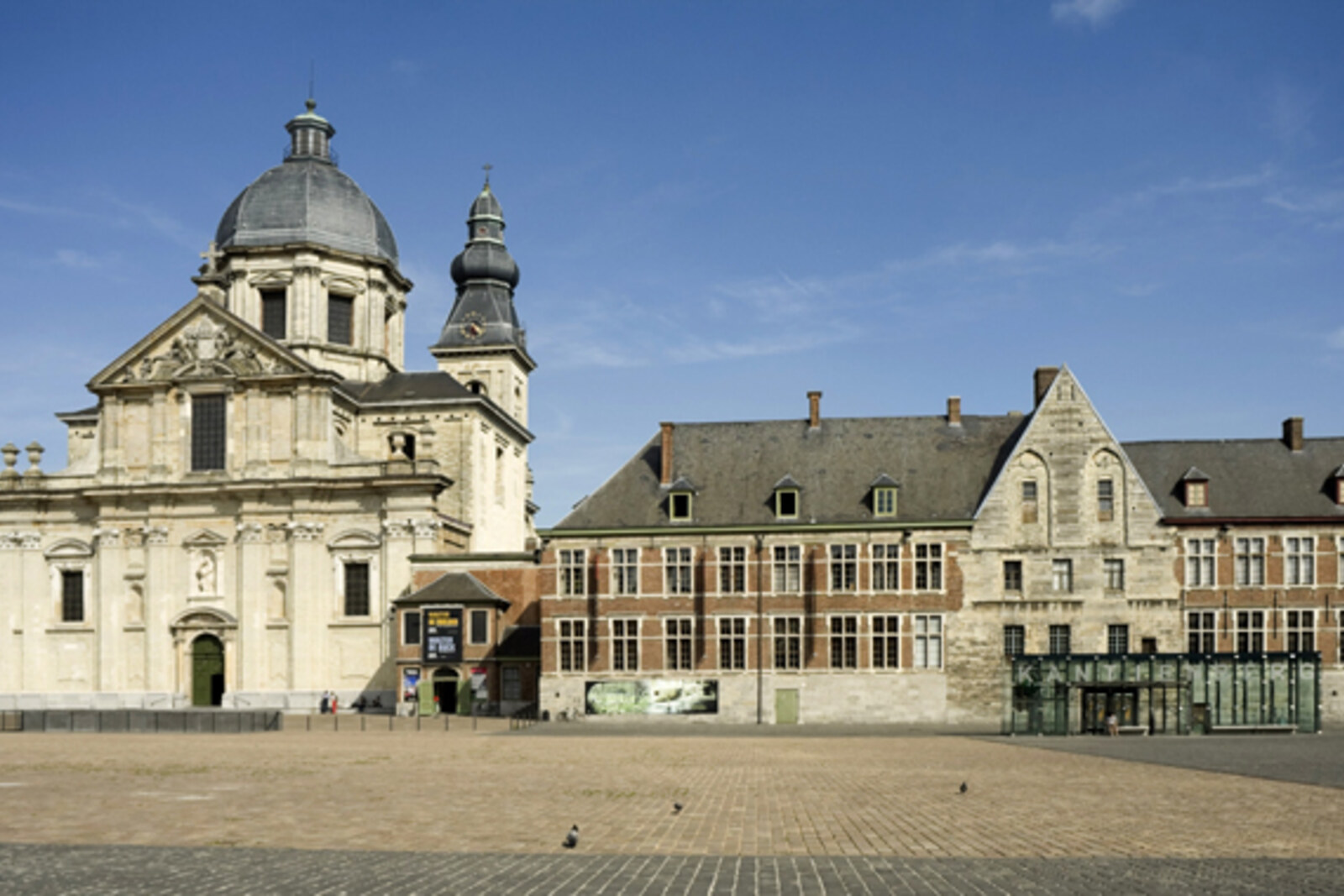
Look around first
What to notice
- The rectangle of the square
- Neoclassical facades
The story of the place
Every spring, dozens of rides from the Ghent Mid-Lent Fair are set up on Sint-Pietersplein. The owners of carousels and sideshows open the Belgian fairground season here. At other times, the same rectangle hosts concerts, sporting starts, and a celebration marking the start of the academic year attended by many thousands.
Until the nineteenth century, this space did not exist. In front of the abbey stood a parish church, the abbot’s house, and other monastic buildings. After the religious house was dissolved, they were demolished: the church in seventeen ninety-nine, the western part of the complex in eighteen eleven. A large vacant plot remained at the top of Blandijnberg.
In eighteen forty-three, members of the city council decided to bring order to Ghent’s many parish fairs. The old mid-Lent fair was abolished, and an attempt was made to gather the traders and performers at one summer festival. For travelling fairground workers, the calendar was their livelihood: after trading in one city, they took their tents and rides to the next. Ghent’s summer dates coincided with fairs in Namur, Mons, and Charleroi, so many owners simply went there. The large event envisioned by the city was left without a significant share of its participants.
Residents of the surrounding houses and traders demanded the return of the former dates. In December eighteen forty-nine, the city council gave in: the fair was again allotted the weeks between mid-Lent and Easter, and Sint-Pietersplein was designated as its permanent site.
The choice came at the right time. The city architect Charles Leclerc-Restiaux was just turning the former monastic land into a level drill square. He levelled the slope, laid out a huge rectangle, and surrounded it with coordinated neoclassical facades. The military received a place for drills, while the fairground workers received a site large enough for circus tents, variety theaters, and steam carousels, and later travelling cinemas. After the participants had left, soldiers could once again be assembled here.
Sint-Pietersplein means “the square of Saint Peter.” Saint Peter here is the apostle, one of Jesus Christ’s closest disciples. The nearby St Peter's Abbey was originally called Blandinium after the hill; medieval monks dedicated it to the apostles Peter and Paul, and from the tenth century the shortened name Saint Peter became established for the religious house. The square took its name from it.
Every spring, ride owners again occupy that very drill-square rectangle that the city council allotted to their fair in eighteen forty-nine.
Useful on site
Open as a public square; during fairs, concerts, and city events, access routes and the view of the paving may change.
Checked: June 29, 2026. Check the official source before visiting.The burials are not visible from the surface, and there is no need to look for access to the excavation. Listen to the account by the church, comparing the confident memorial inscription with the anonymous ground.