 Guide On Map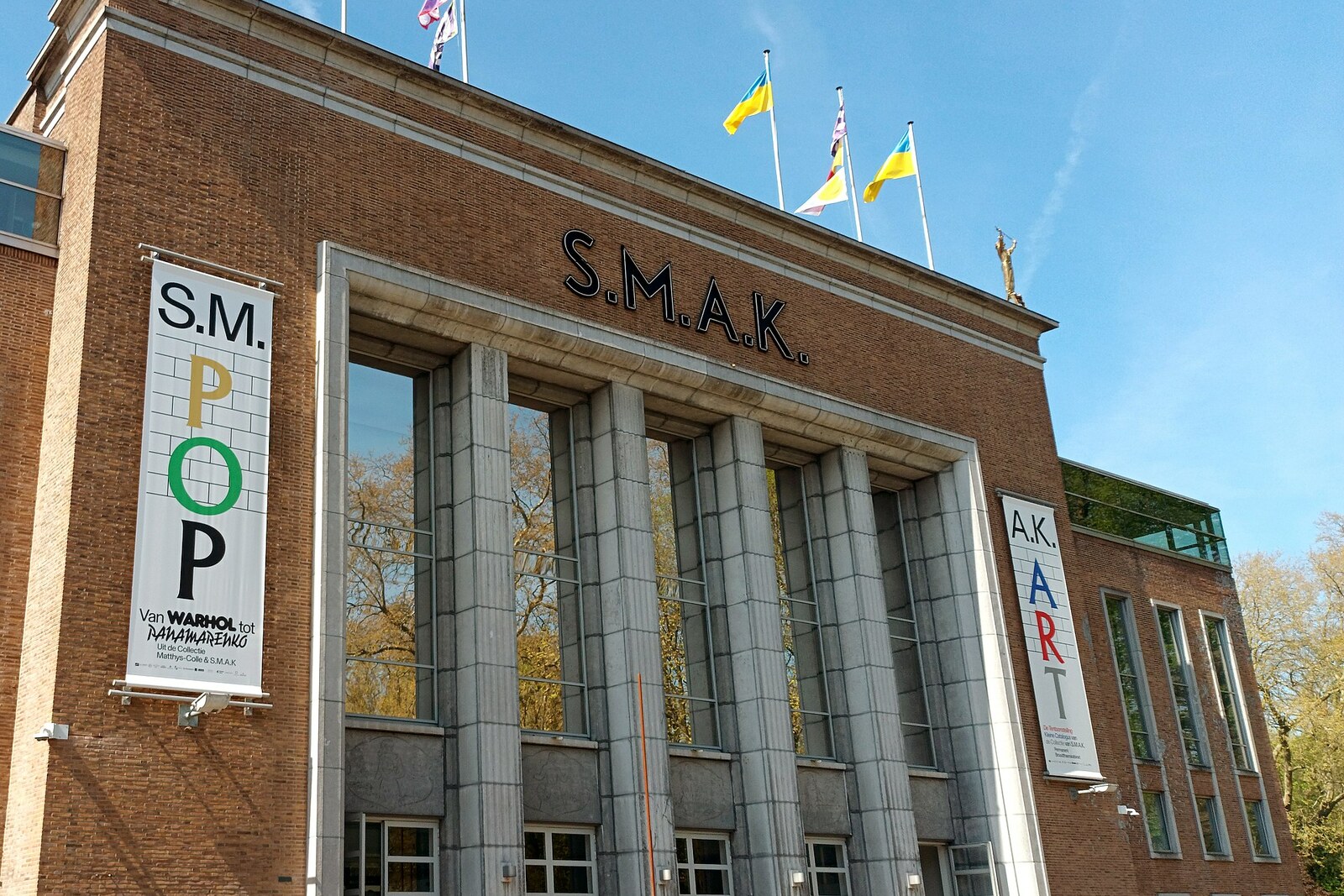
Look around first
What to notice
- Facade of the former casino
- Jan Hoetplein sign
- Changing-exhibition galleries
The story of the place
Behind the facade of the building that served as the casino for the Floraliën Gent complex, the city's collection of works created after the Second World War is displayed. When architects adapted this building for the museum, the collection was moved here from the ten upper galleries of the neighboring museum, where it had previously only been possible to display it in parts. There was still not enough room: large works continue to wait in storage, while changing exhibitions share the galleries with paintings and objects from the museum's own collection.
On May eighth, nineteen ninety-nine, the museum director Jan Hoet stepped into a boxing ring here. His opponent was the American artist Dennis Bellone. Hoet was seeking attention for the opening of the building that Ghent's contemporary art collection had waited more than twenty years for.
It all began in nineteen fifty-seven. The art historian Karel Geirlandt brought together the Society of the Museum of Contemporary Art. Its members wanted to buy works by living artists while the city's Museum of Fine Arts, Ghent (MSK) adhered to its earlier chronology. Membership fees and the sale of portfolios of artists' prints funded the first acquisitions.
In nineteen seventy-five, Ghent established Belgium's first museum devoted to contemporary art and appointed Jan Hoet as its director. The museum was not given a building of its own. It was assigned ten upper galleries in the Museum of Fine Arts, Ghent (MSK), across the square. For Hoet, it was both a workplace and the work of his whole career: he expanded the city's collection, invited artists, and organized exhibitions, but the collection grew faster than the space provided. The works were shown in parts and in constantly changing combinations. Some major acquisitions remained in storage for years.
When a separate home was finally found for the museum, the collection moved only a short distance—across the square. No new building was constructed from scratch: architects converted a former casino adjoining the Floraliën Gent complex. In May nineteen ninety-nine, the institution received its present name, S.M.A.K. (Municipal Museum of Contemporary Art). The initials of its Dutch name form “S.M.A.K.”
Hoet turned the opening into a four-day spectacle with a parade, a charity lunch, a party, and a boxing match. He was almost sixty-three, Bellone was thirty-seven. The artist had better technique, but the director kept advancing, and the referee, former champion Freddy De Kerpel, had to separate the opponents several times. After three rounds, he declared a draw. Hoet called the result a victory for art.
The outcome was inside the former casino. For the first time in several years, visitors saw the collection in its entirety: works created after the Second World War occupied the whole building and remained accessible until December. Now changing exhibitions take place here, and the museum combines works from its own collection with works by contemporary artists. A substantial part of the collection is still kept in storage: the converted casino proved too cramped for it as well.
After Hoet's death, the city council renamed the space between the two museums Jan Hoetplein. The plaque beneath his name reads: “founder, curator, and inspiration behind S.M.A.K.” The main entrance is at Jan Hoetplein, number one.
Useful on site
Regular schedule: Mon closed; Tue–Fri 09:30–17:30; Sat–Sun, holidays and school vacations 10:00–18:00; first Thursday of the month until 22:00. As of 2026-06-29, its status required checking again after a temporary closure due to heat.
Checked: June 29, 2026. Check the official source before visiting.The point of the stop is clear even without going inside, thanks to the pair of buildings. Specific works from The Friends Rooms may be absent from the current exhibition.