 Guide On Map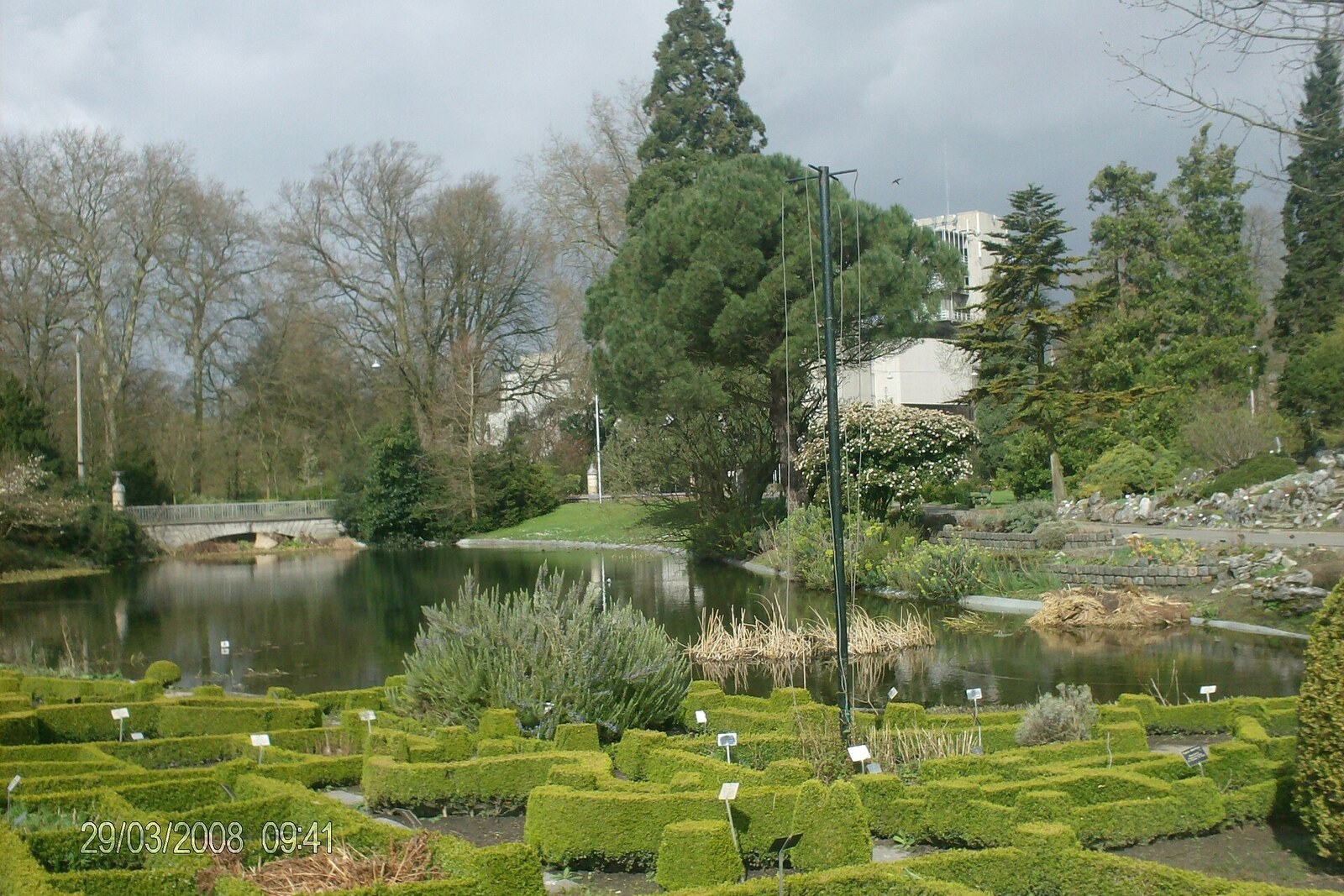
Look around first
What to notice
- Decorated metal fence
- Ledeganck Building
- Greenhouses of the Ghent University Botanical Garden
The story of the place
GUM (Ghent University Museum) opened here in two thousand twenty. The university had moved its botanical collections to Citadelpark much earlier—after a years-long dispute over who needed a scientific garden and who should pay for it.
The first Ghent University Botanical Garden was established in seventeen ninety-seven beside the former Baudeloo Abbey in the city center. Later, the city maintained it, while the university used the plants for teaching. This division worked poorly: professors needed laboratories and functioning greenhouses, while the city council also saw a public park, and repair costs became grounds for litigation.
By the end of the nineteenth century, factories surrounded the garden. Smoke settled on the plants, the structures were deteriorating, and there was not enough room. Julius Mac Leod, professor of botany and the garden's director, studied plant pollination and heredity and taught students. Dying trees and faulty greenhouses directly affected his daily work.
In eighteen ninety-seven, Mac Leod wrote to the mayor that industrial chimneys on all sides were emitting smoke, and experience had already shown how difficult it was to keep trees and shrubs alive in the middle of the city. He succeeded in getting the city council to finally address the relocation.
A commission chose a large site in the Heirnis area. The land belonged to one of the university's estate managers, and city newspapers began to speak of a conflict of interest. Opponents added that students would have to walk too far. The council rejected this option and set aside land beside the new park laid out on the site of the former citadel. The State and the city agreed on a sale, and the expropriation of plots began.
The new garden was smaller than the old one, but the university gained full control over it and assumed all costs. Mac Leod could manage the site as a teaching and research facility. The head gardener, Juliaan Burvenich, moved usable parts of the old greenhouses, ordered plants and fertilizer, and laid water lines to the pond and irrigation system. Beside it, the Julius Mac Leod Botanical Institute was built, with a lecture hall, microscopy room, herbarium, museum, and laboratories. In nineteen oh three, Mac Leod held the first class here—sixteen years after becoming director of the old garden.
The city's residents, however, got nothing like the park they had expected. Mac Leod demanded quiet, as in a library or lecture hall. Ordinary walkers were admitted on Sunday mornings and during the Ghent Festivities. The gates remained open to scholars, students, school groups, artists, and plant enthusiasts. Citadelpark already existed across the street for walks; behind this fence, the professor grew material for teaching and research.
Mac Leod's complex has not survived. In the nineteen sixties, student numbers rose sharply, and the university needed larger lecture halls and laboratories. The old institute, orangery, and greenhouses were demolished. The Ledeganck Building was constructed in their place, and new greenhouses were moved farther into the garden. Of the original ensemble, the decorated metal fence remains.
One function of the vanished institute nevertheless returned to the former site. By the beginning of the twenty-first century, Ghent University's teaching collections were divided among seven small museums; other specimens, models, and instruments lay in offices, corridors, attics, and basements. Around two thousand ten, the directors and curators of these collections, together with the garden's head and the university archivist, began to unite them. Laboratories in the western wing of the Ledeganck Building were converted into a museum.
Since nineteen ninety-seven, Dominick Verschelde, curator of the zoological collection, had organized exhibitions and classes to bring university specimens before the public. When the new museum was created, he directed the transfer of rare exhibits from the basement to the permanent exhibition and resumed their restoration. Now the very course of scientific work is shown here—observation, measurement, doubt, error, and the revision of a conclusion.
Behind the surviving fence, the university once again keeps two collections side by side. In the garden, students and researchers work with living plants; in the former laboratories, visitors are shown instruments, models, and specimens that were once taken from cabinets only for classes.
Useful on site
University Museum: Mon/Tue/Thu/Fri 09:30–17:30; Wed closed; Sat–Sun, holidays and school vacations 10:00–18:00; first Thursday of the month until 22:00. The Ghent University Botanical Garden is also open on Wednesdays; the greenhouses close at 16:30.
Checked: June 29, 2026. Check the official source before visiting.Do not plan a visit around guaranteed flowering of the amorphophallus: the plant itself chooses the rare and brief moment. Check access to the museum and garden separately.