 Guide On Map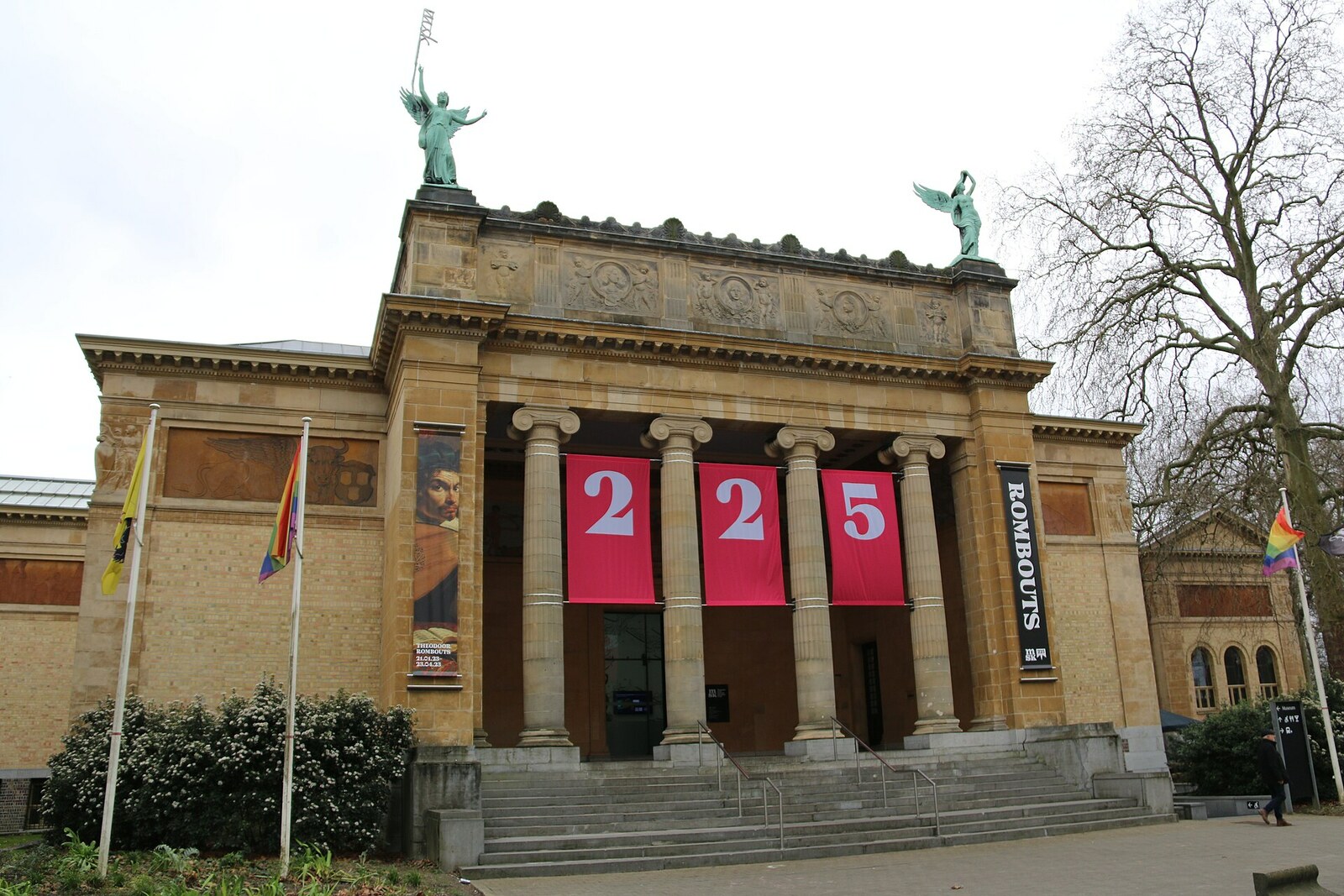
Look around first
What to notice
- The glass wall of the restoration workshop
- Panels of the Ghent Altarpiece
- Stereomicroscope
- Surgical scalpel
The story of the place
The Museum of Fine Arts, Ghent (MSK) has welcomed visitors since eighteen oh two and is among Belgium's oldest public art museums; the collection was moved to the current building by Citadelpark in nineteen oh four. The city and the museum set aside one gallery for an open restoration workshop working on the Ghent Altarpiece. Through the soundproofed glass wall, the panels, microscope, and fine tools are visible, while people in the gallery pass right beside the conservators behind the glass, who cannot hear them at all.
Behind glass inside the museum, conservator Kathleen Forrier removes non-original paint from a painting with a surgical scalpel. Under a stereomicroscope, about sixteen square centimeters can be cleaned in a day, sometimes less. A mistake will remain on a work by Jan van Eyck forever. Forrier is not doing this as a demonstration: since two thousand eighteen, she has been working continuously on the Ghent Altarpiece and coordinating the workshop here.
The altarpiece itself was painted by the brothers Hubert van Eyck and Jan van Eyck for St Bavo's Cathedral in the fifteenth century. Only the panels that conservators are working on are brought to the museum; the others continue to be displayed in the cathedral. Masters from several generations cleaned and retouched the painting, covered damage with fresh paint, and applied varnish over it. By the beginning of the current work, in many places viewers were seeing not the van Eycks' brushstrokes, but a sixteenth-century reworking.
In two thousand ten, the cathedral's church council commissioned a detailed examination of the altarpiece. Specialists found flaking paint, darkened varnish, and cracks in the wooden panels. Two years later, the church council commissioned the Royal Institute for Cultural Heritage to carry out the restoration, while the city and the Museum of Fine Arts, Ghent (MSK) made part of the building available for the workshop. A glass wall made it possible not to hide the work from the public.
At first, the conservators planned to consolidate the paint layer and remove the later varnish. After cleaning, it became clear that the retouching covered about seventy percent of the outer panels. The team faced a choice: preserve this five-hundred-year-old reworking as part of the altarpiece's history, or remove it for the sake of even older paint. The conservators had no right to decide by taste which version was more beautiful. They made test cleanings, examined microscopic samples, and checked whether the upper layer could be separated without touching the van Eycks' paint.
In March two thousand fourteen, an international commission allowed the retouching to be removed where research confirmed it was safe. The church council—the owner of the altarpiece—approved the final instructions. The conservators undertook to fill in only actual losses and to use materials that could be removed if necessary.
The most noticeable consequence was discovered in two thousand eighteen in the central scene of the Adoration of the Lamb. Beneath the animal's later head, the original one was revealed: its eyes looked almost directly at the viewer, and its muzzle seemed short and humanly tense. When the image was published, some decided that the conservators had ruined the famous lamb, while others turned its face into an internet joke. The team responded not with an artistic explanation, but with cracks: the age crackle in the original head extended beneath the later paint. This meant that the unfamiliar face belonged to the lower, older layer.
Now they continue to clean the upper panels here—the figures of Adam and Eve, the Virgin Mary, John the Baptist, the music-making angels, and the central deity. This is one of the activities of the Museum of Fine Arts, Ghent (MSK), Belgium's oldest public art museum: it opened in eighteen oh two, and the collection was moved to this building by Citadelpark in nineteen oh four. Behind soundproofed glass, the conservators can barely see visitors and cannot hear them at all. The already cleaned parts of the altarpiece are in St Bavo's Cathedral; the city center lies between them and the current workshop.
Useful on site
Mon closed; Tue–Fri 09:30–17:30; Sat–Sun 10:00–18:00; during school holidays 10:00–18:00; first Thursday of the month until 22:00; closed December 25–26 and January 1–2.
Checked: June 29, 2026. Check the official source before visiting.A separate museum visit is needed to see the collection. Do not expect to see all the works mentioned at the same time: check the current exhibition.