 Guide On Map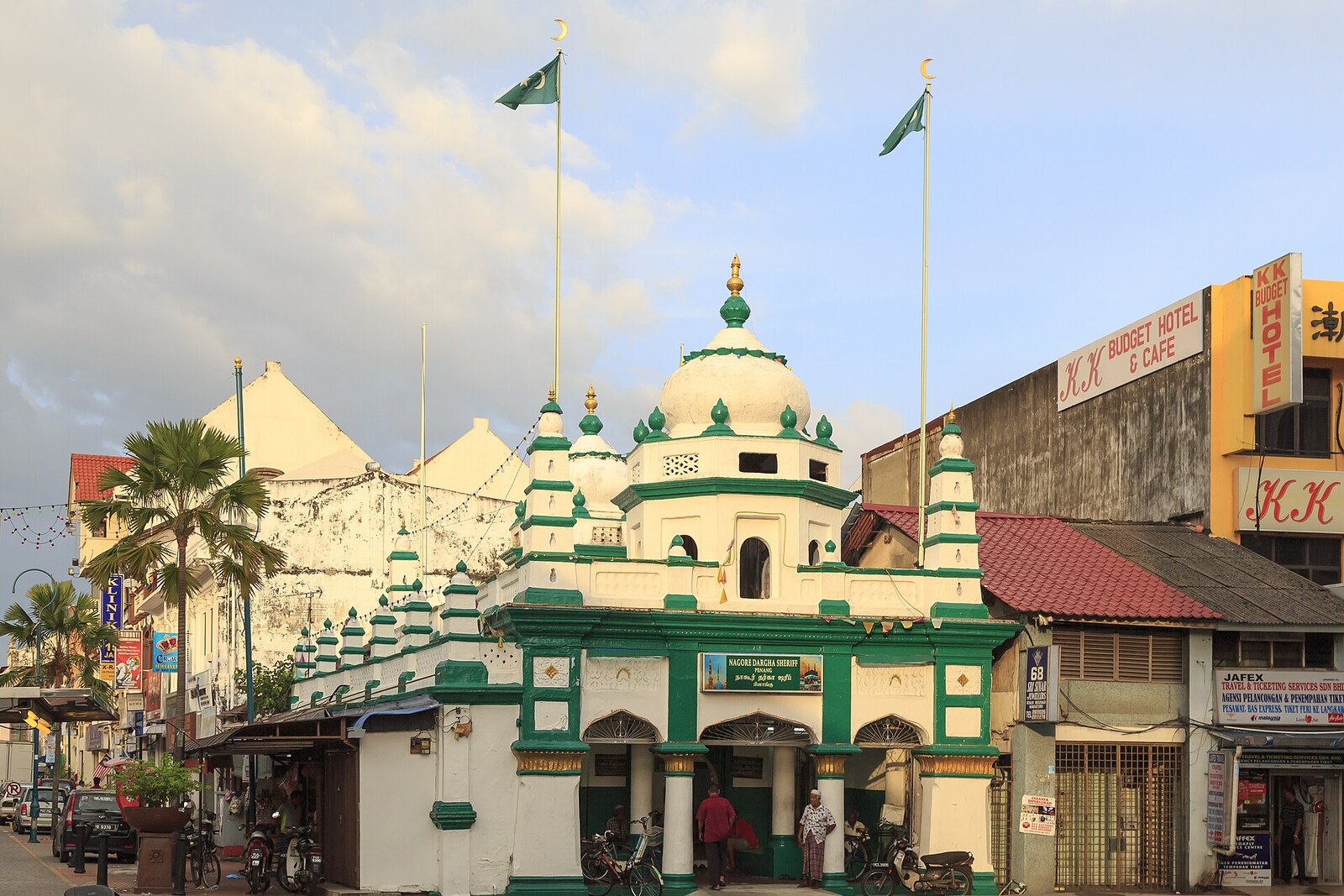
Look around first
What to notice
- White facade
- Four corner minarets
- Entrance from Chulia Street
The story of the place
In eighteen oh one, Tamil Muslim merchants of George Town pooled their money for this shrine. They traded across the Bay of Bengal, and their goods, earnings, and return home depended on the sea crossing. So the merchants dedicated the building to Shahul Hamid, a sixteenth-century Sufi teacher whom his devotees regarded as the patron of seafarers.
Shahul Hamid lived and was buried in the Indian port of Nagore. His actual tomb is still there. The word “dargah” usually means a Sufi shrine at the grave of a revered person, while “sharif” means venerable, sacred. In George Town, the merchants built a smaller likeness of the Nagore dargah: not a new grave for the saint, but a place where people on the other side of the sea could appeal to him.
They chose a corner in the migrants’ own quarter. The former Malabar Street had already been renamed Chulia Street in seventeen ninety-eight, after the Chulias, Tamil-speaking people from the Coromandel Coast. The East India Company provided the land, donations paid for the construction, and sailors gained a local shrine they could visit before a voyage or after returning.
The connection with the sea was expressed here quite literally. On Shahul Hamid’s festival day, worshippers decorated the building like a ship and hung up flags. Donations came from Muslims and followers of other religions. According to the belief of the time, objects thrown into the sea off Penang could be carried by waves to the shore near the actual dargah in Nagore. This was a legend, but it explains the merchants’ actions: between the two ports, they laid out a religious path along their trade route.
The shrine remains active. A Tamil religious teacher—an ustaz who came from India—lives here; he conducts rites for visitors, assisted by a committee of local Tamil Muslims. Shahul Hamid’s tomb remained beyond the Bay of Bengal, while its white replica with four corner minarets has survived on Chulia Street.
Useful on site
usually open during daylight hours; access may be restricted during prayers
Checked: June 17, 2026. Check the official source before visiting.The building is small and may be only partly accessible; view the details from the street without blocking the entrance.