 Guide On Map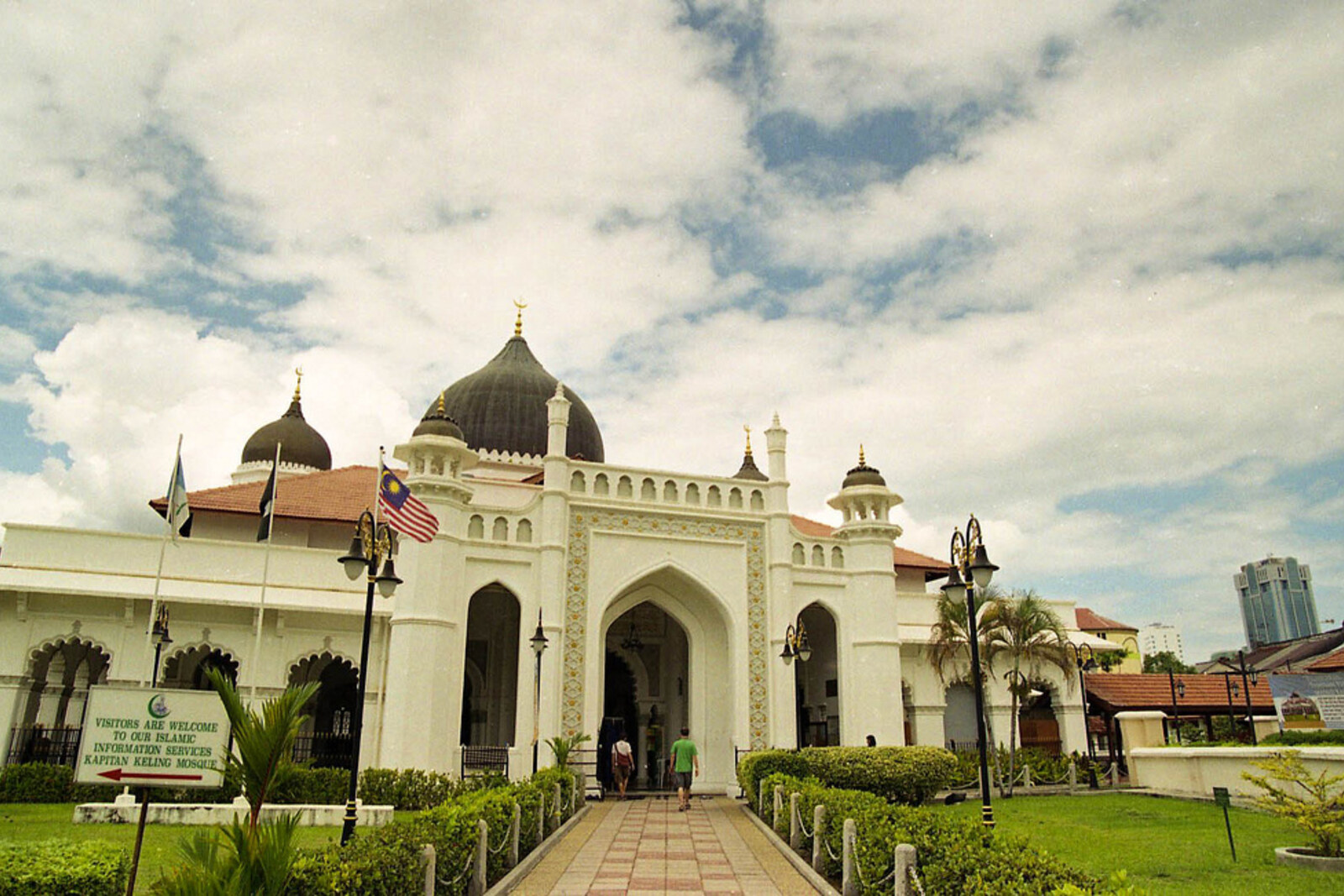
Look around first
What to notice
- Minaret
- Domes
- Fence
- Prayer hall
The story of the place
The name of this mosque preserves an office that no longer exists. Cauder Mohuddeen Merican was the captain of the Kelings—the representative of George Town’s South Indian Muslims recognized by the British administration. This captain had nothing to do with a military rank: he handled the community’s affairs and spoke on its behalf to officials. “Keling” is an old Malay term for people from India. It was used officially then; today, outside a historical name, it sounds offensive.
Cauder Mohuddeen Merican himself made his living through maritime trade. He was a shipboard mandur—a crew foreman—then a shipowner and merchant connected with the ports of the Coromandel Coast and Kedah. Similar merchants and sailors arrived in George Town, as did Muslim sepoys serving the East India Company. They needed a place for communal Friday prayers and a cemetery near the district where they worked and rented lodgings. A small mosque with a palm-leaf roof already stood here, but it was not enough for the growing community.
The Muslim merchants, sailors, and sepoys entrusted Cauder with securing a permanent mosque. He collected donations, persuaded merchants to contribute money for its upkeep, and petitioned the British governor. On November second, eighteen oh one, the East India Company granted about eighteen acres of land. Cauder brought builders and materials from India for a brick building. This is how George Town’s first permanent congregational mosque appeared here—a place where the community could pray together and bury its dead.
In the land grant, officials described the recipient vaguely as the “Muslim church.” They did not name a specific trustee. While Cauder was alive, this caused no problem: everyone knew who had collected the donations and controlled the plot. Before his death in eighteen thirty-four, he ordered that management be passed to his sons and then to his grandsons.
After the sons died, the heirs began suing one another for the right to run the mosque and collect rent from the houses on its land. At stake was one of Penang’s most valuable charitable properties. The court recognized Cauder’s eldest grandson as trustee, but the other claimants did not accept the decision. When officials required them to propose a new manager, each family faction rejected the other’s candidate. The dispute ended with government-appointed managers taking control of the property, and in nineteen oh five it was transferred to a special board for religious endowments. The hereditary management envisioned by Cauder ended there.
The present domes and minaret appeared after later reconstructions, and less than half of the original grant remains behind the fence: streets and city blocks took up the rest of the land. The active Friday mosque still bears the name of its first manager—Cauder Mohuddeen Merican, captain of the Kelings.
Useful on site
non-Muslim visitors: daily 11:00–13:00, 14:00–16:30, 17:00–18:00; Fridays 14:00–18:00; hours may change during prayers and Ramadan
Checked: June 17, 2026. Check the official source before visiting.Check the rules at the entrance: visitor access may give way to prayer, and a respectful visit is also possible from outside.