 Guide On Map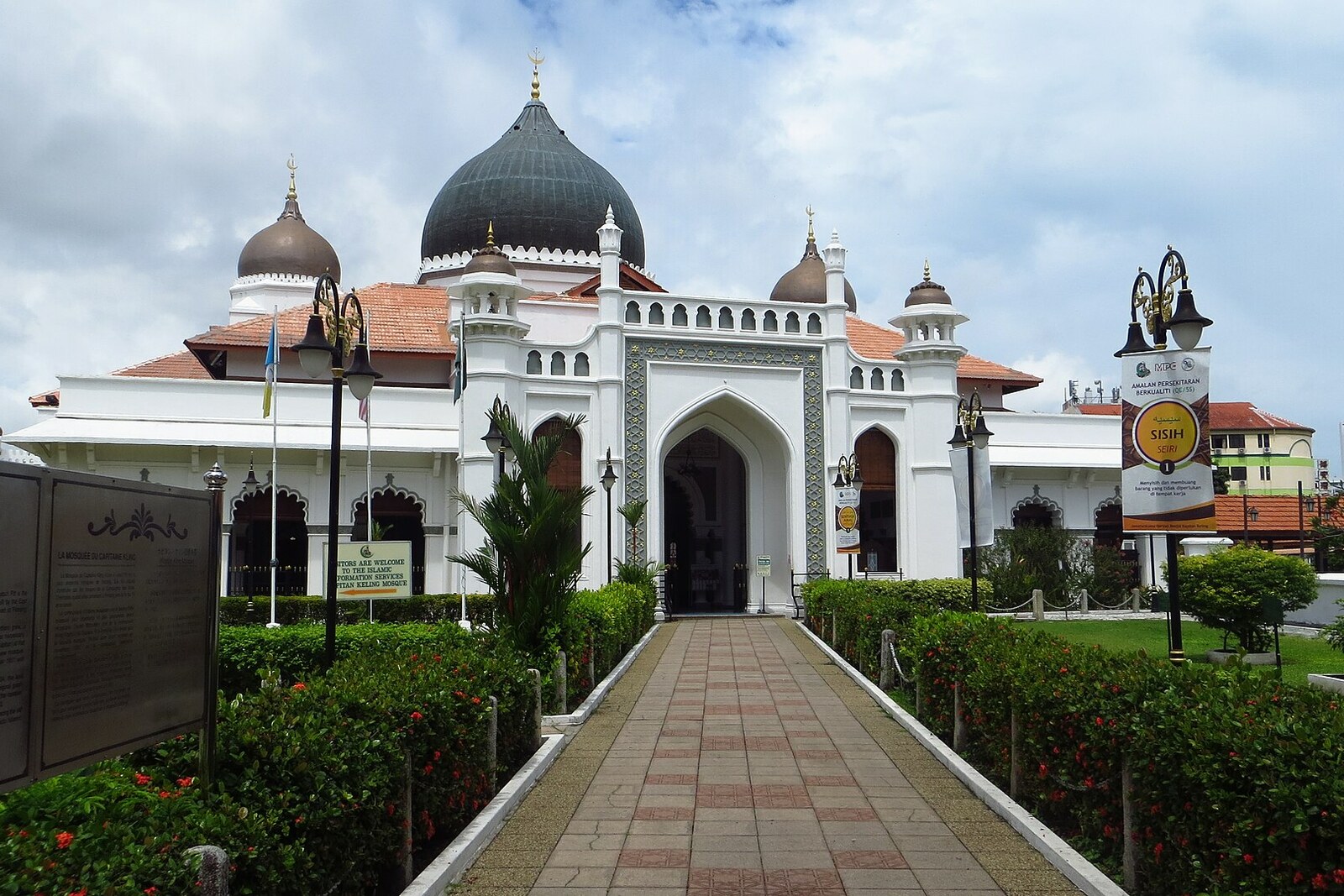
Look around first
What to notice
- Tall minaret
- Octagonal dome
- Stone columns
- Modern plot enclosure
The story of the place
The mosque’s name preserves the office of Cauder Mohuddeen Merican—a shipowner and merchant whom Muslims from South India entrusted with securing a large shared mosque for them. It was not sailors who called him Kapitan Keling. “Kapitan” meant a community representative appointed by the administration, while “Keling” was then used for people from India. Today, calling a person that is offensive; the word remains in the building’s official name.
People had already prayed here before Cauder. A city plan from seventeen ninety-eight marks a small mosque of the Chulias—the name the British used for South Indian Muslims. It was built by sepoys from East India Company units. The building had a roof of palm leaves. As new merchants and sailors began arriving in the free port, people were crowded; the community needed a permanent prayer hall and a large cemetery.
Cauder was suited to this task for two reasons. Ships and trade with ports on India’s southern coast and with Kedah brought him money. And his appointment as kapitan gave him the right to speak to the colonial administration on behalf of the Chulias. The office was quite practical: twice a week, Cauder heard complaints, settled minor debt disputes, ordered births, marriages, and deaths to be recorded, reported violations of the law and illnesses to officials. The people asking for a new mosque already depended on him in matters that could not be resolved within a family or aboard a ship.
The community gave Cauder a written request. He submitted it to Lieutenant Governor George Leith and, on November second, eighteen oh one, received a land grant from the East India Company. Eighteen acres were set aside south of Malabar Street—present-day Chulia Street. The western and southern boundaries of the plot met Cauder’s own land: the mosque rose beside the holdings of the man who could take responsibility for its construction.
The grant had a strict condition. The land could be used only for a mosque and a Muslim cemetery; it could not be sold or transferred to another owner. If the community abandoned this designated purpose, the plot reverted to the Company. Cauder collected donations, invested money earned through trade, and persuaded merchants and sailors to pay for continued upkeep. After receiving permission for the work, he brought craftsmen and some of the building materials from India. In the following years, the palm-leaf structure was replaced by a brick prayer hall.
This is how George Town acquired its first large congregational mosque, where the whole community could gather for Friday prayer. Sermons and announcements were delivered in Tamil: the building served people who had arrived through the same maritime connections from which its trustee earned his living. Cauder became the mosque’s first manager, and the worshippers named it after his office.
The office of Kapitan Keling itself ceased to appear in documents soon after eighteen oh six. Cauder continued trading, died in eighteen thirty-four, and was buried not at the mosque but nearby, in Kampung Kolam. His original prayer hall is also impossible to recognize in its present appearance: the tall minaret was erected in nineteen sixteen, and between nineteen twenty-eight and nineteen thirty-five, the former inner structure was dismantled, stone columns were installed, and the present octagonal dome was built.
The original plot was much larger than the modern enclosure. By nineteen oh three, the mosque retained about eight acres; roads, commercial buildings, and municipal institutions occupied the rest. The office disappeared, the boundaries receded, and the building was rebuilt, but the mosque retained the name of the kapitan who turned the request of port merchants and sailors into a plot intended for shared prayer.
Useful on site
An active mosque. Current published visitor hours for non-Muslims differ between sources; prayer, Friday, Ramadan, and holidays take priority. Check the schedule at the entrance.
Checked: July 1, 2026. Check the official source before visiting.During prayer, view the mosque from the street; to enter, follow the clothing requirements and remove your shoes where indicated.