 Guide On Map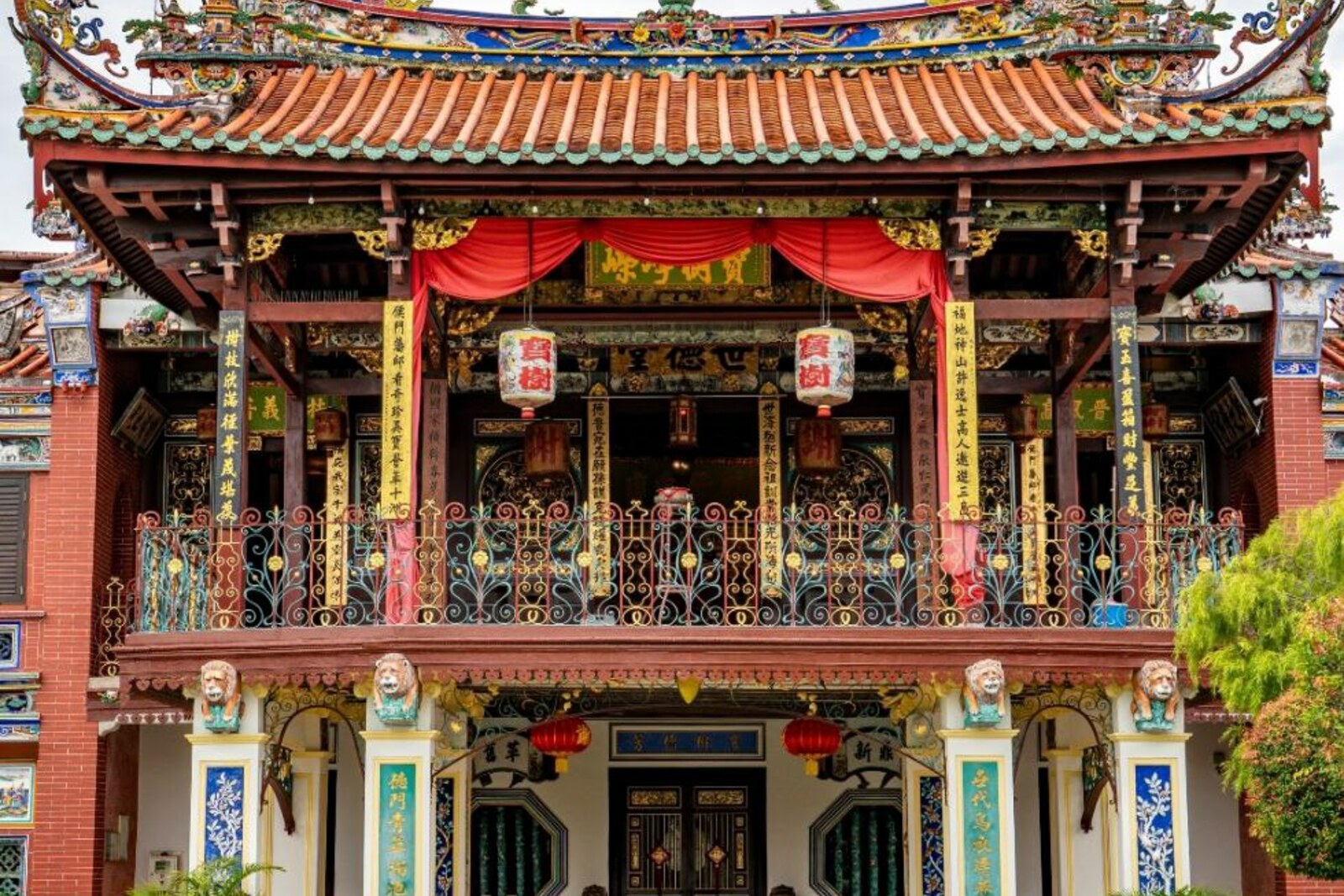
Look around first
What to notice
- Narrow entrance arch
- Rickshaw passageway
- Courtyard
- Two-story temple
The story of the place
The prayer hall remains upstairs, while the rooms along the sides of the courtyard were used for communal meals and meetings. Fellow countrymen who had just arrived slept here, and a clerk helped them send letters to families left behind in China. In the mornings, recruiters from plantations and coal mines came to lead workers away in groups.
Beyond the narrow arch from Armenian Street stretches a passageway once used by rickshaws. It leads to a courtyard with a two-story temple. This is Cheah Kongsi—an association of people bearing the Cheah surname, the Penang variant of the Chinese surname Xie. Their ancestors came from the village of Sek Tong in Fujian Province. The word “kongsi” meant fellowship: fellow countrymen were given shelter here, helped to find work, had their disputes settled, and those with no family nearby were buried.
One of the first organizers of such a house was Cheah Yam, a migrant who sought a permanent refuge for his fellow countrymen and their sacred objects. At first, he and his relatives made their living by fishing on the mainland shore, then moved to the growing trading town of George Town. On Armenian Street, they rented premises for meetings and for worshipping the two patron deities of their home village. Cheah Yam wanted to build a clan temple here, but died in eighteen forty-five without seeing the work through.
His widow, Ong Sin Neoh, took over its management. In Penang’s Hokkien clan associations, a woman had not previously held such direct influence. Ong established a trusteeship and set down rules for managing the common property: rental houses and donations were to support the kongsi after its founders’ deaths. She then led the construction of the temple together with her son, Cheah Choo Yew. It cost twelve thousand three hundred sixty-seven Spanish dollars, collected from relatives in Penang and China. Work began in eighteen fifty-eight and was completed fifteen years later.
People needed a permanent home in the most literal sense. New arrivals from Sek Tong slept in the kongsi’s rooms, while a clerk wrote letters for them to relatives in China. In the mornings, they waited here for recruiters from fruit and rubber plantations and coal mines. Employers led people away in groups: a person traveling alone could be kidnapped on the road and sold into slavery for between twenty-nine and fifty Straits dollars. Once migrants had earned money and settled on the island, they themselves began contributing to the association.
The prayer hall completed under Ong Sin Neoh remains on the upper floor; the side rooms are used for meetings and communal meals. On a current application for school assistance, a child is still asked for the father’s membership number, one of the ten branches of the clan, and the trustees’ meeting decision: assistance granted or denied.
Useful on site
daily 09:00–17:00
Checked: date not specified. Check the official source before visiting.Follow the current access rules; if the rooms are closed, view the complex only from permitted areas.