 Guide On Map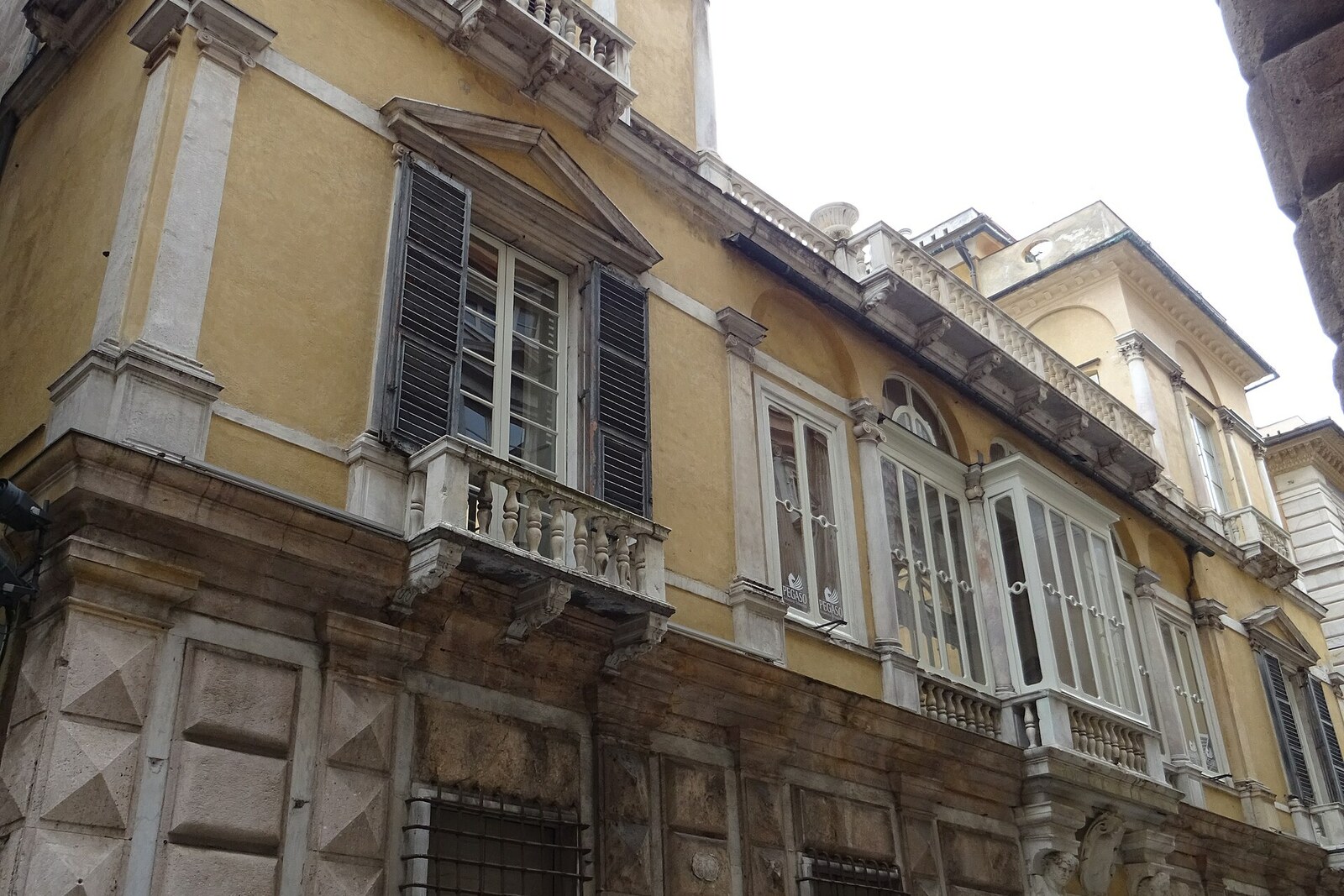
Look around first
What to notice
- Two male figures without noses
- Marble portal
- Inner courtyard
The story of the place
The noses of the two stone men carrying the marble portal were deliberately cut off. Franco Lercari—a Genoese banker and politician known as the Rich—commissioned them that way. Between fifteen seventy-one and fifteen seventy-eight, he built a city residence here for his family. That is why the palace bears his name. Even before construction was complete, it was entered in the highest category of the Rolli, and the republic's noble guests entered the courtyard between these mutilated figures.
Franco had the punishment attributed to his distant ancestor depicted. Domenico Lercari (Megollo) was a merchant and pirate: he traded in the ports of the Black Sea, outfitted ships, and depended on how willing local rulers were to protect Genoese merchants. What follows is known from a legend recorded almost two centuries after the events.
In Trebizond, a Black Sea city in what is now Turkey, the courtier Andronikos tried to humiliate the influential foreigner and insulted Megollo during a game of chess. The city's ruler refused to punish the offender. For a visiting merchant, this meant that at court he could be dealt with without consequences.
Megollo returned to Genoa, received help from his relatives and permission from the city authorities, armed two galleys, and set out again for the Black Sea. His men attacked coastal settlements and vessels of the Empire of Trebizond. Megollo ordered his prisoners to be deprived of their noses and ears. According to the legend, the severed parts were put into vessels of brine. He spared one old man and his two sons so that they could deliver these vessels to the ruler.
After this, the ruler agreed to hand over Andronikos. Andronikos begged to have his life spared, and Megollo let him go. The merchant supposedly refused the rich gifts offered to him. Instead, he demanded a fondaco for the Genoese—a walled trading compound with warehouses, lodgings, and special privileges. The legend ends with the request being granted and a personal revenge bringing Genoese merchants a fortified base in Trebizond.
Documents confirm a narrower and less noble core of the story. Megollo really did trade and engage in piracy on the Black Sea. A treaty of thirteen sixteen assessed the damage caused by him and other Genoese at five hundred thousand silver aspers, small Eastern coins, and Genoa undertook to pay compensation. Historians consider the founding of the trading compound by Megollo himself part of a later legend.
Franco Lercari chose both versions of family memory for his home. The sculptor Taddeo Carlone left a trace of the punishment on the portal: two faces without noses. In the ceremonial hall upstairs, the painter Luca Cambiaso depicted the prosperous ending instead: the construction of the Genoese fondaco in Trebizond. The entrance showed the price of revenge; the interior hall showed the benefit that the family attributed to its instigator.
Since eighteen forty-five, the palace has belonged to the Parodi family, and it is usually impossible to get inside. From the street, Franco Lercari's story is visible only up to its turning point: the prisoners without noses remain above the entrance, while the trading compound, for whose sake the legend carries the matter through to reconciliation, is hidden in a private hall.
Useful on site
Outside only; the palace is private and closed to regular visitors.
Checked: date not specified. Check the official source before visiting.The main story can be read directly from the street. When looking at the sculptures, keep the building entrance clear.