 Guide On Map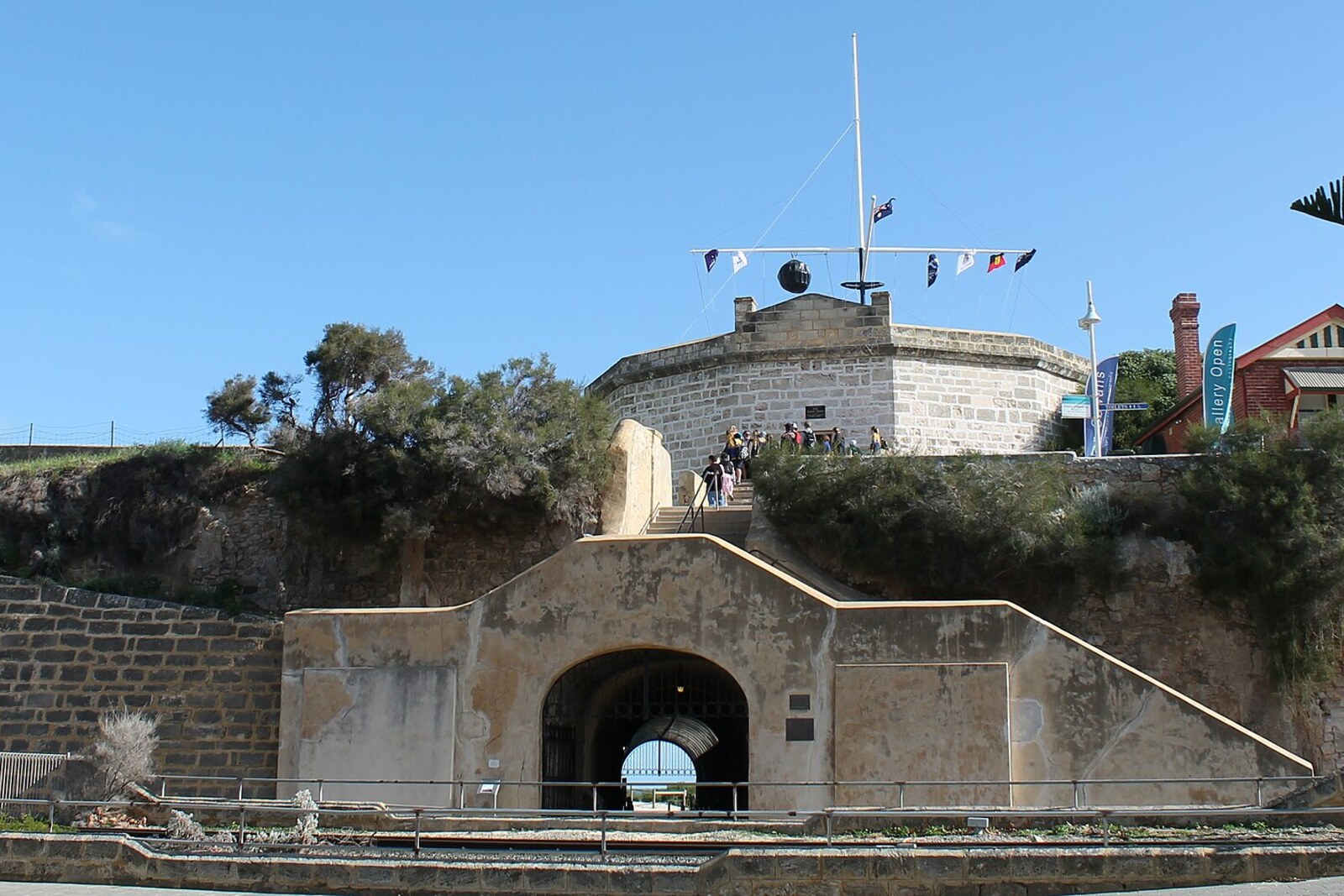
Look around first
What to notice
- The tunnel's stone vault
- The passage's rock walls
- The exit to Bathers Beach
- The Round House above the tunnel
The story of the place
The stone vault leads through the limestone headland from Bathers Beach to the beginning of High Street. The Round House stands above the passage, and the marks of picks can still be seen in the rock walls. Once, this was a service route: barrels of rendered fat and whalebone, as well as goods unloaded at the shore, were rolled along it; townspeople also chose this shorter way. A charge was made for transporting goods, and the gates were locked at sunset. The jetty, warehouse, and shore-station boilers disappeared, but the corridor outlived everything it had been cut for.
In June eighteen thirty-seven, the owners of the Fremantle Whaling Company offered the governor a deal. They would build a jetty and a breakwater at Bathers Bay, where vessels of up to one hundred fifty tons displacement could unload. The colonial administration would permit a direct passage to be cut through Arthur Head to High Street and provide workers—prisoners from the Round House.
One of the company's founders was John Bateman, a Fremantle merchant and postmaster. He earned his living selling a great variety of goods from his own stone house-store. Whaling was meant to give local merchants a share of the profits already being made off Australia's western coast by experienced American and French crews. Bateman and his partners invested in boats, gear, and a shore station. But the jetty was on one side of the rocky headland, while the warehouses and customers were on the other. Barrels of rendered fat, whalebone, and goods brought by ship had to be taken around to town. The tunnel promised to cut unloading time by at least half.
The colonial engineer Henry Willey Reveley laid out the passage almost exactly along the axis of High Street. He considered the local limestone soft enough for picks and strong enough to support the prison above the excavation. In August, prisoners began cutting the rock. They were men convicted in the colony itself; the British convicts usually associated with old Fremantle would not arrive until thirteen years later. Five months later, in January eighteen thirty-eight, the passage was ready.
The company received the right to charge for transporting goods. Townspeople used the passage too, although after disputes over free access, the businessmen were required to install gates and lock them at sunset. For the prisoners, the road cut through the rock did not become a way to freedom: it linked a private jetty with the commercial street, and the construction records did not preserve their names.
The merchants' calculation did not work out either. The whaling ventures did not repay the investment, the company operated at a loss for two seasons, and because of debts it transferred its property to the trading house of Lionel Samson. Later, the jetty, warehouse, and shore-station boilers disappeared. Its service corridor remained: from Bathers Beach it still leads to the beginning of High Street, and above it stands the Round House, whose prisoners cut this road for the whalers.
Useful on site
A public pedestrian passage without a ticket office; fixed hours have not been officially published.
Checked: date not specified. Check the official source before visiting.It is cooler and darker inside than outside; walk carefully and do not block the narrow path. If the tunnel is closed, inspect the accessible entrance and go around the hill by the permitted route.