 Guide On Map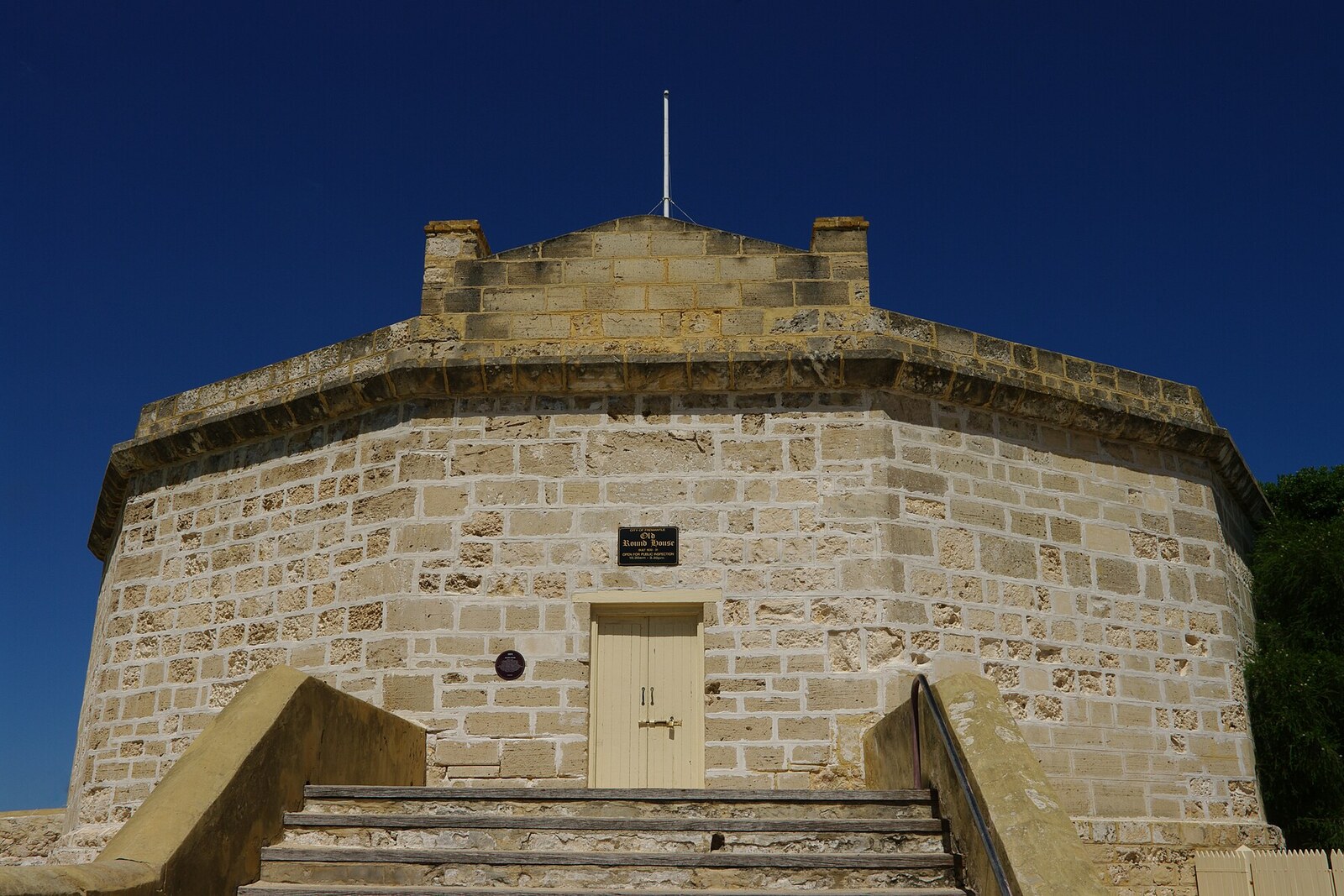
Look around first
What to notice
- Twelve-sided building
- Doors of the eight cells
- Central courtyard
- Main entrance
The story of the place
On the night before his execution, John Gavin sat in one of the eight cells of the Round House—behind this wall. The cell number has not survived in the records. The prisoner himself was about fifteen years old.
Gavin was brought from England's Parkhurst Prison in eighteen forty-three. The colony lacked workers, and several dozen more convicted teenagers were sent with him. The documents called them juvenile immigrants. The boys were conditionally released on two conditions: they became apprentices to local employers, and until the end of their original terms, they could not return to the country where they had been convicted.
Gavin was assigned to the Pollards and lived in exchange for work on their farm in Dandalup. On February twenty-first, eighteen forty-four, eighteen-year-old George Pollard was found on a bed with his head smashed in. A carpenter's adze lay nearby—a tool like an axe with a transverse blade. George's mother immediately accused the apprentice. Gavin denied guilt.
There were no witnesses to the murder. The prosecution rested entirely on circumstantial evidence and the dead man's mother's testimony: Gavin's wet clothing, his trip to the river, and his behavior after the body was discovered. The jury deliberated for about half an hour and found the teenager guilty. The judge immediately imposed a death sentence.
Gavin was transferred from Perth to Fremantle because this twelve-sided building was the main prison of the young British Swan River Colony—the name then used for the settlement around Perth and Fremantle. Governor James Stirling ordered it built soon after the colony was founded: sailors and settlers were arriving in the port, and there was nowhere to hold people detained for drunkenness and fighting. He chose a cliff above the town so that the prison could be seen both from the streets and from arriving ships.
Engineer Henry Willey Reveley arranged the cells around a central courtyard. A warder in the middle could watch all the doors at once. The building has twelve sides in plan; from a distance, they merge together, so residents called it the Round House.
On the evening before the execution, John Scoules, appointed guardian of the transported teenagers and helping with Gavin's defense, came to Gavin, along with the Anglican clergyman George King, who was preparing the condemned prisoner for death. According to a newspaper report, Gavin confessed here. He said that he had intended to kill his mistress, but struck the sleeping George first: George was stronger and might have caught him. The teenager could not explain why he wanted Mrs. Pollard dead. The confession came after the sentence, following several hours spent with the guardian and the clergyman.
Colonial officials led Noongar prisoners and other Aboriginal people of Western Australia through these same doors. After the prison opened on Wadjemup / Rottnest Island, men and boys were locked up here before being sent by sea. On the island, prison authorities used them for forced labor.
On the morning of April sixth, eighteen forty-four, Gavin was led out through the main entrance. A gallows stood about nine meters to the north. There was no trapdoor in the platform: the boy was placed on a cart, then a horse pulled it away from under his feet. He weighed so little that the sheriff ordered extra weights tied to his legs.
The body was left hanging for an hour, then a death mask was taken from his face and a cast of his skull was made for the scientific research of the time. That same day, prisoners carried the body to the sand hills southwest of the prison. Scoules accompanied them alone. Gavin was buried without a rite and without a gravestone.
The cells are now open to visitors, and their doors once again face onto the central courtyard. Which of them was Gavin's final cell, where his grave stood, and what became of his remains are unknown. The gallows in front of the entrance is gone as well.
Useful on site
Daily 10:30–15:30; free entry. The cannon firing usually takes place at 13:00.
Checked: date not specified. Check the official source before visiting.If the inner courtyard is accessible, do not linger in the cell doorways. If the entrance is closed, you can understand the building's shape and its position above the port from outside.