 Guide On Map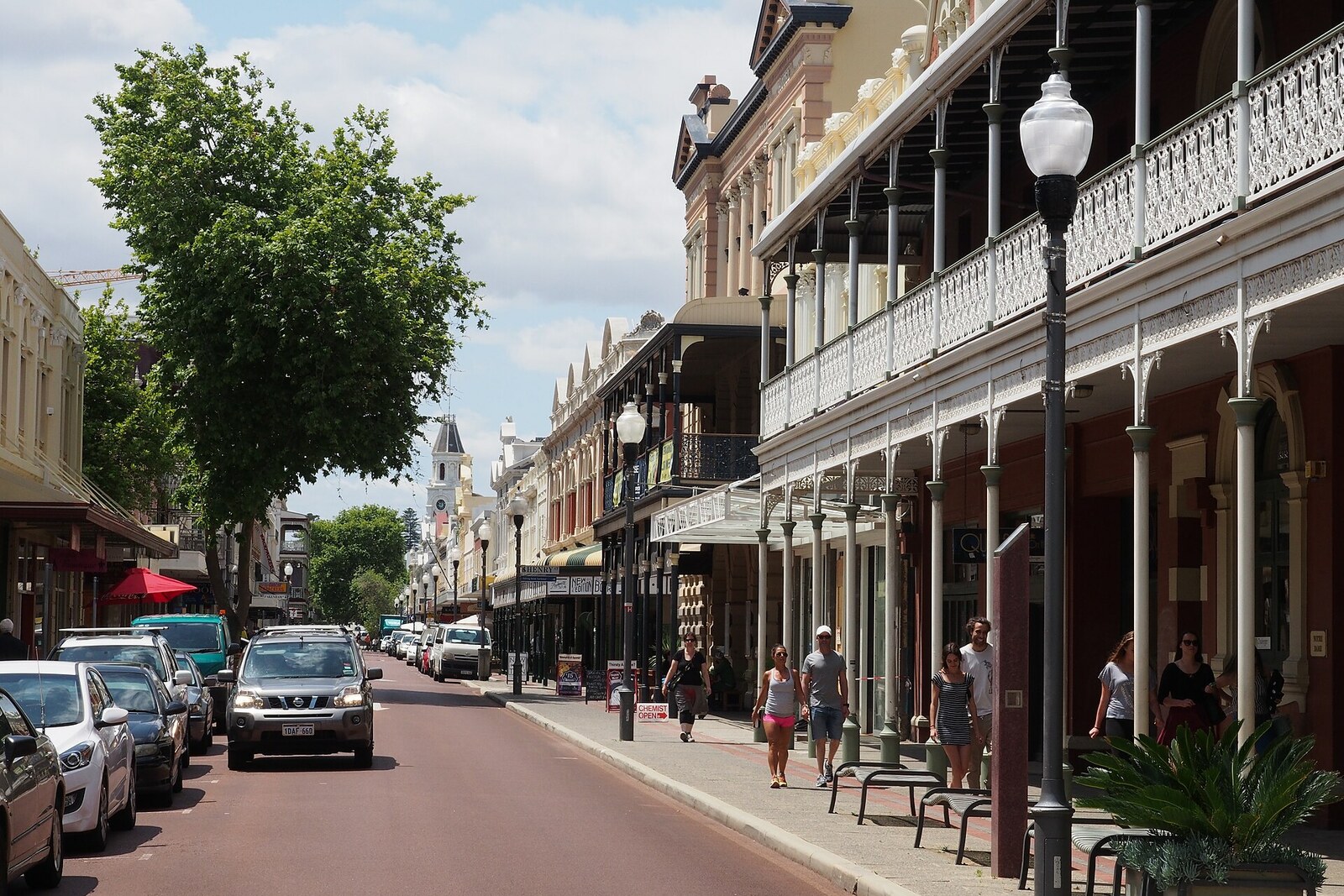
Look around first
What to notice
- The Higham name on the facade
- The date “1853”
- Wide warehouse passageways
- Commercial buildings of the West End
The story of the place
At the corner of High Street and Market Street, the Higham name stands above the facade, alongside the founding date: eighteen fifty-three. The current two-story building was constructed later. The date belongs to the family business, which began as a small bakery.
That year, John Higham and Mary Higham arrived from England in the cheapest passenger class. They rented premises at the neighboring intersection of High Street and Pakenham Street and began selling bread, sweets, and groceries. The family lived on this. In eighteen fifty-eight, John, a baker and shopkeeper, died without a will. Mary was left with four children and a shop that had to be preserved. Her eldest son, Edward Higham, was thirteen; he left school to work with his mother.
Mary expanded the trade, adding clothing, shoes, fabric, and imported goods. In eighteen sixty-one, she bought this very corner site for one hundred twenty pounds. She then mortgaged it, first for six hundred and then for another four hundred pounds. Most likely, the borrowing went toward a large two-story building that housed the shop, living quarters, and a basement warehouse under one roof.
The choice of location proved accurate. Fremantle was expanding eastward, and the intersection of High Street and Market Street became one of the busiest. Crates for Higham's Buildings arrived on ships from other Australian colonies and, later, directly from London. The city council bought office furniture, lamps, timber, gunpowder, and fuses from Mary; the colonial administration ordered tens of thousands of roofing shingles. Customers could pay with local agricultural produce.
The whole West End was built up on the same pattern. On High Street, merchants placed the doors of shops and offices, while goods were kept at the back of the lots and on neighboring streets. Carts reached them through wide passageways. The closeness of the wharves shortened the route from a ship's hold to the warehouse, and from there cargoes were sent farther across the colony. During the gold rush of the eighteen nineties, demand grew so much that merchants replaced many early houses with warehouses and commercial buildings.
What might be stored beneath the handsome facade became clear on the night of February sixth, eighteen seventy-one. Several men talking on High Street noticed smoke coming from the Higham shop and woke Mary, her children, and the lodgers. Edward organized volunteers into a bucket chain. There was kerosene in the basement; the fire was put out before an explosion. A few days later, Mary printed a newspaper thank-you to everyone who had saved the house.
The firm continued to grow. Mary could already send her younger son to study, first in Perth and then in Sydney—an opportunity that thirteen-year-old Edward had missed. She ran the business until her death in eighteen eighty-three. In the following decade, her heirs replaced her shop with the current row of buildings; the property remained in the family until nineteen seventy-four. The Higham name and the date when the trade began remain on the facade—on walls Mary herself never saw.
Useful on site
Public streets are accessible at all times; individual buildings operate on their own schedules.
Checked: date not specified. Check the official source before visiting.View the buildings from the sidewalk and do not enter service passageways. It is best to choose one surviving warehouse and read it from its facade to its rear.