 Guide On Map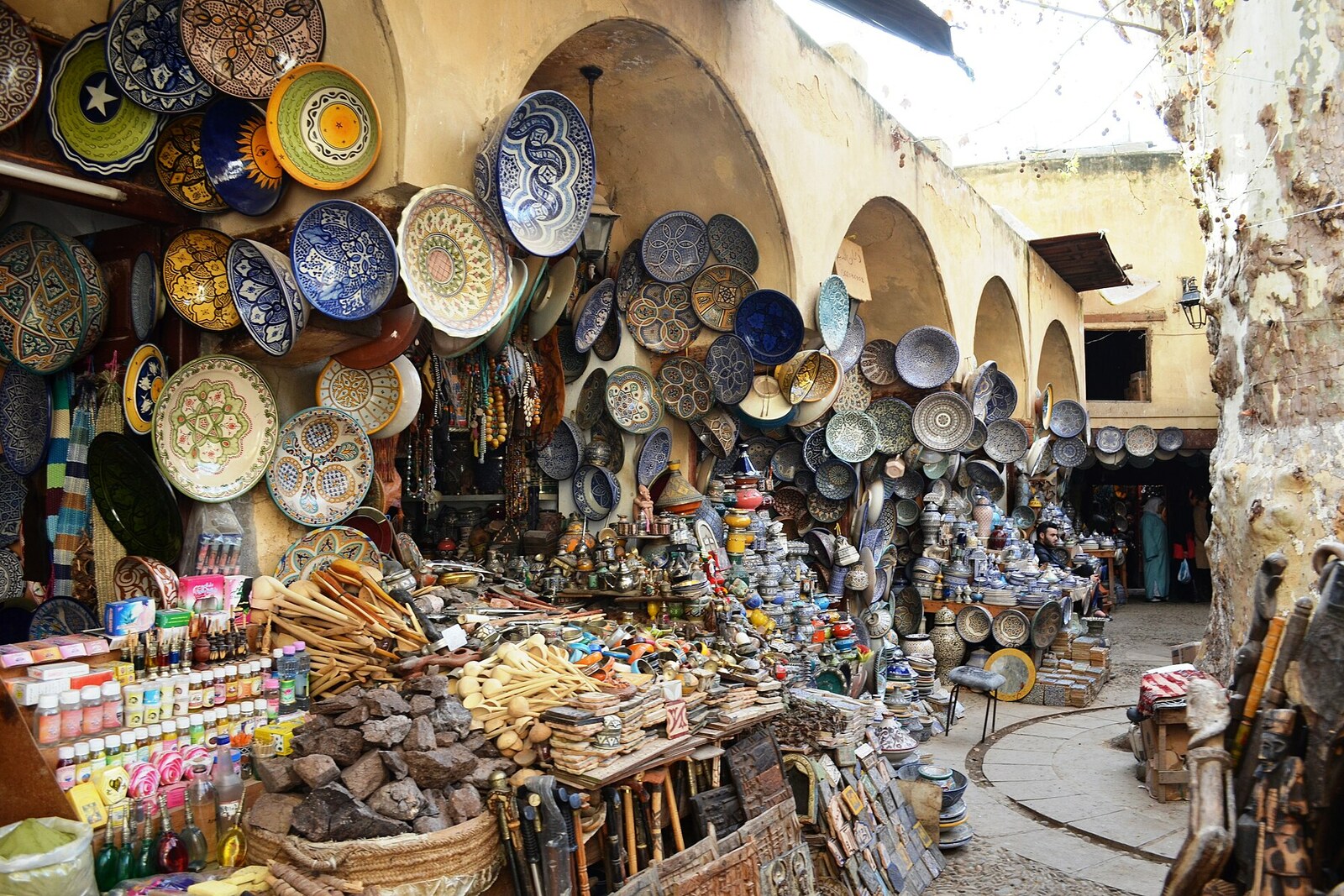
Look around first
What to notice
- Shops around the square
- Covered market gallery
- Henna and herbal products
The story of the place
In the middle of the twentieth century, a severe fire damaged the old building, and the patients were transferred to a new institution. A covered market gallery was later built on the cleared site; shops now occupy the space where the wards and service rooms once stood. The small square at the side adjoins the former western boundary of this place, and henna and herbs are still sold nearby.
The stalls of Henna Souk surround a small square and continue into a covered market building. Henna gave the market its name, but the neighboring sellers of herbs and personal-care products developed beside an institution where these goods were needed not only by shoppers in the Medina of Fez. On the site of the present building stood a maristan—the word used for a hospital in medieval Fez.
Around twelve eighty-six, the Marinid sultan Abu Yaqub Yusuf ordered a hospital to be opened here for people who could not pay for treatment or had been left without support from their families. Doctors treated internal illnesses, bone injuries, eye conditions, and mental disorders. Its upkeep was provided by habous, charitable endowments: houses, shops, and land were transferred to the institution permanently, and the rent paid for medicines, food, and wages for doctors, nurses, cooks, guards, and musicians.
This system was broken by Sultan Abu Sa'id Uthman II, who needed funds to equip an army. He began selling and mortgaging the maristan’s property, although the people of Fez protested. The hospital was losing not a one-time donation, but income that was meant to arrive every month. Doctors and medicines gradually disappeared, while the wards were increasingly used to house mentally ill people who had nowhere else to go.
Hasan al-Wazzan (Leo Africanus), a young student who took work here as a secretary, witnessed the consequences; he would later be called Leo Africanus in Europe. He worked at the maristan for two years and received three ducats a month, as did other students who earned their living through service there. He was a man from the hospital office who knew who was paid and how patients were cared for. In his description of Fez, he listed the staff that still remained, but also described people locked in rooms, tied up, and left in the care of guards. The sale of the habous gave the sultan money for the army; for the patients, it turned the hospital into a place of isolation.
One paid service lasted especially long. Every Friday, musicians performed Andalusian music for the patients; such sessions continued into the twentieth century. They were arranged to ease the patients’ condition, although by then the former multi-specialty hospital no longer existed.
The name Sidi Frej Maristan sounds as though the maristan was dedicated to a local saint. There was neither a tomb nor a reliably known saint by that name here. Researchers link the name to the neighboring Bab al-Faraj—“Gates of Relief”—which stood between the henna market and the herbalists’ market. The hospital’s name grew out of the name of a passage, not the biography of a venerated person.
In the nineteen forties, a fire severely damaged the old maristan. The patients were transferred to a new institution, and a covered kissaria—a market gallery—was built on the former site. The medieval wards have not survived in the present building: Henna Souk adjoins their former location on the west, while the shops occupy the hospital site where Hasan al-Wazzan (Leo Africanus) once kept records for three ducats a month.
Useful on site
Shops open around 10:00 and operate until sunset
Checked: June 19, 2026. Check the official source before visiting.Do not look for hospital wards or a surviving façade: the maristan has been lost. Listen to the story without blocking shoppers and merchants.