 Guide On Map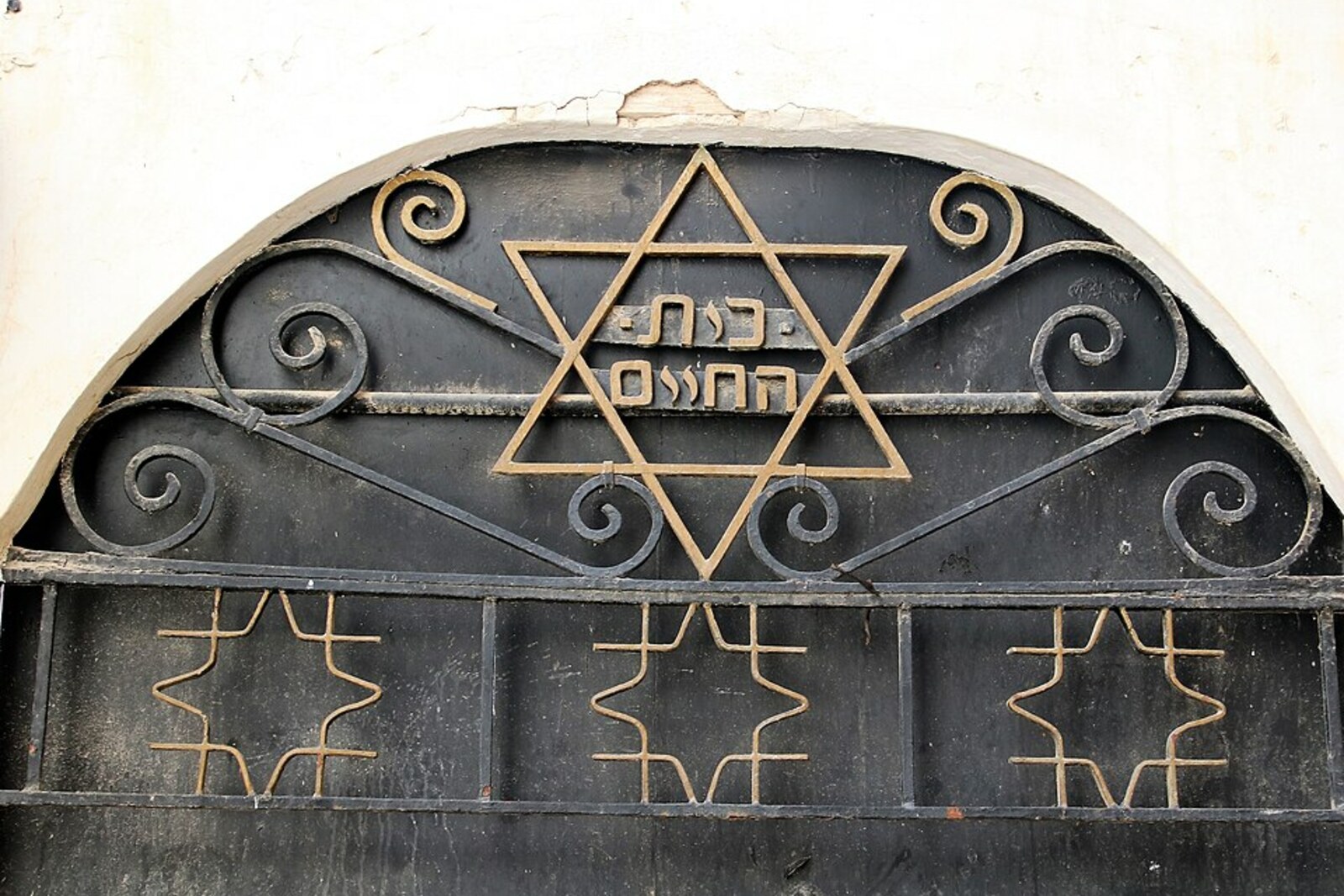
Look around first
What to notice
- Central street
- Restored façades
- The quarter’s northern wall
- Palace walls beyond the quarter
The story of the place
In Morocco, a mellah is a walled Jewish quarter. The Mellah of Fez was the first; later, its name passed to such quarters in other cities. Its founding is dated to the middle of the fifteenth century, most often to fourteen thirty-eight, although the relocation may have taken more than one year. Jewish families had to leave their homes and shops in old Fez and move to Fes el-Jdid, near the wall of the sultan’s palace. Here, the ruler could protect the community and at the same time supervise the merchants, jewelers, and artisans on whom taxes and court commissions depended. At night, the quarter gates were locked.
The palace’s proximity once determined who would be able to get out of here. On April seventeenth, nineteen twelve, two and a half weeks after the treaty establishing the French Protectorate in Morocco was signed, Moroccan soldiers mutinied against their French commanders. Some of the rebels and townspeople who joined them headed for the Mellah. Its residents were considered supporters of the French: a year earlier, some of them had supplied the troops arriving in Fez with food and goods.
Twelve days before the mutiny, soldiers had already searched the quarter for weapons. They then saw stocks of cloth, jewelry, furniture, and goods in the shops. For local families, these were everything at once: income, savings, and dowries. After the searches, most of the residents’ rifles were taken away. When the attackers set fire to the gates, the defenders in the tower above the entrance fired back with several old rifles, but they could not hold the passage.
Amram Elmaleh, the director of a Jewish school, tried to summon help and lead families out of the encirclement. He offered large sums of money to anyone willing to deliver a note to the French camp, only a few kilometers from here. Not a single message arrived. Elmaleh spent the night armed, beside the people sheltering in neighboring houses. By morning, he had persuaded them to abandon their property and leave through the garden adjoining the palace.
The palace gates remained closed at first. Only by evening did Sultan Abd al-Hafid order that the refugees be admitted. On the first evening, about two thousand people entered the palace courtyard; then almost the entire community of the Mellah gathered on palace grounds. Families settled in courtyards, stables, and the open cages of the sultan’s menagerie. The cages did not serve as a prison: people occupied them themselves as shelter. The sultan ordered bread and olives to be given to the refugees.
The attack lasted three days. Dozens of residents were killed, homes and synagogues were looted, and part of the quarter burned down. In Jewish memory, these days came to be known as the Tritel—a looting in which even things hidden underground are sought out.
On April twenty-third, the minister of public works, Sidi Muhammad al-Tazi, who had been tasked with making the quarter fit for return, hired one hundred Jewish men. They were divided into groups of ten and sent under guard to clear the rubble. The workers demolished walls that were ready to collapse and inspected wells: residents had hidden property there, and found items were recorded so they could be returned to their owners. On April twenty-eighth, families whose homes could still be occupied left the palace courtyards. The others moved in with relatives and acquaintances.
In photographs taken after the Tritel, the central street of the Mellah is strewn with charred beams, and the stories of the houses are torn open. The present façades along it are the result of repairs and later rebuilding. A short spatial connection remains unchanged: directly beyond the quarter’s northern wall lie the palace lands, where residents left through the neighboring garden. The menagerie itself can no longer be seen from the street.
Useful on site
The quarter’s open streets are accessible as urban space; individual houses, courtyards, and religious sites are not open for unrestricted passage. Checked against open sources 2026-06-29.
Checked: June 29, 2026. Check the official source before visiting.This is a living commercial quarter: do not block narrow passages, ask permission before photographing residents, and do not enter private entryways for architectural details.