 Guide On Map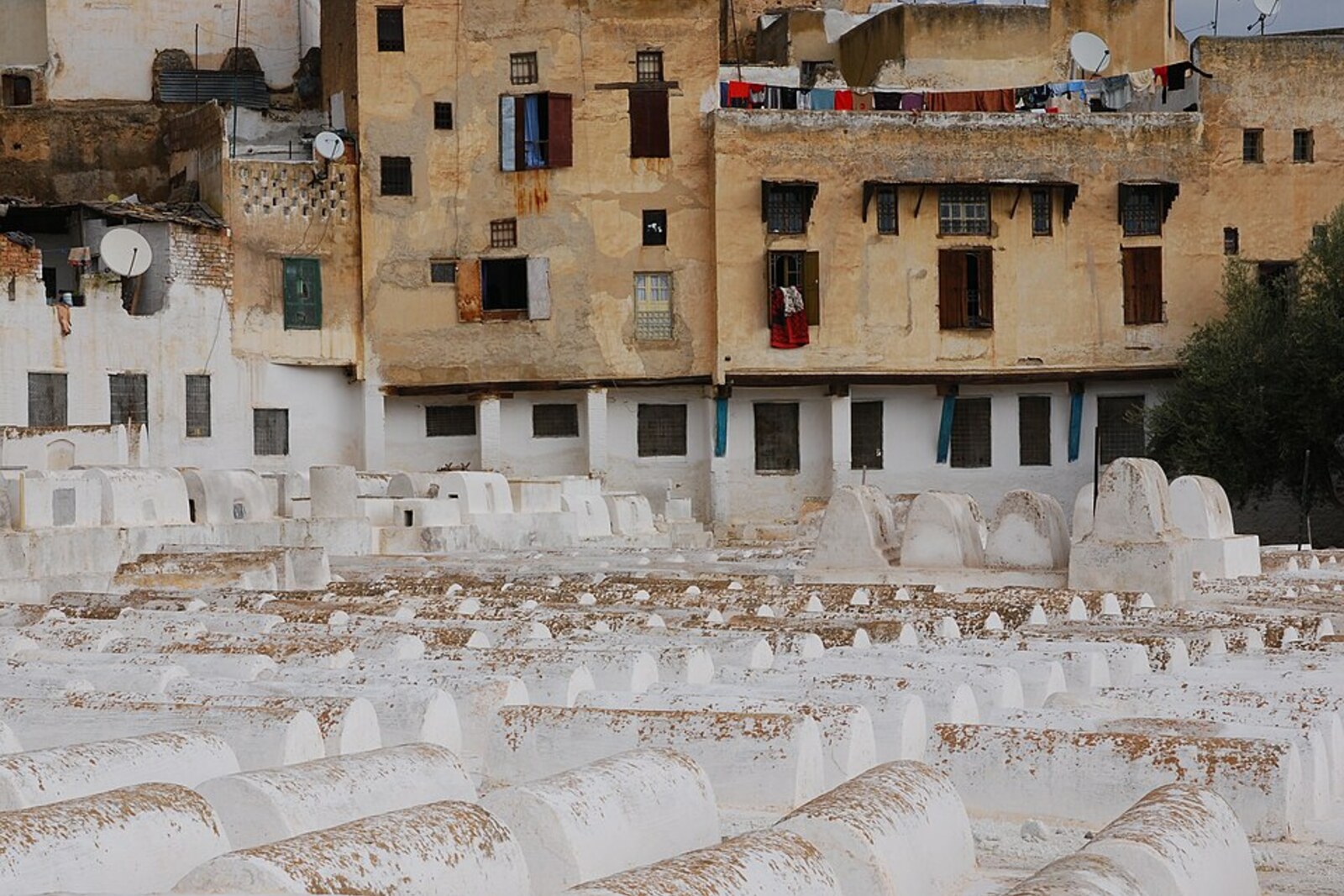
Look around first
What to notice
- Rows of low headstones
- Lime-whitewashed slabs
- The southern wall of the Mellah of Fez
The story of the place
Beyond the southern wall of the Mellah of Fez lies the Jewish Cemetery of Fez, for which the community was assigned land by a sultanic decree in eighteen eighty-two. The soil on this site remained damp for a long time: in a community description, it was associated with standing water. Later, graves of new generations began to appear here, and the low slabs were covered with lime. Their even, pale rows run along the wall and preserve the community's memory of another piece of land that disappeared by the palace.
In the spring of eighteen eighty-eight, families of the Mellah of Fez were laying to rest here people who had died long before the families themselves were born. Remains were being exhumed from the old cemetery by the palace wall. Relatives took the bones of parents and ancestors to bury them again on this site.
The old cemetery stood near Bab Lamer, roughly where the square before the golden gates of the Royal Palace of Fez now lies. The community had owned this land since about the beginning of the sixteenth century. Among those buried there were rabbis who had arrived in Fez after the expulsion of the Jews from Spain. For the families, this meant both the graves of loved ones and land that several generations had regarded as their own.
In eighteen seventy-seven, Moulay Hassan I, the sultan who was expanding the Royal Palace of Fez, demanded that the cemetery be cleared for new buildings. Community leaders and the chief rabbi asked him to reverse the decision, then appealed to European diplomats. They managed to gain several years. In eighteen eighty-two, a sultanic decree assigned the Jews other land by the southern wall of the Mellah of Fez—the present cemetery. In a community description, the new site is called marshy and full of water.
The dispute did not end there. According to a Fez Jewish chronicle, on the first day of Nisan—the spring month of the Jewish calendar—in eighteen eighty-eight, the sultan sent guards to the old cemetery. They began opening the graves, and families hurried to take the remains before they became mixed together or disappeared. The relocation took years: even in nineteen twelve, historians still saw individual graves on the former site.
Later, subsequent generations of Fez Jews were buried on the new land. This is how the rows of low headstones, whitewashed with lime, appeared. There are no more headstones at the former cemetery by the palace; here remain the relocated remains and the graves of those buried after the relocation.
Useful on site
Access depends on the current arrangements and the custodian; a donation or local fee may be required. An official, consistent schedule is not confirmed in open sources as of 2026-06-29.
Checked: June 29, 2026. Check the official source before visiting.Entry may depend on the custodian and local rules. If access is open, behave as you would at an active place of remembrance: do not sit on the headstones, and ask whether photography is permitted.