 Guide On Map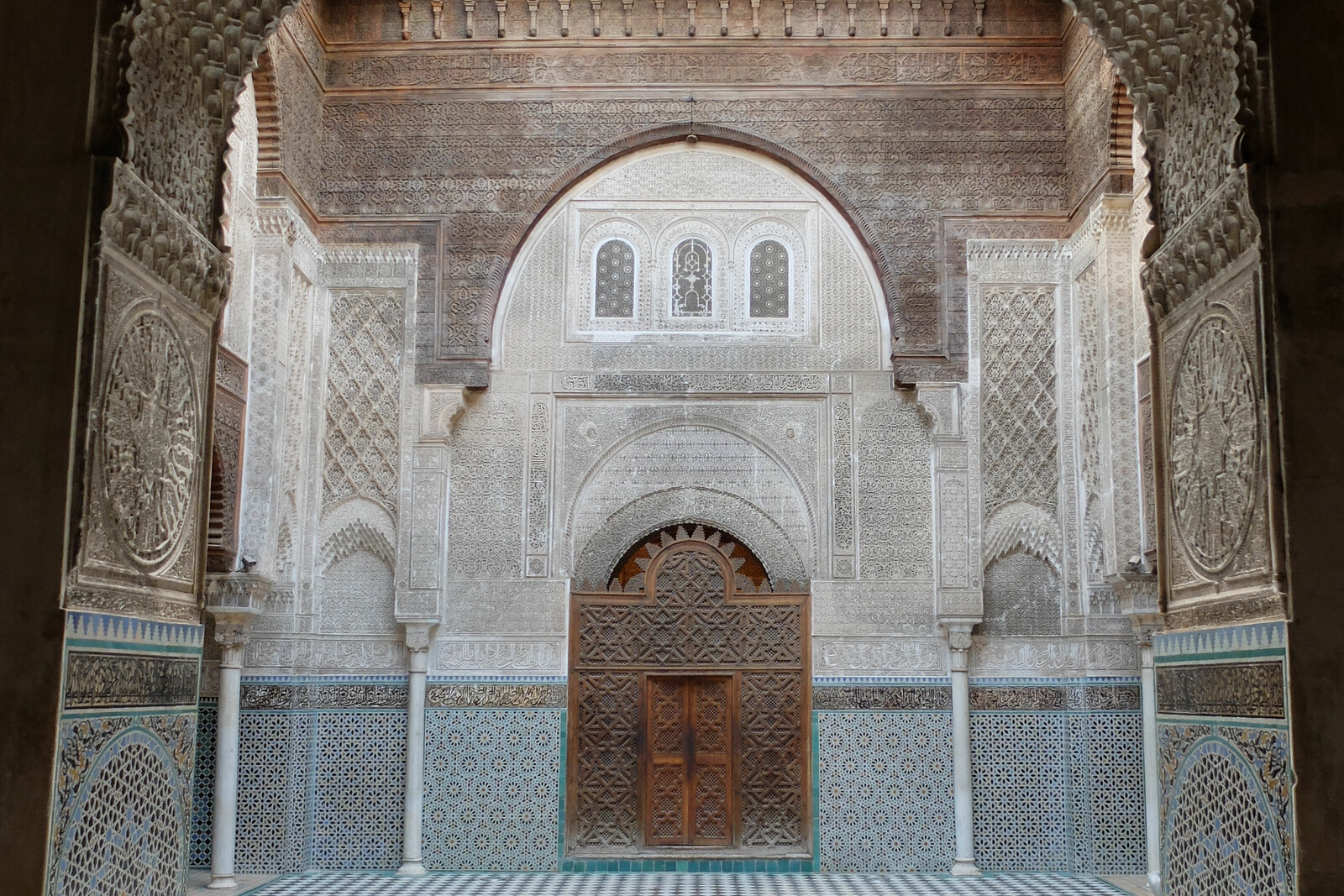
Look around first
What to notice
- Courtyard with a fountain
- Prayer hall
- Doors of the rooms above the galleries
- Foundation plaque
The story of the place
Al-Attarine Madrasa was built as a home for al-Qarawiyyin's students who came from elsewhere: without accommodation and support, they would not have been able to stay in Fez for long. On the cramped plot between market rows, a courtyard with a fountain, a room for ablutions, and a prayer hall were fitted below, while thirty small rooms opened above the galleries. In the early twentieth century, about sixty students still lived here, mainly people from cities in the country's northwest. The madrasa was named for the spice and perfume traders by the entrance; visitors now come into these rooms and the hall.
In thirteen twenty-three, the Marinid sultan Abu Sa'id Uthman brought Fez jurists and pious townspeople here. He needed the support of influential scholars and educated people to govern the state. That is why he placed the new school beside al-Qarawiyyin, Fez's principal place of teaching.
The head of construction, Abu Muhammad Abdallah ibn Qasim al-Mizwar, was given an awkward plot in a densely built market quarter. The sultan personally attended the laying of the foundation together with the very jurists for whom this gesture was intended. Two years later, the building was ready.
Abu Sa'id bought revenue-producing property and transferred it to a habous endowment: its income was to be spent on the madrasa. This money paid the teachers, the imam, the muezzins, and the caretakers, maintained the water supply, and provided students with allowances. For a young man arriving from elsewhere, the arrangement was entirely a practical matter. Without a room and food, he would not have been able to remain in Fez for long, and would therefore have lost both an education and the chance to become a judge, theologian, or official. Al-Attarine housed above all people from the northwestern cities of Tangier, Larache, and Ksar el-Kebir.
Most lessons took place at neighboring al-Qarawiyyin, but teaching was also held here, in the prayer hall. The madrasa was at once a school, a dormitory, and a small mosque for its residents. The cramped plot determined the entire layout: below were fitted a courtyard with a fountain, a prayer hall, and a room for ablutions, while thirty small rooms were arranged above the galleries. In the early twentieth century, about sixty students still lived in them.
The sultan himself did not remain in the name. “Attarine” means traders in perfumes and spices: their Souk al-Attarine stood by the entrance, and the madrasa took on the name of the neighboring market row. There are no students here now; visitors enter instead. In the prayer hall, the foundation plaque bearing the date when the work was completed has survived, and above the courtyard still run the doors of those thirty rooms, for which the school was squeezed in here, just a few steps from al-Qarawiyyin.
Useful on site
Paid visitor entry is usually during the daytime; check the exact schedule and access to individual sections at the door, especially on prayer days, holidays, and during local works.
Checked: June 30, 2026. Check the official source before visiting.If the entrance is open, move quietly and do not block the narrow passageways; if the door is closed, limit yourself to reading from outside.