 Guide On Map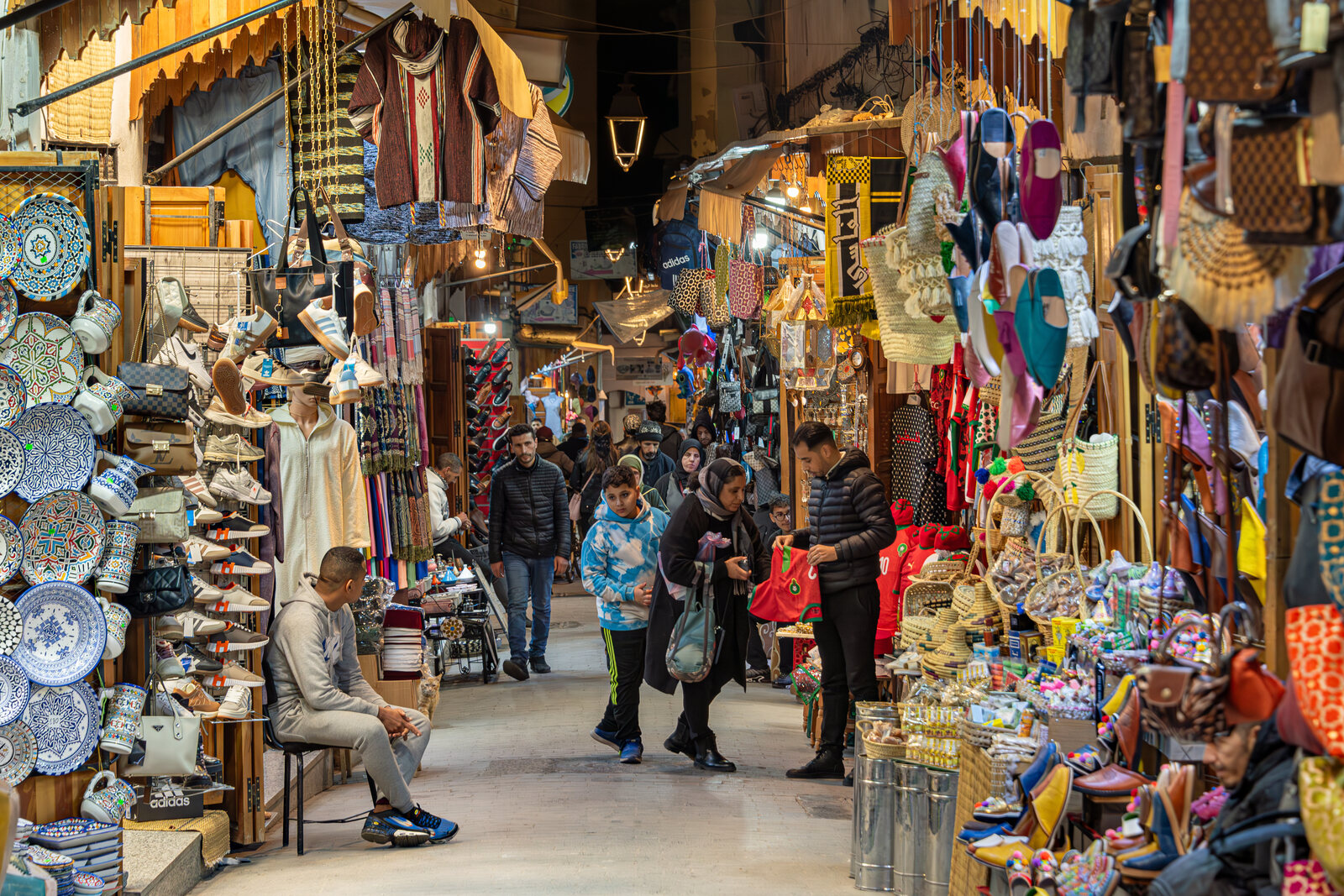
Look around first
What to notice
- The steep slope of the street
- Shops along the road
- Blind bends in residential alleyways
- Cul-de-sac passages
The story of the place
Talaa Kebira means “the Great Ascent.” The route leads down it, from the western gate toward al-Qarawiyyin; the name comes from movement in the opposite direction, up the slope. Merchants kept shops along this road, while residential alleyways led off around blind bends and into cul-de-sacs. This made it possible to move shoppers, pack animals, and goods through the medina with almost no need to enter residential quarters.
At the beginning of Talaa there is another name: Maimonides House. According to oral tradition, this is where Moses ben Maimon lived, a young Jewish legal scholar trying to understand how to preserve faith under threat of death. The exact address cannot be confirmed, but Moses ben Maimon's stay in Fes and a letter written here leave almost no doubt.
His family left Cordoba after the Almohads conquered the city. The new rulers stripped Jews of their former protection: conversion to Islam, flight, or death remained. Around eleven sixty, the family reached Fes, where a large Jewish community still survived. Yet Fes was ruled by the same Almohads.
The occasion for Moses ben Maimon's letter was the response of another, unnamed rabbi. He declared Jews who had uttered the Islamic profession of faith under threat to be apostates and demanded that they choose death instead. For Moses ben Maimon, this concerned people around him, not a theological exercise. He objected: words spoken out of fear of the sword cannot be judged in the same way as a voluntary renunciation of faith. A coerced person may observe the commandments in secret, but must leave the country as soon as an opportunity arises.
In eleven sixty-five, the Fes rabbi Judah ibn Shoshan was executed as an apostate from Islam. Researchers believe that this execution may have prompted Moses ben Maimon to flee. He followed his own advice: with his family, he left Fes, reached Palestine, and then settled in Fustat near Cairo.
There is no twelfth-century house here. Dar al-Magana, which is associated with Moses ben Maimon, was built almost two centuries later. What remains on Talaa Kebira is not his walls but the address of an oral tradition: a place to which the Jews of Fes attached the memory of a letter written by a man preparing to flee for the second time.
Useful on site
An open street thoroughfare; go in the morning or outside the busiest shopping peak if you want to look up calmly without slowing the flow.
Checked: June 30, 2026. Check the official source before visiting.Walk at the pace of the flow, keep to the edge when stopping, and do not block shopfronts or deliveries.