 Guide On Map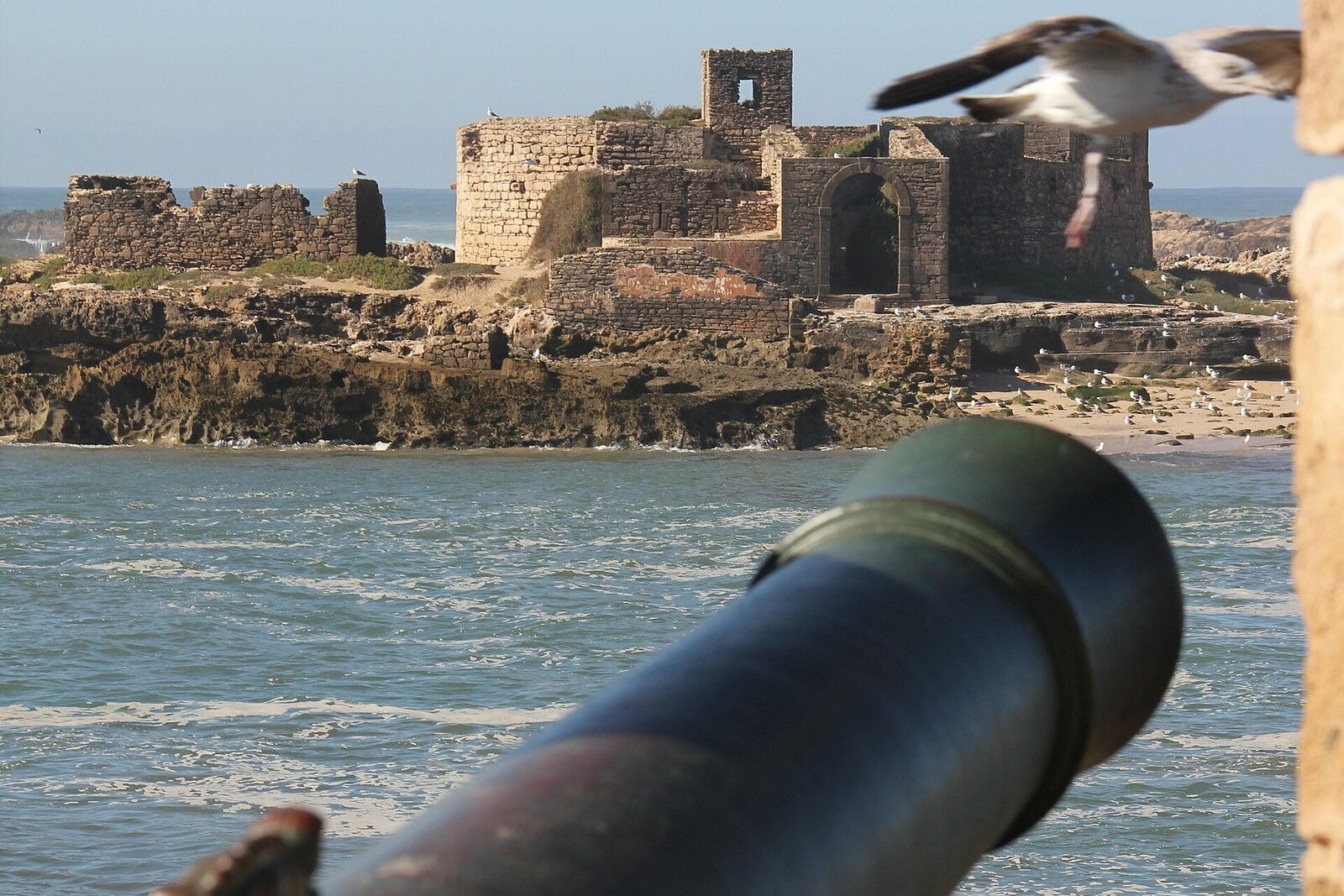
Look around first
What to notice
- The long stone platform
- Cannons on the upper level
- Embrasures
- Rooms beneath the battery
The story of the place
Sqala de la Ville is an artillery platform on the seaward wall of the kasbah, the fortified quarter of the sultan's officials, garrison, and foreign representatives. Here, the word “sqala” referred to a coastal battery. Another sqala protected the port entrance; this one was meant to keep ships off the western side of the city under fire. Cannons were placed on the upper level, while ammunition was stored in the rooms below.
The overall plan for Mogador was drawn up by the French military engineer Théodore Cornut. However, Sultan Mohammed ben Abdallah was dissatisfied with the progress of the work and, at the beginning of seventeen sixty-seven, sent Cornut back to France. A drawing signed by Cornut survives, but researchers cannot confidently attribute every present-day fortification to him. Other European and Moroccan craftsmen continued the construction.
Documents link two city batteries to the Genoese trading company of Marquis Francesco Saverio Viale. Viale sought privileges to trade with Morocco and wanted a monopoly on exporting grain, oil, and wax. The enterprise required enormous sums: sea voyages between Genoa and Mogador were financed with loans at twenty percent. Profit was meant to come after Moroccan goods were sold; a delayed ship or an unsuccessful season turned future revenue into debt.
The sultan needed ship's rigging, weapons, and people able to build seaward fortifications. In seventeen seventy-one, the company sent about thirty engineers, architects, and workers. They were accompanied by Ambrogio Serra, manager of Viale's trading house in Morocco. Along with goods, the Genoese delivered bronze cannons, mortars, cannonballs, bombs, and tens of tons of rope. Of all the planned work, their craftsmen completed two batteries: the port battery and the kasbah battery, now known as Sqala de la Ville.
Viale's calculation did not work out. The company took on more orders and debts than it could service. By seventeen seventy-four, trade had to be sharply reduced to postpone defaulting on payment to the sultan. Serra, meanwhile, tried to separate from Viale and let the affairs of the trading house fall into disorder. In seventeen seventy-six, the sultan ordered the manager taken into custody; a year later, Serra was sent to Genoa. Another year later, the company ceased to exist.
The cannons standing here now cannot be regarded as one preserved cargo from Viale. Most were cast in Seville and Barcelona between seventeen forty-three and seventeen eighty-two, and the battery was armed gradually. What has survived more reliably from the Genoese enterprise is the long stone platform itself. Serra was taken home, the trading house closed, and the work completed by its craftsmen is still called Sqala de la Ville.
Useful on site
The open section of the fortifications is usually freely accessible; individual passages may be closed due to work or safety concerns.
Checked: date not specified. Check the official source before visiting.Watch out for strong gusts of wind, and do not sit on the cannons or on the edge of the wall. If the passage is closed, listen to the story from the accessible outer line of the fortifications.