 Guide On Map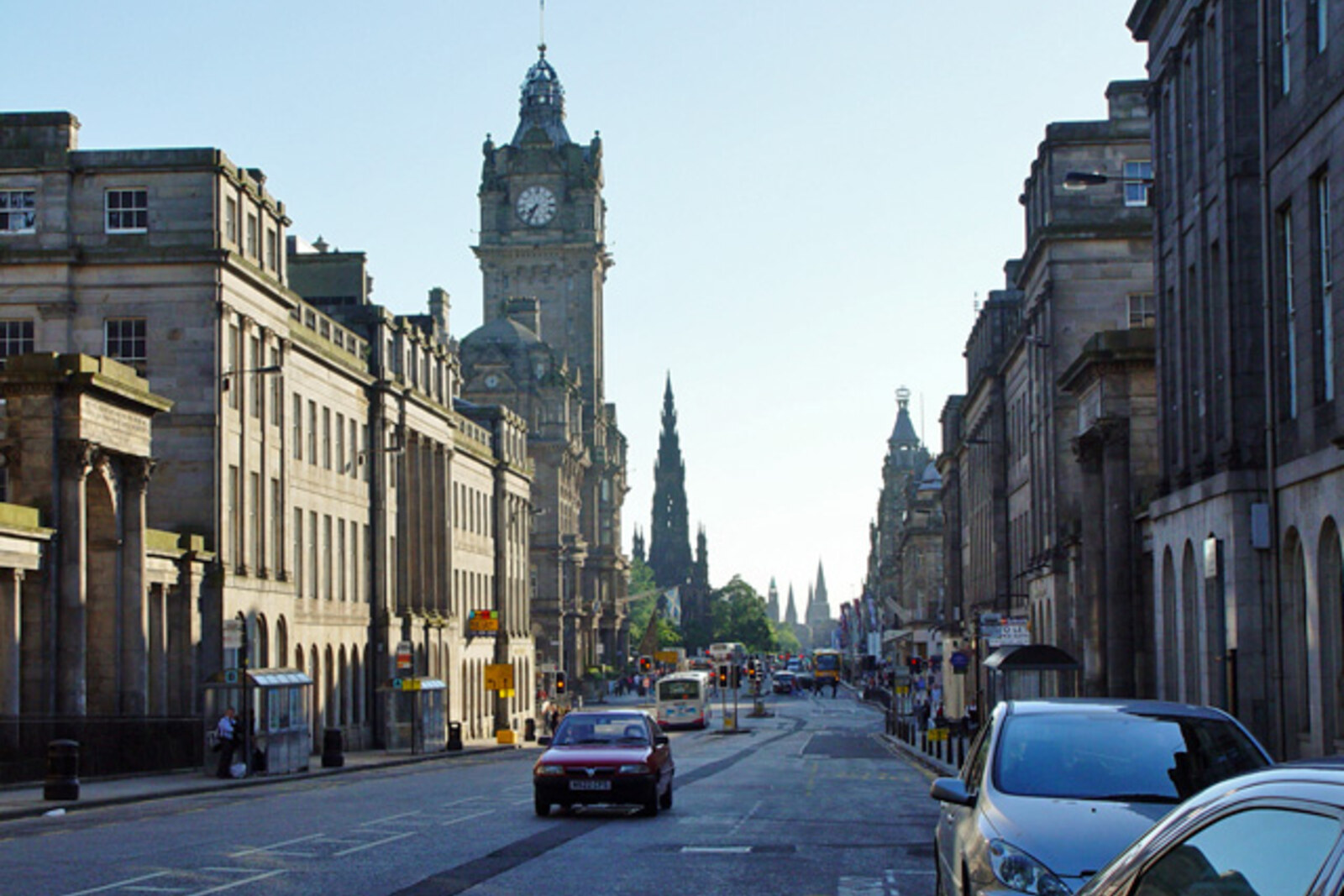
Look around first
What to notice
- Northern row of facades
- Princes Street Gardens
- Railway cutting
- Tracks to Waverley Station
The story of the place
The northern row of facades belongs to houses built for residents, but their floors are now occupied by shops and hotels. To the south, no second front of houses rises: the slope is occupied by a garden, and the train to Waverley Station runs below, in a cutting. The greenery appeared on the site of the drained Nor Loch, so the edge of the New Town opens out not into a block, but into a slope and a railway.
Behind the present name of Princes Street stands one prince. In James Craig's original plan for the New Town of seventeen sixty-seven, he called it St Giles Street, after Edinburgh's patron saint. The royal physician Sir John Pringle showed the plan to George III. The king remembered St Giles in London, an area with a bad reputation, and rejected the name. Pringle proposed Prince's Street—after the king's eldest son George, the future George IV. The name was written with an apostrophe and meant that it belonged to one person. In the middle of the nineteenth century, the apostrophe disappeared from directories, and the word came to look plural.
A row of houses only on the north side was secured by a legal dispute. The buyers of the plots believed that Craig's plan would leave an open slope down to Nor Loch in front of their windows. The city council read the documents differently: building was allowed south of the street if it stood at least ninety-six feet back from the northern houses.
In seventeen seventy-one, the council granted the land by what are now the Waverley Steps to a coachbuilder and furniture makers. They needed houses, warehouses, and workshops—their income depended on these premises. The owners of the plots opposite had paid for prestigious homes with an open view and did not intend to have workshops, soot, and devalued property in front of their windows.
The philosopher and historian David Hume was among fourteen owners who demanded that construction be stopped. The council rejected their petition, and they appealed to the Court of Session, Scotland's highest civil court. The judges ruled that Craig's drawing was not a contract. The owners appealed to the House of Lords and secured the reversal of the decision, but on reconsideration the Scottish judges again supported the council.
While the sides went through the courts, builders had almost finished the disputed buildings. In seventeen seventy-six, the arbitrator David Rae proposed a settlement: the buildings by what are now the Waverley Steps were allowed to be completed, while the land farther west, almost to Hanover Street, was ordered to remain a promenade forever. In eighteen sixteen, Parliament extended the ban to the rest of the southern side of Princes Street.
At their own expense, the owners laid paths, planted trees, and made a garden on the site of the drained Nor Loch. The park did not then belong to all townspeople. The gates were opened with a personal key, for which three guineas a year were paid. Hume and his neighbors preserved the promised open space, but turned it into a convenience for those who could pay for access.
A few decades later, the same owners had to defend the garden against the directors of the railway between Edinburgh and Glasgow. At first, they ensured that trains ended farther west, at Haymarket. The directors needed a connection with the line to Berwick-upon-Tweed, and they appealed to Parliament again. By the middle of the eighteen forties, attitudes toward railways had changed; the owners accepted compensation, and engineers laid the tracks in a cutting below street level. In eighteen forty-six, trains began running through the gardens to Waverley Station.
Shops and hotels already occupied some of the former houses. After the arrival of the trains, wealthy residents left Princes Street, owners enlarged the commercial premises, and by eighteen seventy-seven commercial facades occupied almost the entire northern row.
Both outcomes remain in place. To the north stand former residential houses, absorbed by shops and hotels. To the south, there is no second row of buildings: there are gardens there, and below the lawns run the tracks to Waverley Station. The owners kept open space in front of their windows, but trains were let into it all the same.
Useful on site
Sidewalks are accessible around the clock; the gardens, shops, and transport operate on separate schedules.
Checked: June 29, 2026. Check the official source before visiting.The best view opens from the regular sidewalk; do not cross the roadway for a photograph except at permitted crossings.