 Guide On Map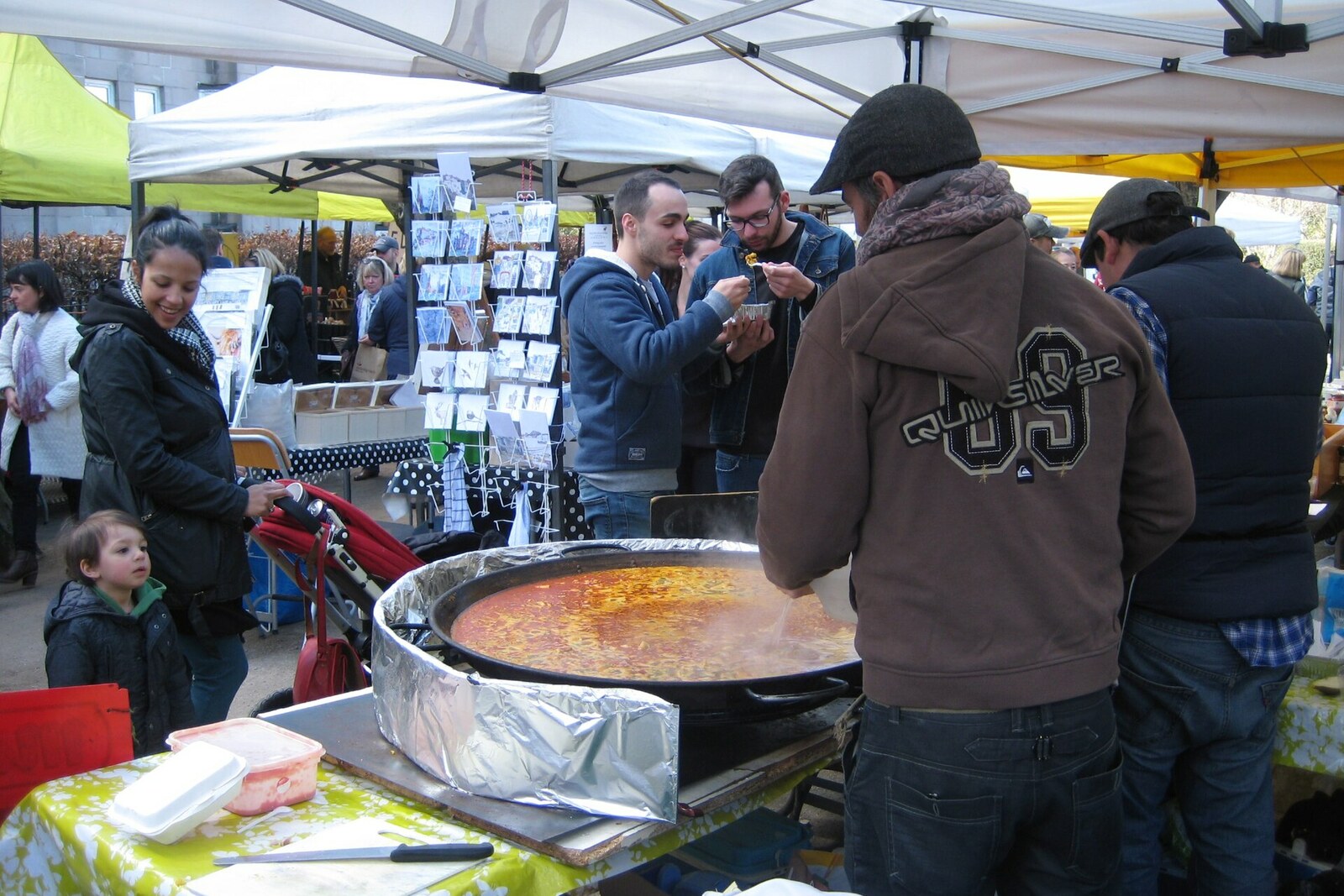
Look around first
What to notice
- The single-span stone bridge
- Shopfronts on Raeburn Place
- The mill lade
- Lade Court
The story of the place
The name Stockbridge comes from the Scots “stock brig,” meaning a wooden bridge. Before the stone crossing, people used a ford by the present bridge and a footbridge farther upstream. In seventeen eighty-six, a single-span stone bridge was built. The road from the northern outskirts entered Edinburgh across it, so houses, workshops, and shops stretched along one line—today's Deanhaugh Street and Raeburn Place. Shops and cafés still occupy this line today.
Raeburn Place is named after Henry Raeburn. He made his living from commissioned portraits, but here he acted as a landowner who wanted to turn the outskirts by the mills into a residential extension of the New Town. He particularly needed the money. Raeburn had guaranteed a trading company run by his son and son-in-law, which had invested in sea transport. The company went bankrupt in eighteen oh eight with debts of more than fourteen thousand pounds. Its ships and cargoes were sold off, Raeburn gave up his renowned studio, and he began granting plots from the Dean estate on long hereditary leases for construction. In eighteen thirteen, the architect James Milne began laying out new streets west of the bridge.
Almost at once, these plans were hindered by the grain merchant Andrew Keddie. His mill stood near the toll gate, where Bakers Place now stands. Keddie installed a steam engine: it made it possible to grind grain when drought or frost left too little water in the river for the wheel.
Residents of the new houses claimed that clouds of black smoke came from the chimney, soot settled on laundry and in gardens, and windows had to be kept shut. For Raeburn, this also meant a fall in land prices: who would buy plots beside a smoking engine? He led the homeowners in demanding that the engine be stopped. Keddie admitted that there had initially been too much smoke, but blamed a man who did not know how to fire the furnace properly. He said the emissions had already been reduced by more than half.
While the dispute was under way, Keddie lost money on imported grain: prices fell sharply after the Battle of Waterloo. He went bankrupt and sold the mill to a group of Edinburgh and Leith bakers. They were now the ones defending the engine on which the processing of their grain depended.
In January eighteen sixteen, Raeburn's dispute with the mill owners became the first case heard by Scotland's new civil jury court. Sixteen local residents testified about the smoke and ruined laundry. The bakers brought three washerwomen, who said they had noticed no particular damage, and Professor John Leslie, who studied steam engines. He inspected the engine at full load and judged it to be in good working order.
After a twelve-hour hearing, the jurors needed about fifteen minutes. They unanimously found the engine useful and harmless. The bakers continued to use it; by then Keddie had already lost the mill, and Raeburn had failed in his attempt to remove industry from beside his houses.
He continued the development nonetheless. Residential streets gradually took over the land around the old settlement, and Raeburn Place became its commercial street. The buildings of Stockbridge Mill are gone now. On Bakers Place, the channel that carried water to its wheel remains, while the residential block standing on the site of the mill is called Lade Court—“mill-lade court.”
Useful on site
The streets and bridges are open around the clock; the market operates on Sundays.
Checked: June 17, 2026. Check the official source before visiting.The historic sites here are dispersed through a working neighborhood rather than gathered in one attraction. As you look at signs and façades, do not stand in the roadway.