 Guide On Map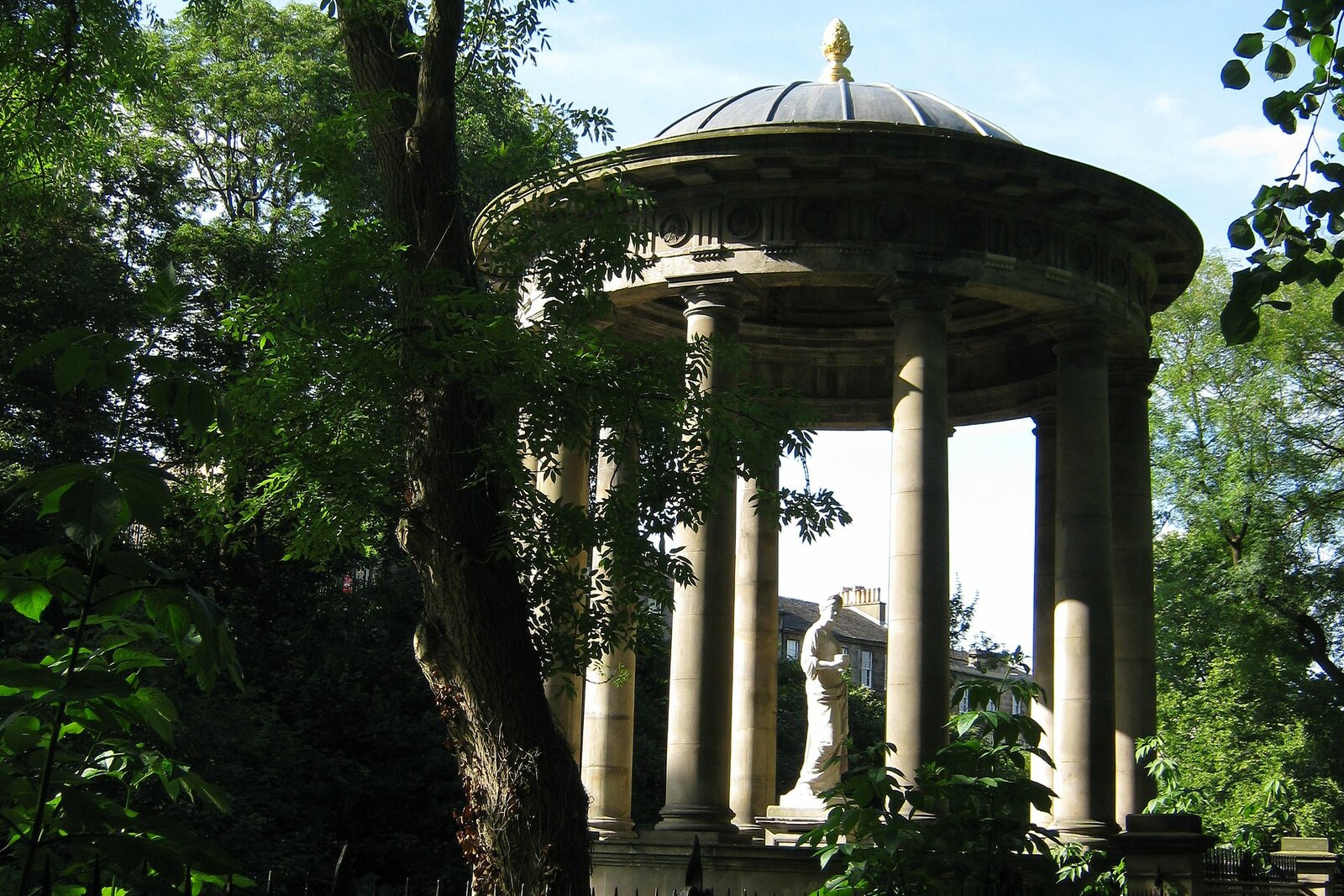
Look around first
What to notice
- Round stone pavilion
- Dome with columns
- Statue of Hygieia
- Inscription above the door
The story of the place
The colonnade and dome make this stone rotunda resemble an ancient temple. Beneath it lies the former pump room: sulfurous water reached it from an underground spring by the bank, not from the river. There was a strict procedure at the spring: the caretaker poured it into glasses, collected payment during designated hours, and waived it for patients with a doctor’s certificate; anyone who had drunk had to make room for the next person. Hygieia, the goddess of health, still stands beneath the dome today, although water is no longer dispensed here.
Francis Garden, Lord Gardenstone, was a judge of Scotland’s highest civil court and drank water from this spring for more than twenty years. He suffered from stomach and nervous disorders and was convinced that the water sustained his health. In old age, his condition worsened so much that the sixty-five-year-old judge went to southern Europe to be treated by its climate. On returning to Edinburgh, he decided to save the abandoned spring, which he trusted more than doctors.
In seventeen eighty-eight, Gardenstone bought the spring, ordered the approach cleared, and commissioned a pavilion from Alexander Nasmyth. Nasmyth was a landscape painter; this became his first architectural commission. He placed a round temple above the water, recalling the ancient buildings of Tivoli. A pump room was hidden in the stone base: the water was drawn from a sulfurous underground spring that emerged on the bank, not from the river.
Gardenstone paid for the construction alone. It was a serious gamble for a man who was already losing money on public projects and died a few years later with substantial debts. But he set a precise procedure for visitors. The caretaker, George Murdoch, was to dispense glasses, collect payment at set times, and admit free of charge those who brought a doctor’s certificate. After drinking the water, a person had to step aside to make room for the next one. A separate rule prohibited washing ulcers and diseased limbs here in the mornings.
To attract the public, Gardenstone asked the Aberdeen physician James Taylor to describe the water’s healing properties. In seventeen ninety, Taylor published a treatise and listed the illnesses the spring supposedly cured: from dropsy and scurvy to venereal diseases. The advertising had the opposite effect. Edinburgh residents began avoiding the well so that acquaintances would not think they suffered from one of these illnesses. When the treatise was forgotten, people returned, but they increasingly came here for a morning walk rather than treatment.
The statue beneath the dome depicts Hygieia, the ancient Greek goddess of health. Gardenstone added her two years after the opening; the present marble figure replaced the smashed first version. And Saint Bernard in the name was not a confirmed visitor to the spring. According to local legend, Bernard of Clairvaux, founder of the Cistercian Order, lived in a neighboring cave in the twelfth century. There are no documents confirming this.
Above the door to the former pump room, the words “Saint Bernard’s Mineral Well” are still carved. The water is no longer dispensed here, but the stone pavilion has preserved the arrangement of a place of treatment: the spring below, the goddess of health above, and the walking path where patients made room in the queue for glasses.
Useful on site
The pavilion is open to visitors on Sundays in August and on open-door days; the exterior is accessible around the clock.
Checked: June 17, 2026. Check the official source before visiting.View the pavilion from outside. If the gate is closed, do not try to go beyond it: interior access requires separate confirmation.