 Guide On Map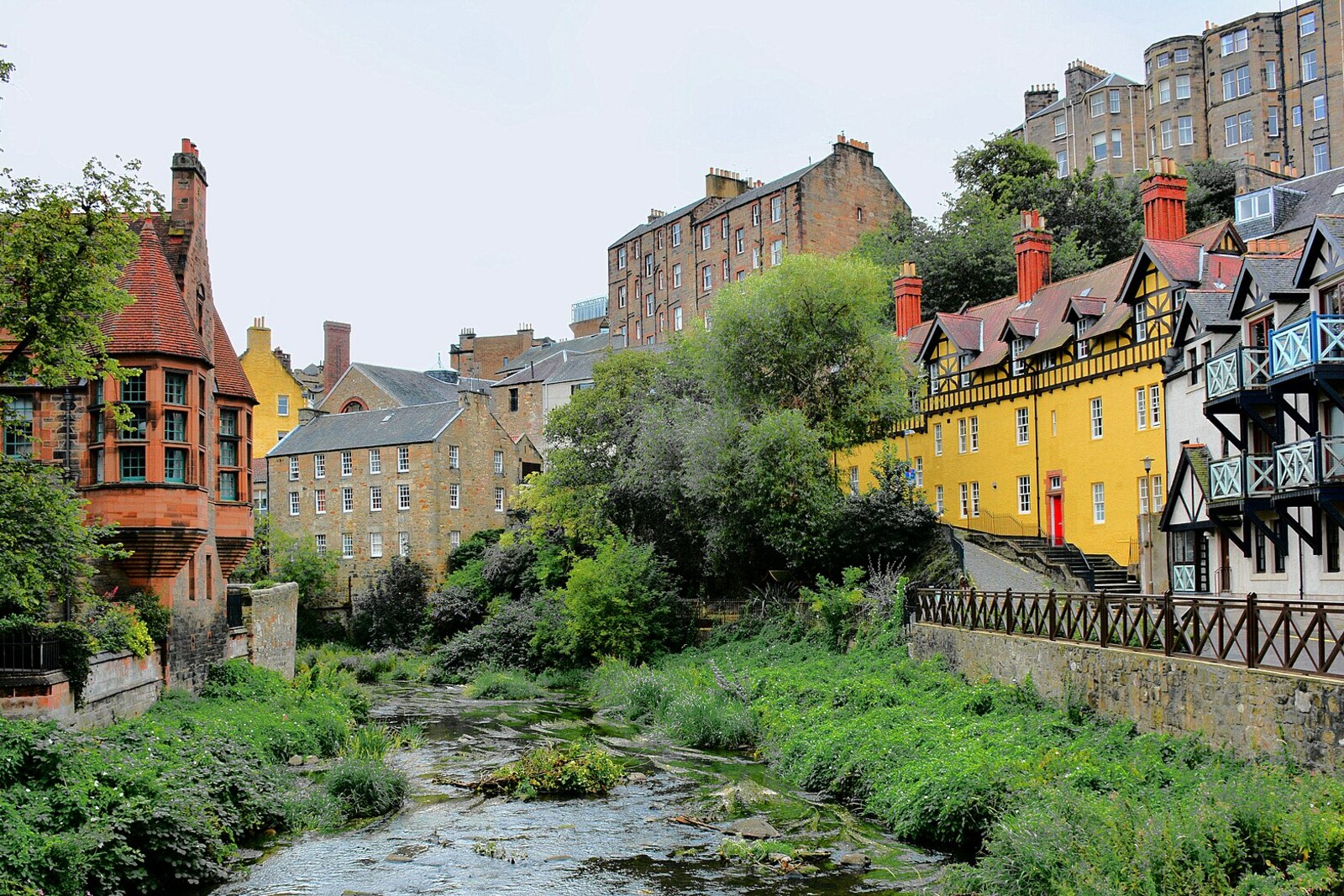
Look around first
What to notice
- The old weir
- The mill channel
- The stone granary
- The mill owner’s house
The story of the place
The stone buildings of Dean Village now contain apartments and a hotel, but the settlement grew up around the mills. “Dean” means a narrow, deep valley. The drop in the water made it possible to build weirs and divert the river through channels to the wheels. In old documents, this place was called the Water of Leith village; at its height, eleven mills operated here.
The last of them was run by Lawrence Walker, the owner of Bells Mill and a fifth-generation miller. His family had earned its living from this trade for more than a century. By nineteen seventy-one, the millstones no longer turned grain into flour. Walker ground sawdust into wood flour: a fine powder bought by manufacturers of linoleum and hardboard. This way, the water wheel still allowed the family business to operate alongside modern industry.
On March twelfth, nineteen seventy-one, wood dust that had accumulated inside the mill exploded. The main buildings were blown apart; only their outer walls remained. Walker suffered severe burns. Two other workers were injured, and one of them was no longer able to return to work. At the moment of the explosion, a police car was on the neighboring Belford Bridge. The officers called the fire brigade and an ambulance by radio before the people at the mill reached the telephone.
Lawrence Walker spent several weeks in hospital and recovered. A month after the explosion, residents created the Dean Village Association to take part in decisions about new development; Walker was elected deputy chair, and later he headed the organization and led tours of the former mill village himself. The last Edinburgh miller was telling of a production that had ended in his lifetime.
Bells Mill no longer exists. A hotel and housing have appeared on its site. What remains of the Walker family business is the owner’s house and a stone granary from the early nineteenth century. Water is still diverted from the river at the old weir, but there is no mill wheel at the end of the channel.
Useful on site
The area is open for walks around the clock; these are residential streets with no admission tickets.
Checked: June 17, 2026. Check the official source before visiting.This is not a museum set but a residential area. View the facades and the riverbank from public paths, and do not enter courtyards without an invitation.