 Guide On Map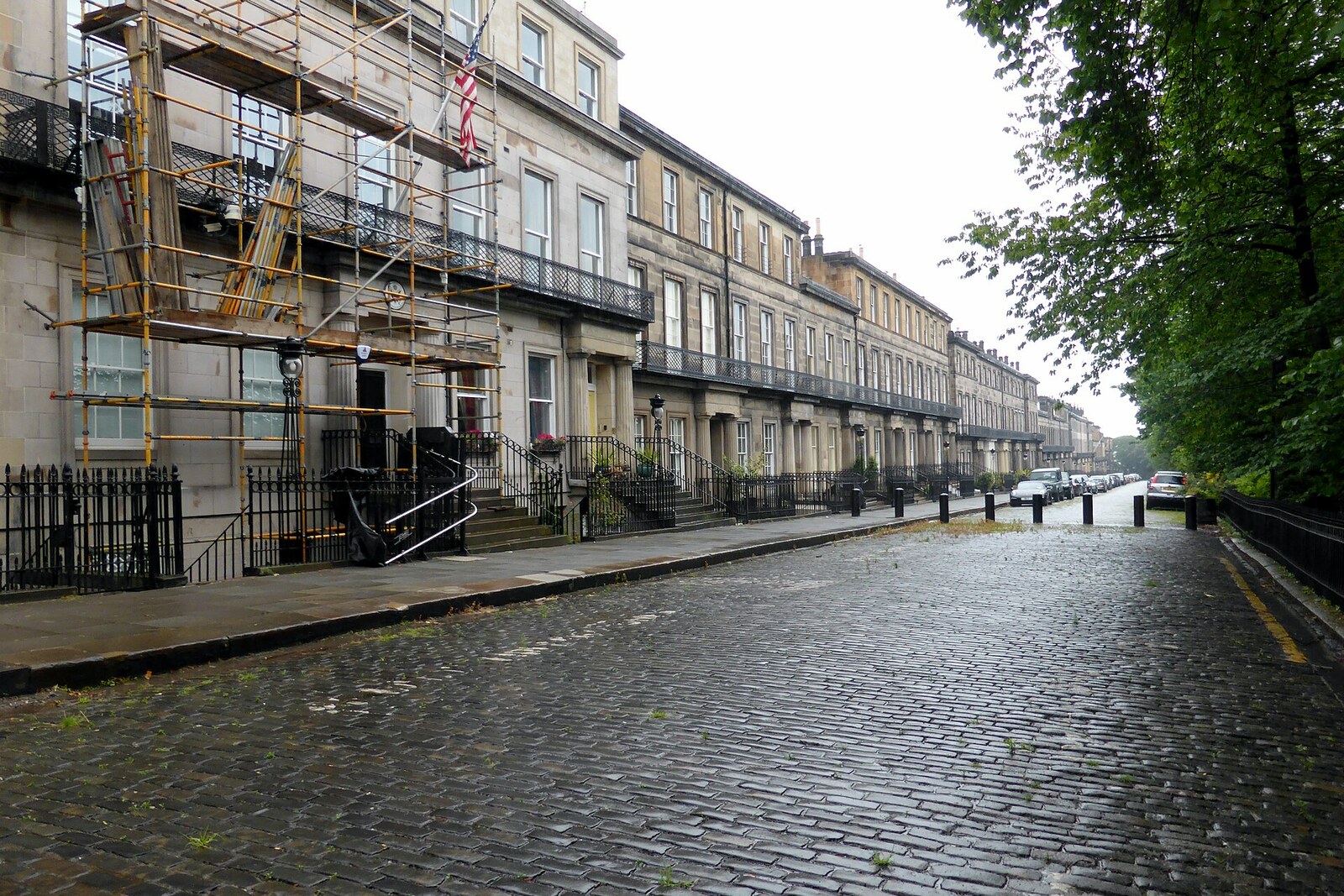
Look around first
What to notice
- Number 28
- Commemorative plaque
- Doric columns by the door
- Cast-iron balcony
The story of the place
Regent Terrace is a row of thirty-four townhouses set along the slope of Calton Hill in the eighteen twenties and early eighteen thirties. Identical stone facades, Doric columns by the doors, and continuous cast-iron balconies were meant to give the private homes the appearance of a single palace. The word “Regent” refers to George IV: before ascending the throne, he served as Prince Regent for his ailing father. The designers named the street after the king's visit to Edinburgh in eighteen twenty-two.
A plaque bearing the name of General Charles de Gaulle remains at number twenty-eight. In nineteen forty, he refused to recognize France's ending of the war and, in Great Britain, led Free France—French people who had decided to continue fighting Nazi Germany. Some of their naval units were in Scotland. For sailors and officers, leave created a simple problem: they could not return home, and they had no permanent accommodation in Edinburgh.
A Franco-Belgian entrepreneur gave this townhouse to the movement. On June twenty-third, nineteen forty-two, de Gaulle came to Regent Terrace and officially opened the Scottish House of the Free French. Service personnel could stay here while staff looked for Scottish families willing to take in lodgers. The rooms also hosted meetings and supported French cultural life. For people cut off from their country, number twenty-eight became both a temporary hostel and a recognizable French address.
After the war ended, French representatives decided to retain this address. In October nineteen forty-five, they bought the house together with its garden and transferred the general consulate here from Glasgow. In nineteen sixty-six, the consular offices moved to the neighboring building, and number twenty-eight was set aside as the official residence of the consul general.
The plaque on the facade repeats de Gaulle's words about the Franco-Scottish alliance being the oldest in the world. Nothing can be seen from the street of the rooms where French servicemen waited for an invitation; their exact address is preserved by number twenty-eight and the opening date on the stone wall.
Useful on site
Open around the clock; this is a residential area
Checked: June 17, 2026. Check the official source before visiting.This is a residential street: view the facades from the sidewalk, do not go beyond the railings, and do not linger by windows or entrances.