 Guide On Map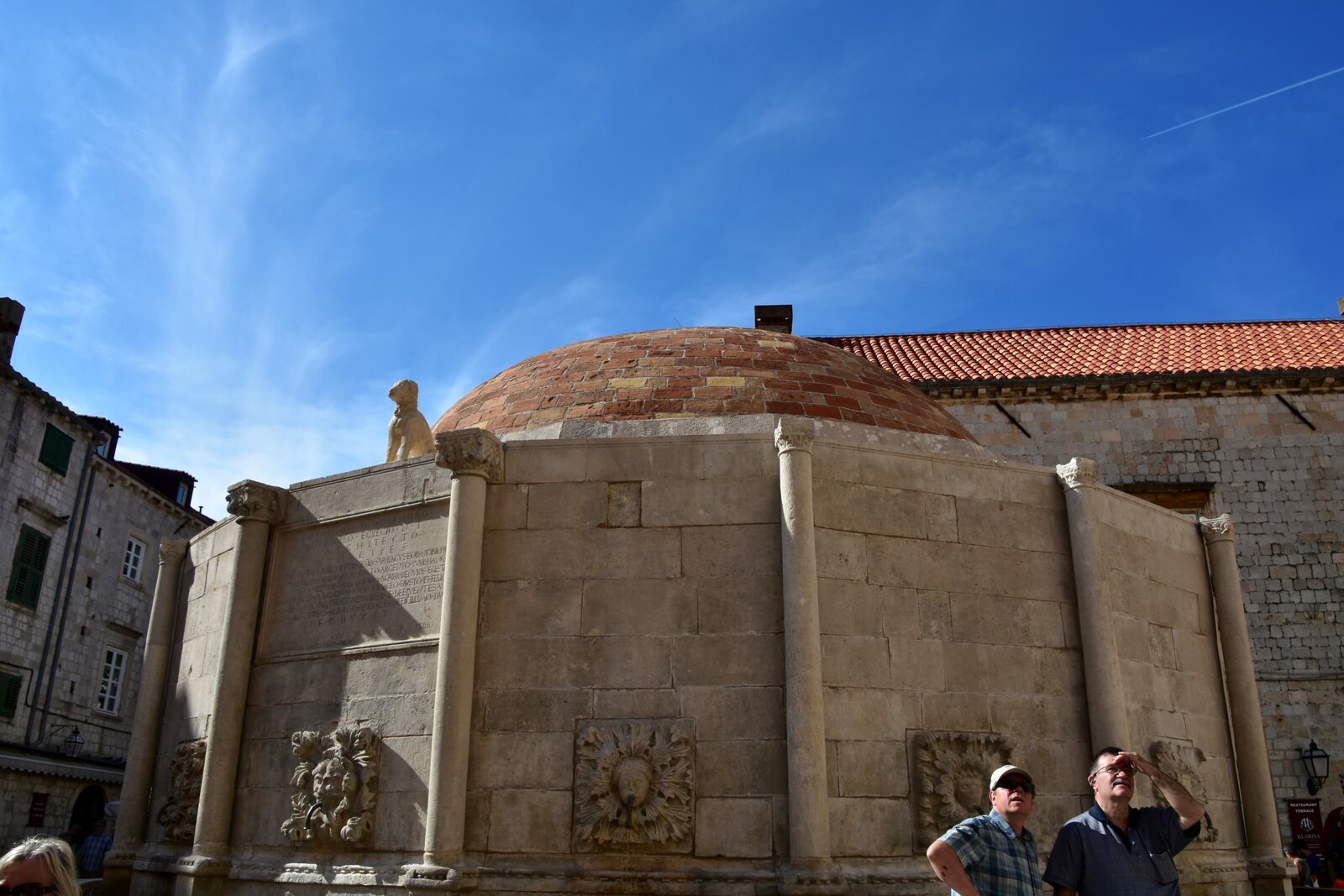
Look around first
What to notice
- Sixteen-sided stone base
- Mascaron heads
- Stone inscription
- Traces of the lost upper part
The story of the place
On October twenty-sixth, fourteen thirty-seven, city overseers completed their inspection of the new water channel, and the treasurers paid the contractors the final part of their fee. The result was tested here, by the western wall: water had to reach the site of the future Large Onofrio's Fountain.
Before the water channel, townspeople drew water from wells and collected rainwater in household cisterns. In summer, the cisterns ran dry, and because water was constantly drawn from the wells, salt water seeped into them. Drinking water was then brought by ship from nearby springs and sold in the city port. The population was growing, the cloth workshops also needed fresh water, and the city councils decided on an expensive channel from Šumet—nearly twelve kilometers from the walls.
Onofrio di Giordano della Cava, a specialist from the town of Cava de' Tirreni near Naples, was invited as chief engineer. His task was to bring water by gravity across terrain with a very slight difference in elevation. Together with the construction contractor Andruzzo de Bulbito, he agreed to a strict condition: however much water entered the channel at the spring, the same amount had to emerge in the city. In the event of a noticeable loss, the contractors would reimburse the costs.
The contract price was eight thousand two hundred fifty Venetian ducats. One thousand were paid in advance, with subsequent sums due after each completed quarter of the route. The final payment was due only after the entire route had been accepted. Sixteen months later, the overseers inspected eleven kilometers seven hundred meters of the channel, accepted the work, and confirmed that the water had entered within the walls.
At this outlet, Onofrio then built a sixteen-sided reservoir. Water entered its enclosed core and flowed out through sixteen mascaron heads: a contemporary noted that sixteen people could fill their vessels at the same time. The fountain was placed between the Franciscan Monastery and the Convent of St Clare, directly in the path of the channel descending along the western wall. The word “Large” distinguished the main reservoir at the city entrance from the smaller fountain at the other end of the street.
A stone inscription was later fixed to one of its sides, praising Onofrio as the creator of the water channel. The chief engineer received his final payment, his name remained on the city's two fountains, while his original partner disappeared from the records after the council declined his services.
In sixteen sixty-seven, an earthquake brought down the upper part of the structure. The arches, animal figures, upper basin, and stone dragon heads from which water had once flowed disappeared. Later craftsmen did not restore the former upper section; the lower sixteen-sided part has survived almost intact. The fountain is now connected to the modern water supply network, and water emerges from sixteen sides where Onofrio once had to prove that the contractors had not lost the promised flow anywhere along the route from Šumet.
Useful on site
Groups gather around the fountain and tours pass by. For quieter listening, step a few paces away while keeping the structure in view.