 Guide On Map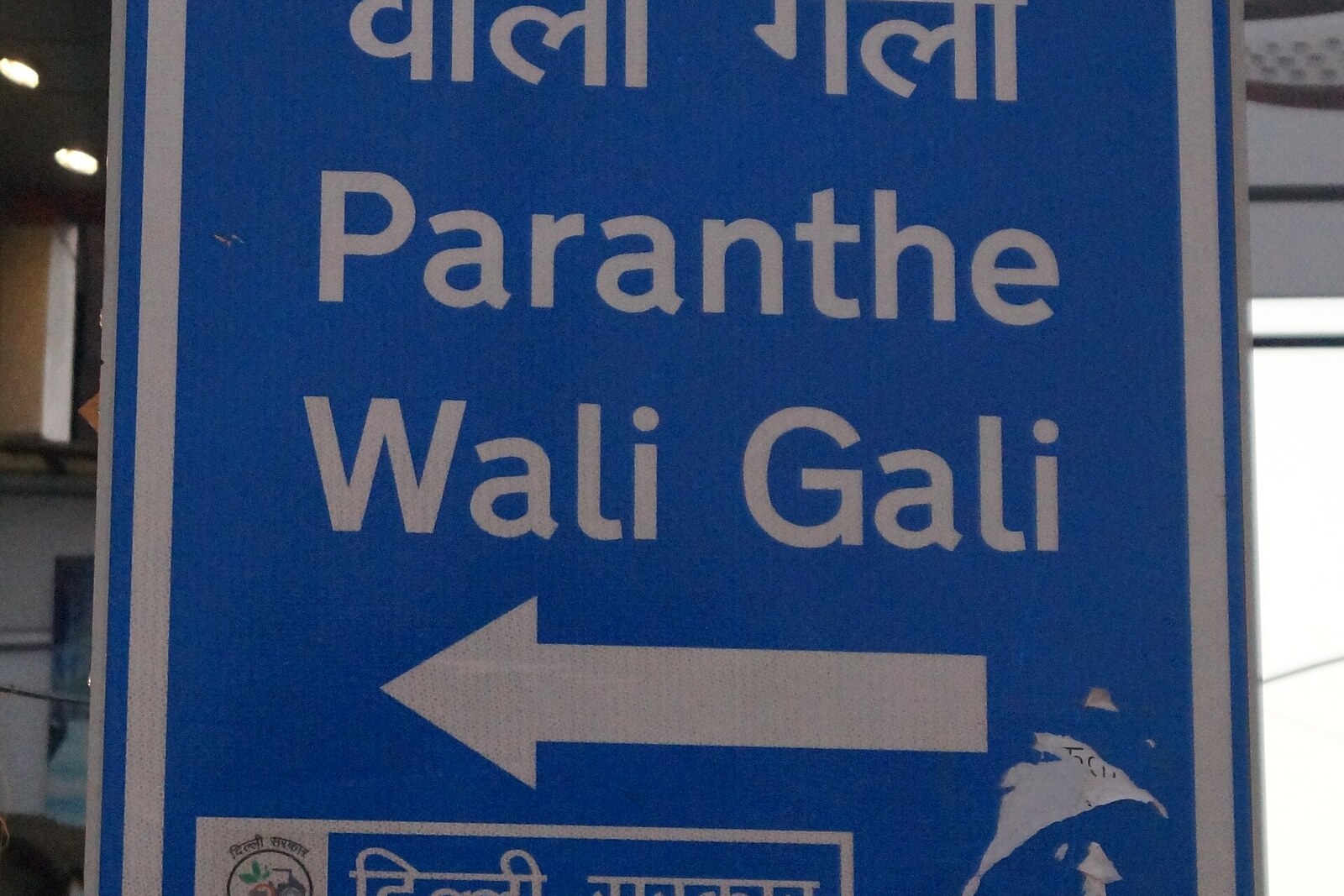
Look around first
What to notice
- Pandit Gaya Prasad Shiv Charan shop
- Deep cast-iron pan
- Paratha shops
- Sari shops
The story of the place
Paranthe Wali Gali lives by the work of small paratha shops: here, the filling is hidden inside the dough and fried in a deep cast-iron pan. That is why the local flatbread is closer to a stuffed kachori than to a home-made paratha, which is browned on a flat surface. Sari shops stand beside the hot pans; they occupy some of the premises where parathas were once prepared as well.
In eighteen seventy-two, Gaya Prasad arrived here—a farmer and professional wrestler from the village of Padhavali in what is now the state of Madhya Pradesh. Farming did not give him enough work, and he was looking in Delhi for an occupation that could support his family. Gaya Prasad settled in Dariba Khurd lane: silver and saris had previously been traded here.
According to the account of his descendants, he based his new trade on village wedding food. There, puris—flatbreads fried in ghee—were served with potatoes and pumpkin. Gaya Prasad put the filling inside the dough and began frying parathas in a deep cast-iron pan. That is why the paratha here differs from a home-made one, which is usually browned on a flat surface: in its method of preparation, it is closer to a large stuffed kachori. At first there were four fillings: potato, cauliflower, lentils, and chickpea flour with fenugreek.
In Delhi, Gaya Prasad missed his relatives and invited his brothers to join him. They came and opened their own paratha shops in the same lane. The family decision changed its name: when there were more than ten establishments, customers began calling it “Paranthe Wali Gali”—the lane of paratha sellers. This popular name displaced the former Dariba Khurd.
Most of the family establishments were later sold or turned into sari shops. But the shop called “Pandit Gaya Prasad Shiv Charan” still operates here; the word “pandit” is a respectful designation for a learned Brahmin. The founder’s descendants continue frying parathas where their ancestor opened the first establishment, while neighboring sari shops occupy some of the premises that helped give the lane its current name.
Useful on site
The lane is narrow, so do not stop in the middle of the passage to take photos. If you want to eat, first see how the queue works and where you can sit; choose a particular shop and filling on the spot.