 Guide On Map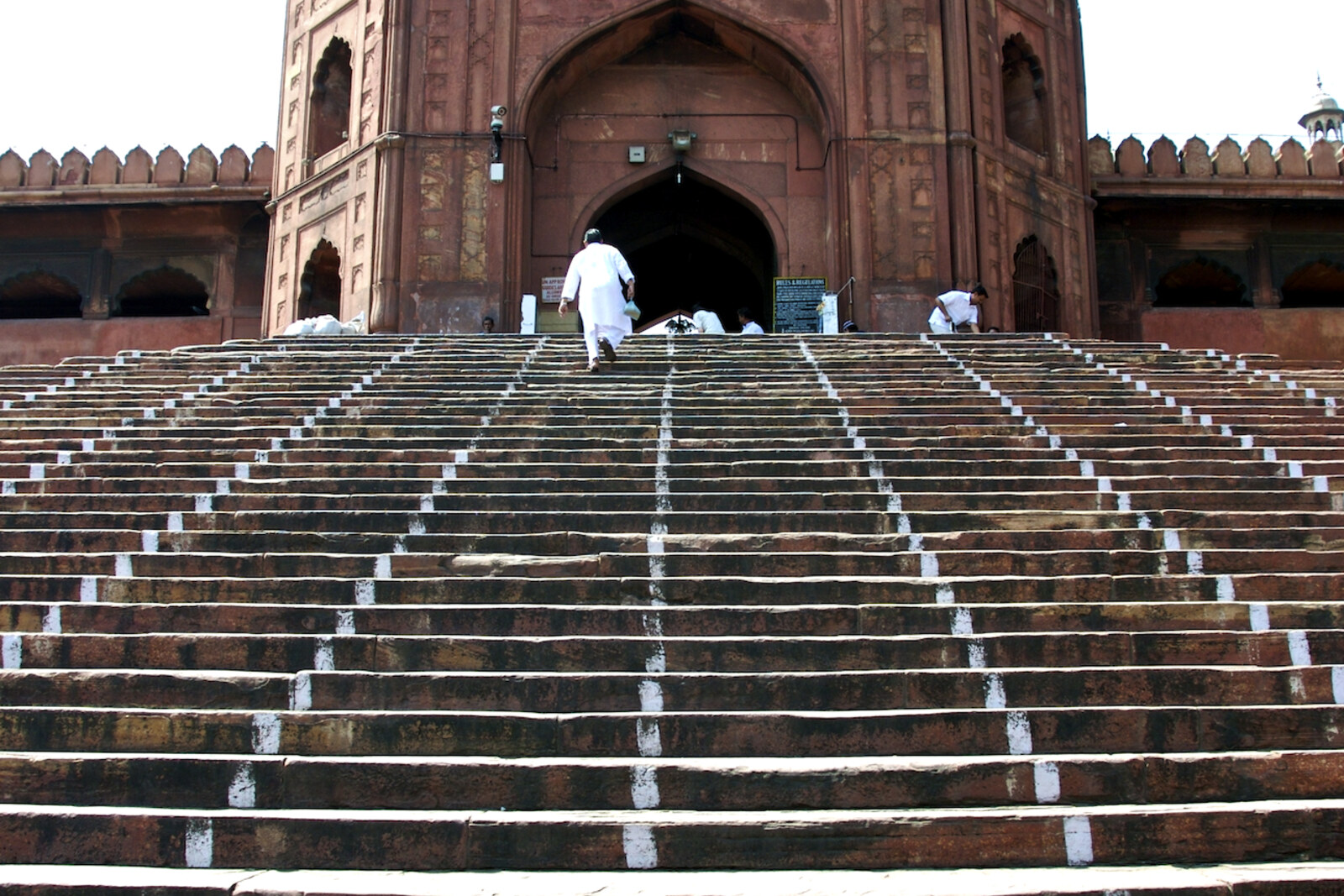
Look around first
What to notice
- Jewelry shops
- Silver jewelry
- The steps of Jama Masjid
The story of the place
In March seventeen thirty-nine, the jewelers and money changers of Dariba Kalan took up arms. They usually risked their own goods: precious stones, coins, and metal were kept where they worked and lived. Now their homes and lives were at stake.
Shortly before this, the Iranian shah Nader Shah had defeated the Mughal army at Karnal and brought the defeated emperor Muhammad Shah back to Delhi. Nader Shah wanted to secure recognition and an enormous tribute. His soldiers were quartered throughout the city, and the residents were required to supply them with food.
The clash began at the grain shops. Iranian soldiers demanded that grain be sold more cheaply, the merchants refused, and a fight broke out. Then a rumor spread through Delhi that Nader Shah had been killed and that Muhammad Shah was once again in command at the Red Fort. Townspeople attacked scattered detachments throughout the night. Among them were jewelers, money changers, and shopkeepers: people used to scales and account books fought with whatever weapons they could find. Many were killed.
In the morning, Nader Shah ordered the inhabitants of the rebellious quarters to be massacred. One punitive detachment set out from Chandni Chowk and moved south toward Jama Masjid, along the same line that runs through Dariba Kalan. Saad ad-Din Khan, the commander of the defeated Mughal artillery, went with the Iranian commander. Nader Shah ordered him to translate the townspeople's answers and accompany the soldiers: the former commander of the emperor's guns became a guide to people killing his emperor's subjects.
Dariba suffered especially badly. The houses of jewelers and money changers stood tightly packed here, and the detachments had only a short way to travel from Chandni Chowk. Soldiers looted the shops and set buildings on fire. People were left beneath collapsed roofs and walls. Some wealthy nobles had received Iranian guards for their mansions in advance; most merchants and artisans had no such protection.
A few hours later, Muhammad Shah sent two senior dignitaries to Nader Shah to ask him to stop the killings. The shah gave the order to stop, and the soldiers obeyed. Looting and extortion continued: money, silver, and jewelry were taken from the residents. Five days later, the survivors were forced to carry the bodies beyond the city walls; those killed beneath the rubble of Dariba's burned houses continued to be found for a long time.
The street's name is usually derived from the Persian expression “durr-e be-baha”—“a pearl without price.” “Kalan” means “large”: the Dariba Khurd passed earlier was Lesser Dariba. No façade here has been reliably identified as belonging to the shops burned in seventeen thirty-nine. Their trade has survived: on the way to the steps of Jama Masjid, jewelry is still sold, now mainly silver and inexpensive pieces.
Useful on site
Listen where you do not obstruct merchants or traffic: in Dariba Kalan, it is easy to block the narrow passage. At the mosque, respect the rhythm of prayer, check the entry rules, and follow the requirements for clothing, footwear, and photography.