 Guide On Map
Shahjahanabad: Red Fort, Shrines, and Bazaars
From Red Fort through Chandni Chowk to Jama Masjid
Guide On Map on your phone
Open the walk like a regular app
It takes about 10 seconds to install. No app store needed.
The whole path
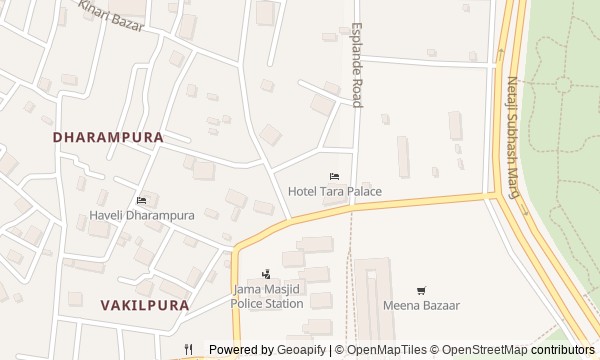
Route map
About the walk
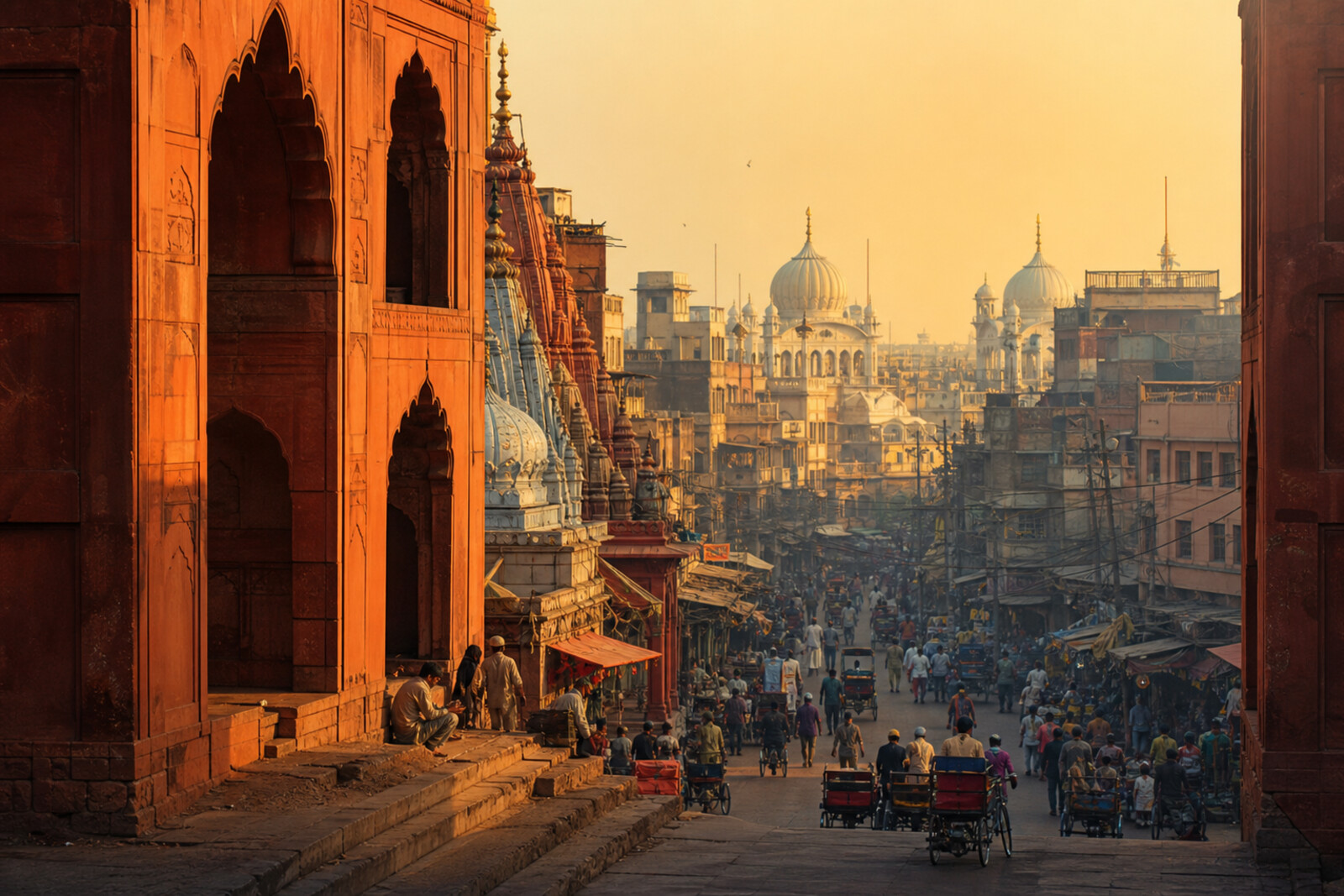
The walk begins at the red walls of the fort and follows Shahjahanabad's main street. First come the imperial gate and a temple that rose beside the palace market. Then Chandni Chowk leads to a Sikh shrine, and from there the route turns into a paratha lane before emerging through the jewelers' rows at the steps of Jama Masjid.
Each stretch leaves a question behind. Why was a straight approach to the gate turned into a bend? Why are injured birds carried up to the temple roof? How did one family shop manage to rename an entire lane? And what made silver merchants set aside their scales and take up weapons?
The story stays calm and specific. It separates Sikh tradition from what historians debate, and keeps close to walls, shrines, shops, and street names.
By the end, you will be able to connect the red barbican, the Jain temple, the gurdwara, the paratha shops, and silver Dariba into a map of one old city.
Why this order
Lahori Gate is the starting point because Chandni Chowk began there as a straight road to the emperor. The Red Temple stands at the same beginning of the street: after the palace, it becomes clear where the merchants serving the new capital lived and prayed. Farther on, the same street leads to the gurdwara on the site of the Kotwali, where courtly trade gives way to a clash between power and faith. From the gurdwara, the route continues to Paranthe Wali Gali, where the history of the capital shifts from imperial decisions to a family shop. The lane's former name, Dariba Khurd, sets up the final transition to Dariba Kalan: from Lesser Dariba, the route reaches Greater Dariba and follows the line toward Jama Masjid to trace the consequences of the city's uprising.
Those visiting Old Delhi for the first time Those interested in the history of religions and urban trade Those who enjoy a dense story built around specific traces
Those looking for a tour of Red Fort alone Those wanting a food tour with tastings Those seeking a light overview without stories of executions and urban violence
Before you go
Wear comfortable, modest clothing and shoes that are easy to remove: part of the route passes active religious sites. Check the rules at each shrine before entering, follow signs and the requests of attendants, do not disturb prayer, and ask first whether photography is allowed. Keep your belongings close in narrow passages, and do not expect an even pace: trade, queues, rickshaws, and crowds constantly change the speed. Visiting the interiors of Red Fort is a separate program; for the logic of this walk, seeing the gate from outside is enough.
When to go
Start in the first half of the day or closer to evening, when the walking pace is easier to manage. Active shrines may have services, access restrictions, and pauses, so check current opening arrangements before setting out and allow extra time for removing shoes, security checks, and waiting.
Backup plan
If the streets are overcrowded or entering a shrine is not possible, keep the sequence of the route and listen to the relevant story from outside without blocking the passage. Skip optional interior visits and food in the lane, but do not miss the transition from Dariba Kalan to Jama Masjid: the contrast between the narrow street and the steps opening up ahead completes the walk's idea. If moving through the crowd becomes uncomfortable, stop somewhere safe at the edge of the flow and continue only when you can find your way calmly.
Route conditions
Surface. Paved — 329 m (data covers 15% of the route)
Stairs. Flights: 1, 24 m in total
Access. Wheelchair — no; stroller — limited (stairs)
Facilities. Toilets — 12; drinking water — 5
Elevation. Ascent — 24 m; descent — 13 m
OpenStreetMap extract of July 9, 2026: database data, not a check on the ground. Data © OpenStreetMap contributors, ODbL licence
Walk plan
Open in maps ↗- 1
Lahori Gate of the Red Fort
Here you will see how the struggle for the throne changed the very approach to the imperial residence. - 2
Shri Digambar Jain Lal Mandir
This stop connects a trading community at the Mughal court with a temple and a bird hospital. - 3
Gurdwara Sis Ganj Sahib
Here, the route shows how an execution site became a shrine and why memory is divided between two places. - 4
Paranthe Wali Gali
The lane will show how a family trade changes urban place names. - 5
From Dariba Kalan to the steps of Jama Masjid
The final stretch restores to the shopping street the memory of the day when jewelers became participants in an uprising.
Route features
Everything you need stays in the browser
Progress, saves and your trip plan are stored on this device.
Add Guide On Map to your home screen so the walk opens outside the browser.
How we handle sources, maps and corrections: our editorial standards