 Guide On Map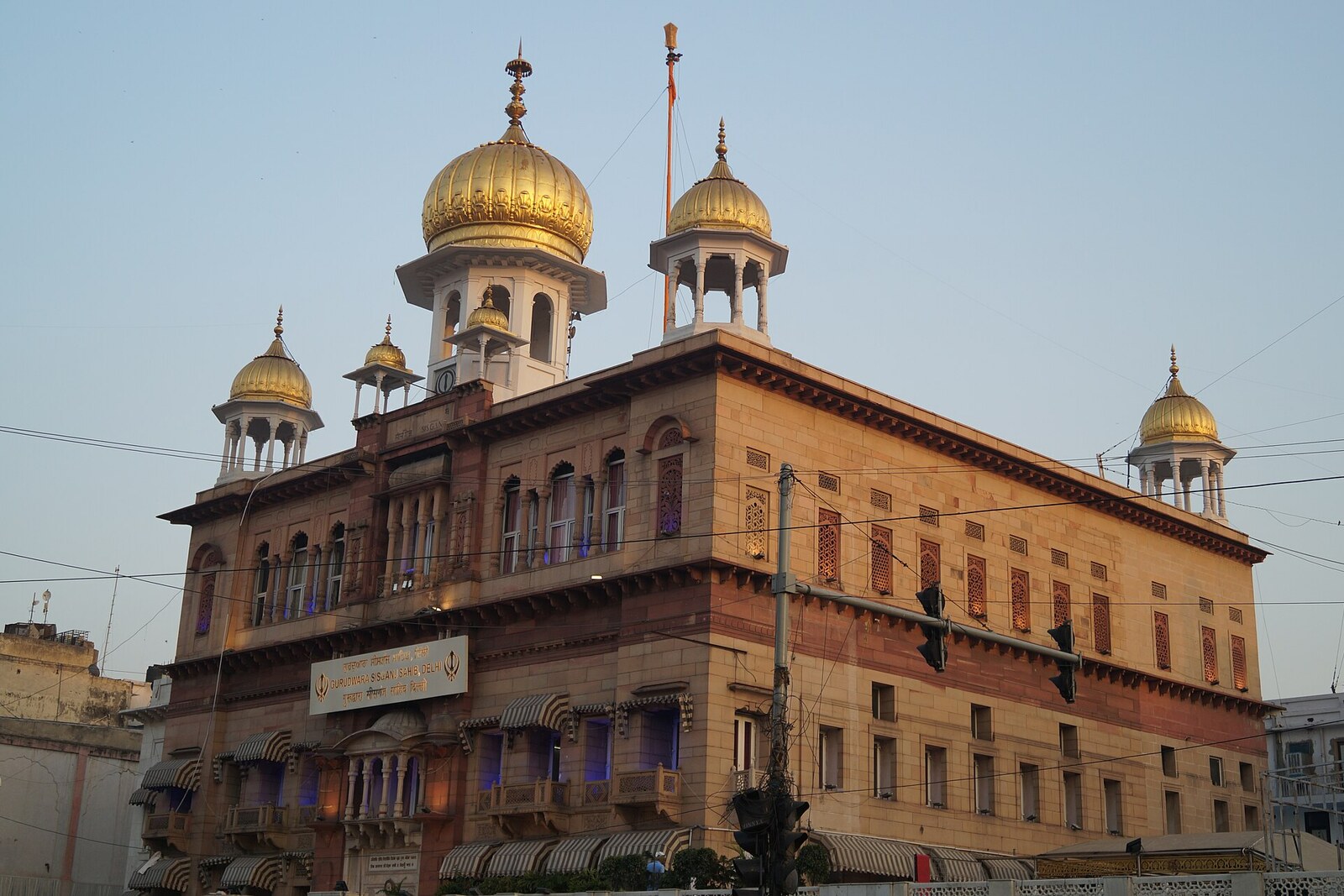
Look around first
What to notice
- Gilded pavilion
- Banyan trunk
- Old well
- Guru Granth Sahib
The story of the place
Gurdwara Sis Ganj Sahib stands here. In sixteen seventy-five, before setting out for Delhi, the ninth Sikh Guru, Tegh Bahadur, appointed his nine-year-old son, Gobind Rai, as his successor. In this way, he provided for the future of the community in case he did not return.
Historians dispute the exact reason for his clash with Emperor Aurangzeb. The Sikh tradition that gave rise to this gurdwara explains the guru's decision as follows. Kashmiri pandits—scholar-brahmins led by Kirpa Ram—came to him in Anandpur Sahib. They asked him to protect them from forced conversion to Islam under the governor Iftikhar Khan. According to this account, Tegh Bahadur proposed making the outcome depend on him: if the emperor could convert the Sikh guru, the others would follow him; if the guru stood firm, the persecution was to stop.
Tegh Bahadur set out and was arrested. At that time, the Kotwali stood here—the city prison and police headquarters of Shahjahanabad. The guru was required to prove his holiness by performing a miracle or to accept Islam. Three companions who had come to support him also refused to renounce their faith: Bhai Mati Das, Bhai Dayal Das, and Bhai Sati Das were executed one after another, in the hope of breaking Tegh Bahadur. He agreed to neither demand. On Aurangzeb's orders, he was beheaded here, beneath a banyan tree by the Kotwali.
After the execution, they intended to dismember the body and put it on display. Lakhi Shah Vanjara, a Sikh merchant and contractor, managed to take it away. An open funeral would have exposed Lakhi Shah, so he turned his own house into a funeral pyre: he carried the body inside and set the building ablaze along with his possessions.
The head remained elsewhere. Bhai Jaita, a disciple of the guru, carried it out of the cordon and brought it to Anandpur Sahib. There Gobind Rai, the same nine-year-old successor, cremated his father's head. He later became the tenth Sikh guru, Guru Gobind Singh.
The shrine appeared at the site of the execution only one hundred eight years later. In seventeen eighty-three, the Sikh military commander Baghel Singh obtained from Emperor Shah Alam II the right to mark Delhi sites associated with the gurus and established the first gurdwara here.
Now, beneath a gilded pavilion placed directly over the point of beheading, is Guru Granth Sahib—the sacred scripture of the Sikhs. Hymns are read and sung before it; in the langar, the communal free dining hall, volunteers prepare free food for anyone who comes. Inside, the trunk of the banyan tree beneath which, according to tradition, the execution took place is preserved, along with the old well that Tegh Bahadur used during his imprisonment. The name literally tells what happened: “sis” means “head.”
Useful on site
Behave quietly in the gurdwara, remove your shoes, and cover your head in accordance with the rules at the entrance. During the service, do not block passageways or photograph people without permission.