 Guide On Map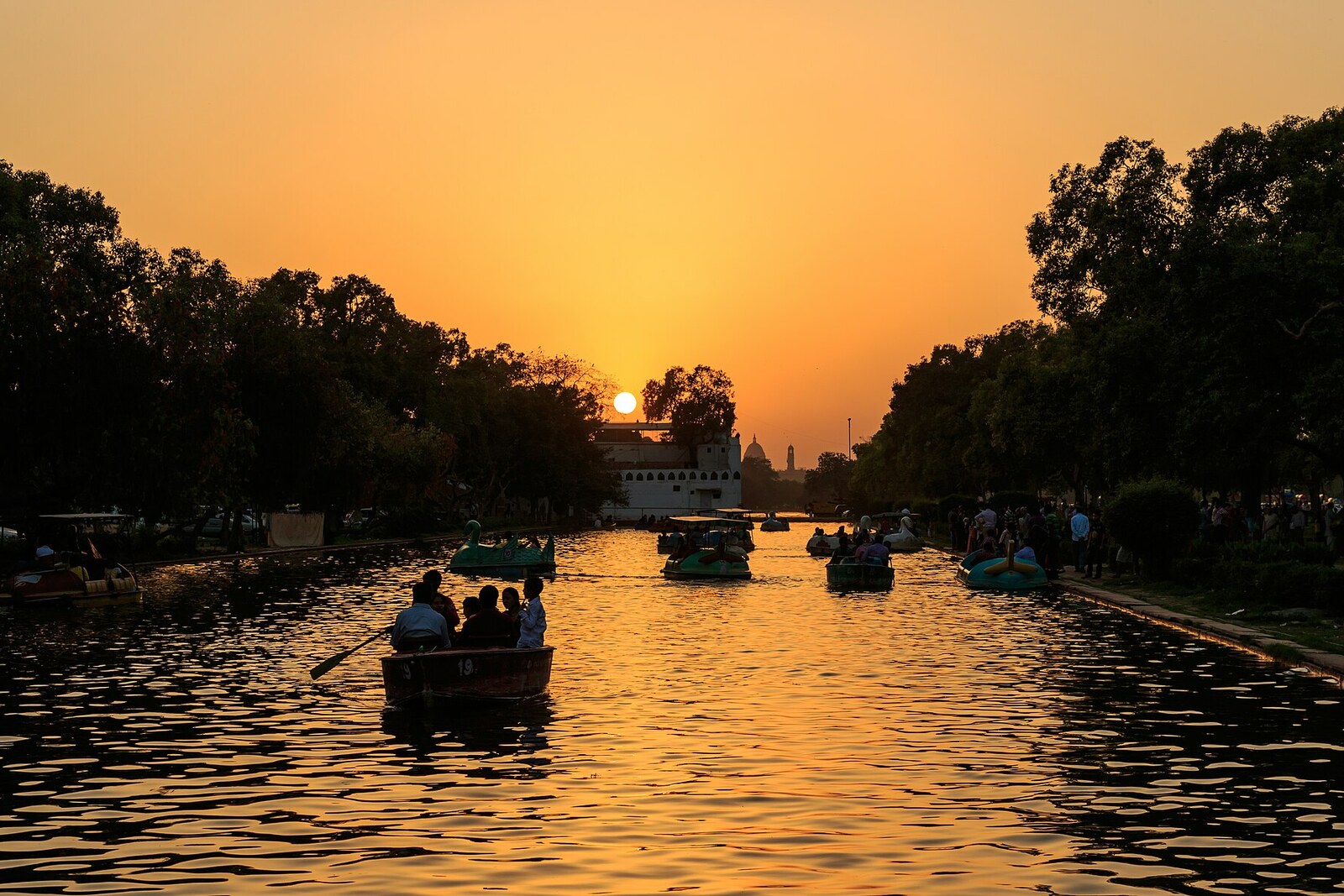
Look around first
What to notice
- The avenue's straight line
- Lawns on both sides
- Water channels
- India Gate to the east
The story of the place
At first, the avenue was called King's Way, the Royal Road. British planners laid out this three-kilometer straight route for state processions between Viceroy's House and the arch of the All India War Memorial. Lawns and water channels frame the road, and at India Gate it opens onto a large field where troops and participants in ceremonies could gather. Later, King's Way became Rajpath, and it is now called Kartavya Path, the Path of Duty.
On the evening of August fifteenth, nineteen forty-seven, preparations were underway at the eastern end of this road to salute the flag of independent India. Numbered chairs were set out on the lawns of Princes' Park by India Gate, and the parade ground was fenced off with wire. Units from the three branches of the armed forces spent several days rehearsing their formation and march. The organizers expected honored guests and spectators with invitations.
Several hundred thousand people arrived.
The ceremony was scheduled here precisely because of the avenue's layout. British planners laid out a straight road from Viceroy's House to the arch of the All India War Memorial and named it King's Way—the Royal Road—in honor of George V. State processions were meant to move along it. After independence, the name was translated as Rajpath, “Royal Road.” Three kilometers of straight roadway, broad lawns, and a large parade ground made it possible to form up troops before the government quarter.
But on the evening of the first day of independence, spectators broke through the police cordons. People filled the passageways, mingled with the guard of honor, and took the places assigned to the marchers. Ministers, diplomats, and military commanders could not reach their seats and turned back. At first, the police tried to hold the barriers; then they stopped pressing the crowd: it was no longer possible to continue the original program.
Louis Mountbatten arrived in a ceremonial carriage. Only the day before, he had been the last British viceroy; now he was the first governor-general of independent India and was to receive the salute to the new flag. Jawaharlal Nehru, the first prime minister, made his way to the carriage: he needed to bring the public ceremony to its end without allowing a crush.
Nehru, Mountbatten, and the commander of the Delhi Garrison conferred right in the middle of the crowd. They canceled the troops' formation and march-past. Only the raising of the flag and an artillery salute remained.
The danger had not yet passed. People who had fainted or found themselves near the wheels were lifted into the carriage; among them were women with children and refugees who had already lost their homes in the partition of British India. To get the carriage out, Nehru sat on top of its folded leather hood. The carriage moved slowly across the field, drawing people along behind it and clearing space. The flag was raised, the salute was fired, but the carefully rehearsed parade never took place.
Today, the former Rajpath is called Kartavya Path—“Path of Duty.” Since nineteen fifty-five, the Republic Day parade has passed annually along this straight road. The site of the first ceremony remains at its eastern end, on the lawns by India Gate. Where participants and spectators are now separated in advance, on August fifteenth, nineteen forty-seven, spectators occupied the parade ground before the participants.
Useful on site
Open urban space; closures are possible due to state ceremonies, rehearsals, security measures, and maintenance of public areas. Checked 2026-06-30.
Checked: June 30, 2026. Check the official source before visiting.This is the longest stop, so listen as you walk. Stay on accessible pedestrian sections and do not cut across areas used for ceremonial traffic.