 Guide On Map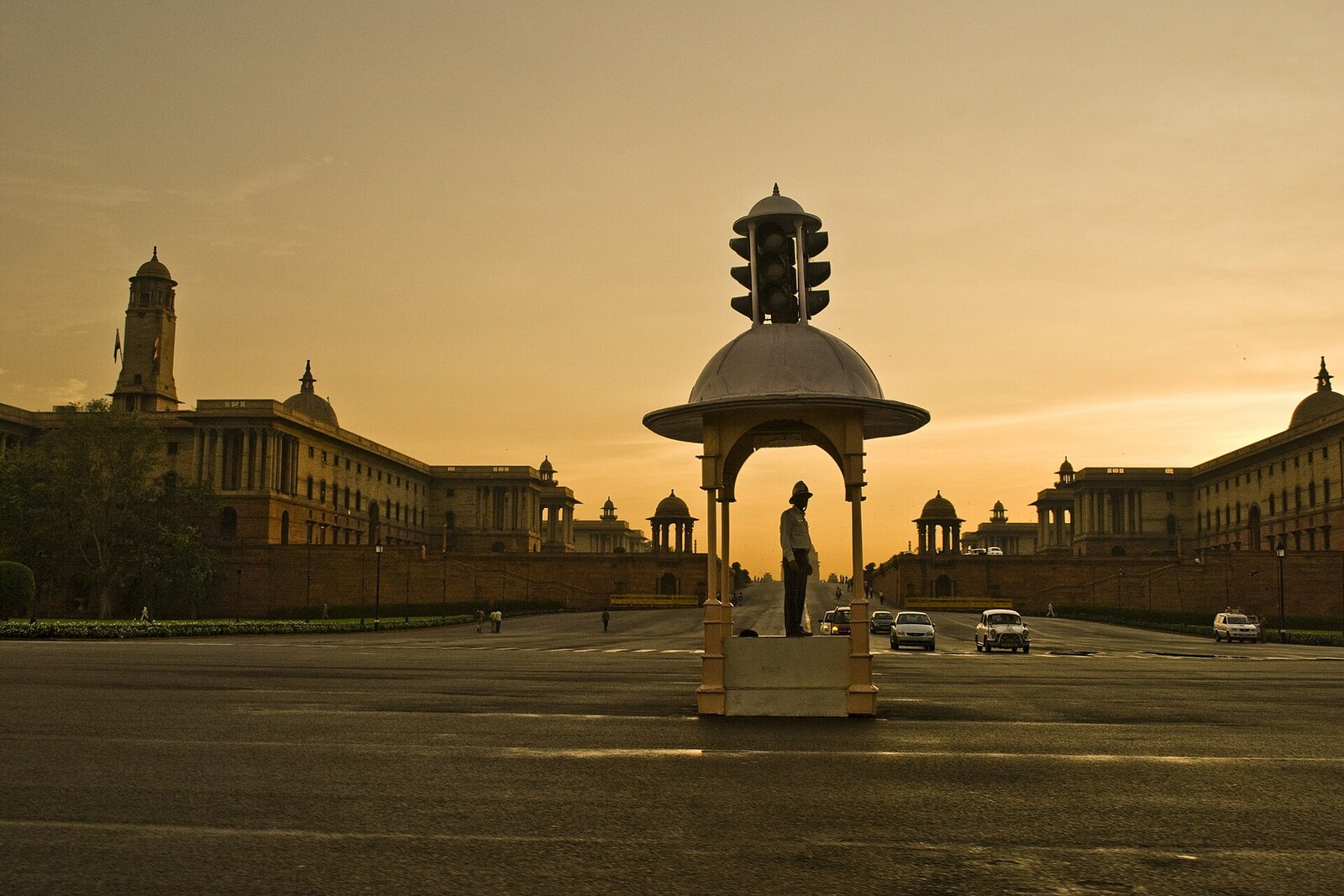
Look around first
What to notice
- Rectangular ceremonial ground
- Secretariat buildings
- Ascent to the presidential residence
- Kartavya Path axis
The story of the place
At the foot of Raisina Hill, a level ceremonial square brings together the Kartavya Path axis, the two Secretariat buildings, and the road uphill. The British plan for the new capital set aside this open stretch as a ceremonial approach to the government hill: between North Block and South Block began the route to Viceroy's House. Large official formations could fit here, and the residence of the President of India now stands above the square.
On July twenty-fourth, nineteen fifty-five, Jawaharlal Nehru, the first prime minister of independent India, wrote a note to the home minister about the names of Delhi's streets. The city's Chief Commissioner proposed renaming, all at once, every road, avenue, and lane left over from the British capital. This alarmed Nehru. A wholesale change of addresses, he warned, would cause confusion, and names invented by officials would feel alien to city residents.
For Nehru, the question was practical: imperial names had to go, but the new republic would have to use this map every day. He proposed proceeding gradually, beginning with a few major places and seeing how people reacted. In such matters, the prime minister wrote, an ordinary passerby could be a better adviser than a professor of history.
First on his list was the broad rectangle at the foot of Raisina Hill. British planners called it Great Place—the Great Square. This was the official name of the ceremonial space from which the ascent between North Block and South Block of the Secretariat began, leading to Viceroy's House. Beside it Nehru wrote two words: “Vijay Chowk,” Victory Square.
Three days later, the cabinet approved the proposed name. At the same time, King's Way became Rajpath, and Queensway became Janpath. Nehru did not, however, link Vijay Chowk either to a military commander or to a particular battle. In the note itself, the word “Victory” appeared among the new names that replaced the principal designations of the imperial capital after independence. The documents do not allow the square to be credited to any specific military victory.
At almost the same time, the square acquired an activity suited to its new name. In the early nineteen fifties, Major Roberts of the Indian Army devised a ceremony for combined military bands. He took as its basis the old retreat call: on the battlefield, an evening bugle ordered soldiers to stop fighting, put away their weapons, furl their flags, and return to camp. Roberts turned this sequence of commands into a ceremonial formation with music and marching.
Now, on January twenty-ninth, the Republic Day celebrations conclude here. The President of India arrives as commander-in-chief, and the bands of the Army, Navy, and Air Force march before the president. At the end, the retreat call is sounded, the flag is lowered, and the director of the bands approaches the president to ask permission to lead the musicians away.
Vijay Chowk was chosen specifically for this ceremony: the combined bands fit into the broad former Great Place, the Secretariat buildings stand on either side, and the presidential residence lies directly above the square. Once permission is given, the musicians leave the square, and the presidential escort returns up the slope—to the place where the British viceroy lived before the republic was born.
Useful on site
Usually an open city square; access regularly changes because of Republic Day, the Beating Retreat ceremony, rehearsals, and security measures. Checked 2026-06-30.
Checked: June 30, 2026. Check the official source before visiting.Do not step into the roadway for a centered photograph. The space is best understood from the permitted pedestrian area, comparing the square with the surrounding facades.