 Guide On Map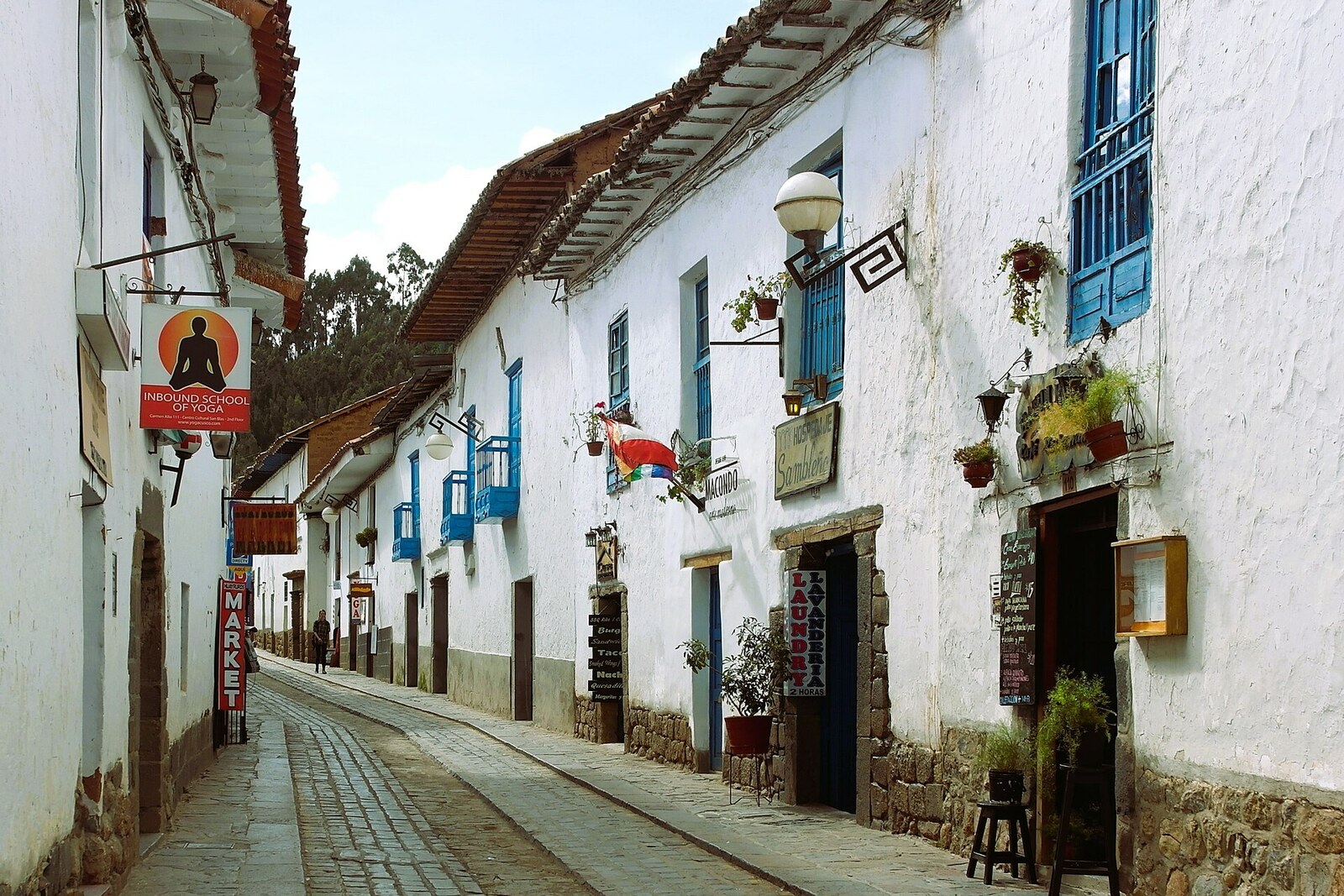
Look around first
What to notice
- Figures with long necks
- Figures with large hands and feet
- Tense clay faces
- Facades of family workshops
The story of the place
In front of the Mendívil workshop, one family name conceals the work of an entire family. Hilario Mendívil built the framework of a religious figure, modeled its face, and set its pose. His wife, the craftswoman Georgina Dueñas, prepared the clothing from glued fabric, painted it, and applied the decorations. Together, they devised the long necks of Virgin Marys, Magi, and archangels. In the family, their origin is explained by the silhouettes of llamas and alpacas; the artisans themselves called this form “llama-kunka”—“llama neck.”
Once, the family received a large urgent order, and Georgina, the only person then dressing the finished figures, fell ill. Her nine-year-old daughter Juana volunteered to help. In five hours, the girl dressed fifty statuettes. Hilario tested her once more: he assigned her the task of independently making a figure of the pregnant Virgin Mary. Juana succeeded, and her father announced that the workshop had an heir.
That decision proved useful in nineteen seventy-seven, when Hilario died. Georgina and the children already knew the entire work process and continued filling orders. Juana changed the family paste made from potato, rice, and wheat flour and ch’uño—freeze-dried potatoes—and began using enamels, gold leaf, and silver. That is why, in front of the Plazoleta de San Blas, there is at once a home, a museum, and a working family workshop: here, the Mendívil name means Hilario, Georgina, their children, and their grandchildren.
The figures of Edilberto Mérida on Carmen Alto have different proportions: large feet and hands, tense faces, sharply protruding cheekbones. Mérida arrived at them after an encounter on this very slope.
In nineteen fifty-eight, he earned his living through wood carving and was fulfilling an order at a training center for artisans. There, Mérida saw students modeling with readily available clay and decided to try it himself. The first result was a smartly dressed peasant woman with braids and a wide skirt—a neat little figure designed for a buyer.
On his way home to San Blas, Mérida noticed an elderly woman slowly climbing the steep slope. Her exhausted face had nothing in common with the smooth beauty he had just modeled. The artisan recognized his own work as superficial and began a new figure. He enlarged the hands and feet, distorted the facial features, and tensed the muscles. In this way, he depicted people living in the middle of the twentieth century in poverty and dependent on estate owners. Even his crucified Christs were given the faces of Andean peasants and the heavy hands of someone accustomed to physical labor.
In nineteen sixty-three, Mérida brought twenty such statuettes to the Santurantikuy Christmas fair. Visitors laughed at the unfamiliar bodies; the artisan did not sell a single one. A fellow countryman persuaded him to take the works to Lima. There, they were all bought up, newspapers called Mérida the “Picasso of the Andes,” and his style became known as “protest clay.”
After Edilberto Mérida died in two thousand nine, his daughter María Antonieta continued the workshop; she had learned to model here from the age of six. The enormous hands and feet in the Mérida house trace back to that elderly woman who was slowly climbing the slope of San Blas while the artisan carried home his first beautiful peasant woman.
Useful on site
Family/private spaces; access and hours change, so check locally.
Checked: June 28, 2026. Check the official source before visiting.These are family spaces, so ask separately about the possibility of visiting; without an invitation, limit yourself to the display windows and facades.