 Guide On Map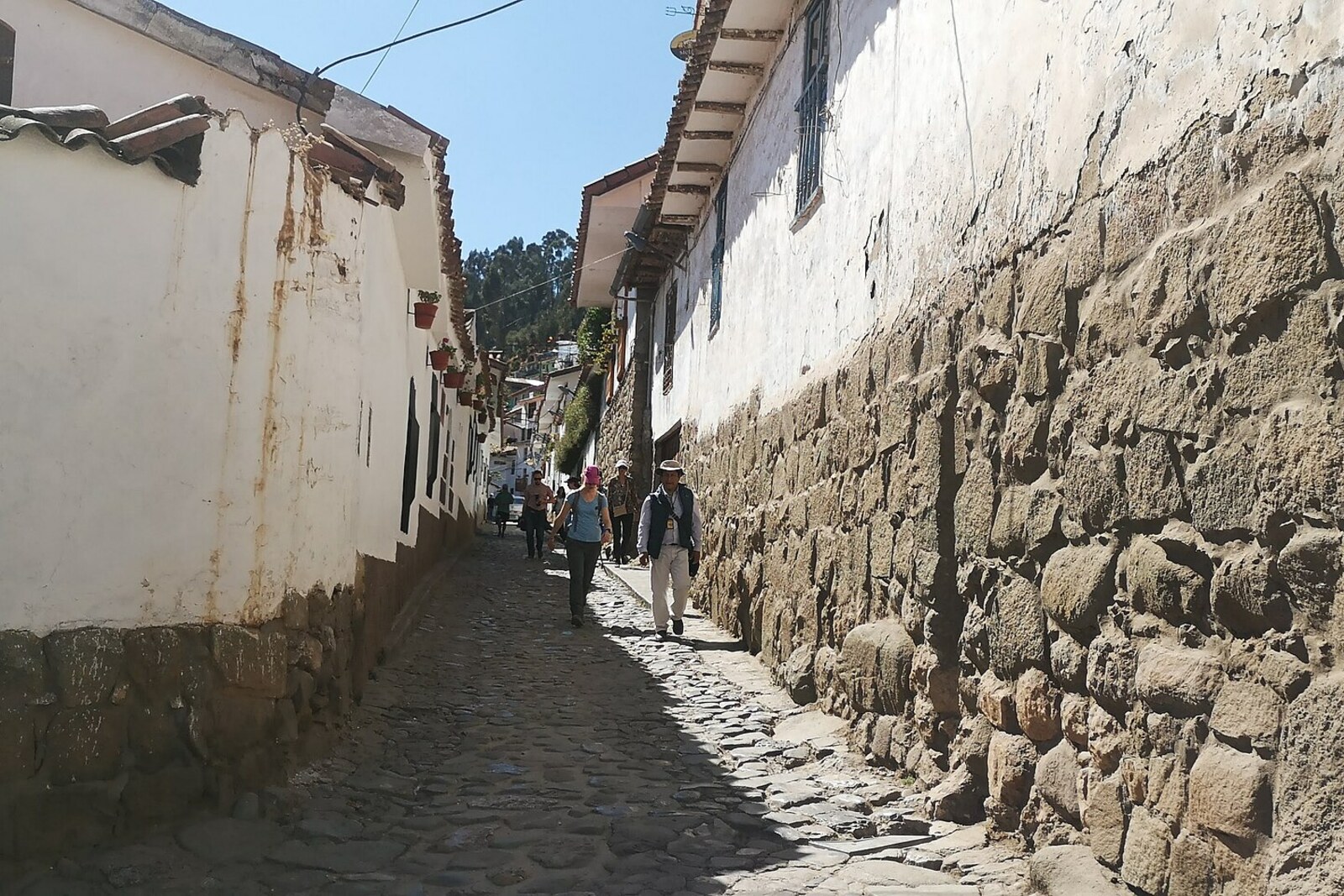
Look around first
What to notice
- Carmen Alto street sign
- Tandapata street sign
- Stone paving
- Changes in elevation between the streets
The story of the place
The stone paving on the steep slope links Carmen Alto with Tandapata, and the difference in elevation between the streets can still be felt underfoot. The upper street's name came from the veneration of the Virgin of Carmel in the neighboring Church of San Blas. A small house for a women's religious community once stood nearby, while the lower part of the street was named Carmen Bajo. The house itself is gone: its ruined galleries and cells were demolished after the earthquake, and only its name on a sign remains.
Tandapata had an earlier name: Chacan Canal. It described the street literally: a wide, shallow irrigation canal ran down its middle, carrying water from Sapantiana. Residents gradually occupied the former Inca agricultural terraces with houses, but vegetable gardens remained behind the yards. They had to be watered from a single stream.
From the last quarter of the sixteenth century, water in Cusco was distributed in turns called tandas. Here, neighbors diverted it to each plot at an appointed time. While one family watered its vegetable garden, the others waited. This sequence of turns gave Tandapata its name.
The canal remained part of everyday household life well into the twentieth century. In nineteen fifty-three, fees were collected from irrigators and other water recipients to build the channel bed. In nineteen ninety-three, municipal workers enclosed the open ditch beneath the street. Now residents and guests of small hotels walk above the former watercourse. The terraces and a name that still echoes the turn for water are all that remain of the old arrangement.
The name Carmen Alto is connected with the neighboring Church of San Blas. Parishioners venerated an image of the Virgin of Carmel there and held her feast. Beside the church stood Beaterio del Carmen, a house for a women's religious community, organized more modestly than a convent. The upper street was named Carmen Alto, and its lower continuation Carmen Bajo.
On October thirtieth, sixteen eighty-nine, Pedro de Roa Izquierdo, an official responsible for protecting Indigenous people, came to the doors of Beaterio del Carmen. He demanded to be let in late in the evening. The superior, Magdalena de San Juan Bautista, refused: she was seeking to preserve the closed order and good name of the house where unmarried women lived.
Pedro began publicly calling the residents prostitutes, claimed that men made their way to them over the roofs, and threatened the women with beatings and death. For this poor community, it was a thoroughly material threat: its members supported themselves through work and alms. That night, the doors remained locked. Magdalena then filed a defamation suit, and witnesses confirmed what Pedro had said. The end of the court case has been lost, so it is unknown whether he was punished.
Beaterio del Carmen occupied part of what is now Plazoleta de San Blas. The earthquake of nineteen fifty destroyed its galleries and cells, after which the building was demolished. It is no longer at the beginning of Carmen Alto; the women's community's name remains on one street sign, and the arrangement for sharing water on a neighboring one.
Useful on site
Open streets; best visited in daylight or when they are well lit.
Checked: June 28, 2026. Check the official source before visiting.Observe from the street and respect private doors and courtyards; on uneven sections with traffic, watch both your footing and the cars.