 Guide On Map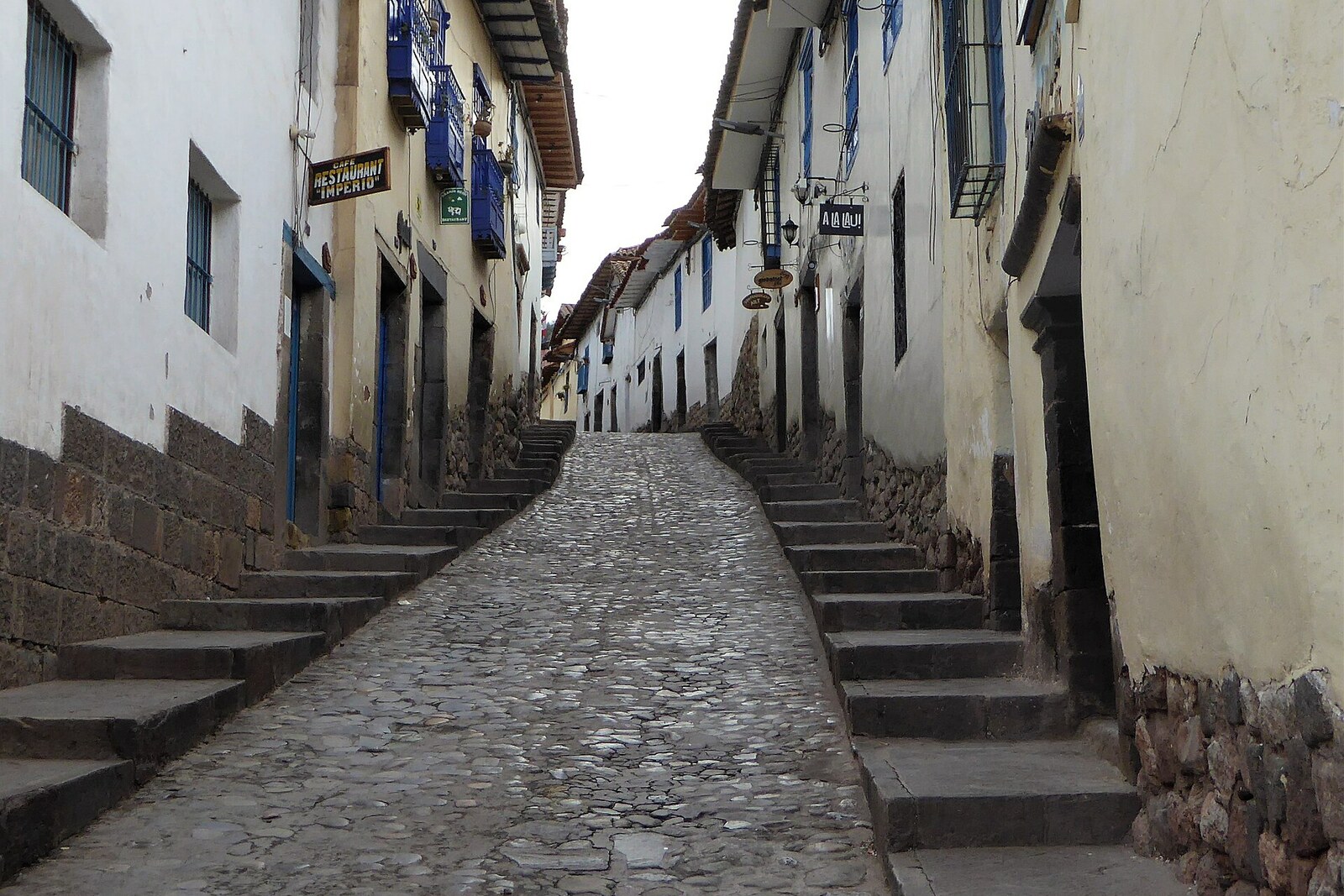
Look around first
What to notice
- The intersection of Hatun Rumiyoc and the Cuesta
- Stone paving
- The steep line of the street between the houses
The story of the place
Cuesta de San Blas takes its name from the parish at the top. In fifteen sixty-two, the city magistrate Juan Polo de Ondegardo established it for the baptism and religious instruction of the Indigenous residents of Tococachi, as this neighborhood was formerly called. The parish was dedicated to Saint Blaise, a physician and Christian martyr from Sebastia in Armenia. In Spanish, his name is San Blas; that is why the climb to his church became Cuesta de San Blas.
But a road existed here long before the parish. Inca builders laid out the main route to Antisuyu, the northeastern part of the empire, along this slope. At the lower end of the descent, the open Tullumayo crossed the road. Stone slabs were laid across it: travelers, laden llamas, and messengers crossed the river by way of Viruy Paccha Bridge. Spanish residents later rebuilt the bridge with lime mortar, and documents from sixteen eleven already used it to mark the boundaries of houses.
By the beginning of the twentieth century, this crossing stood in the way of what residents and city officials sought: uninterrupted streets and the removal of open streams into which the city’s waste flowed. In August nineteen oh nine, workers began enclosing the Tullumayo in a vaulted underground channel from Sapantiana to the foot of the Cuesta. Residents lost direct access to the water, but gained a roadway instead of a break made by the river. Viruy Paccha Bridge was dismantled—after the riverbed was covered over, it was no longer needed.
That is why, at the bottom, the Cuesta continues into Hatun Rumiyoc without a visible crossing. Beneath the intersection, the Tullumayo still flows, and Viruy Paccha Spring still emerges into the same underground channel. Nothing remains of the old bridge above it, neither a span nor a railing: the place where the route to Antisuyu began now looks like an ordinary junction of two streets.
Useful on site
Open street; shops and workshops keep their own hours.
Checked: June 28, 2026. Check the official source before visiting.Climb at an unhurried pace and keep to the safe side when a car passes; the altitude quickly takes your breath away.